Skip to content



Fred and Jill Sauceman study, celebrate and write about the foodways of Appalachia and the South from their home base in Johnson City, Tennessee, and have been covering food for this magazine for decades. Who better to provide a set of food favorites in three realms: Restaurants, Products and Recipes.
Much of our region’s story can be told through the products that have been sold at country stores, roadside produce stands, bakeries and county fairs. These rank among our very favorites.

Ale-8-One. This gingery drink was invented in 1926 by George Lee Wainscott, whose descendants still run his bottling company in Winchester, Kentucky. Unable to come up with a name he liked for his new drink, Wainscott asked for ideas at the Clark County Fair. The winning entry was from a 14-year-old girl who submitted “a late one,” to describe the latest thing in soft drinks. Wainscott transformed her phrase into Ale-8-One. His great-great nephew, Fielding Rogers, protects the secret recipe today.
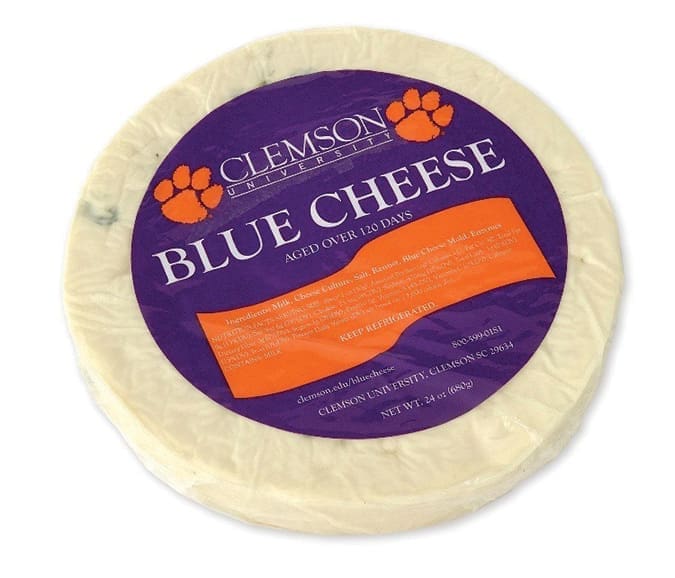
Clemson Blue Cheese. Our travels for Blue Ridge Country took us to the campus of Clemson University in South Carolina to learn the 80-year history of Clemson Blue Cheese. The cheese was first aged in Stumphouse Tunnel, an unfinished Civil War railroad tunnel cut into the face of Stumphouse Mountain. Now it’s done on the campus, under the supervision of cheese master Anthony Pounders, with milk from a herd of Holstein cows owned by Clemson alumni Watson and Lisa Dorn.
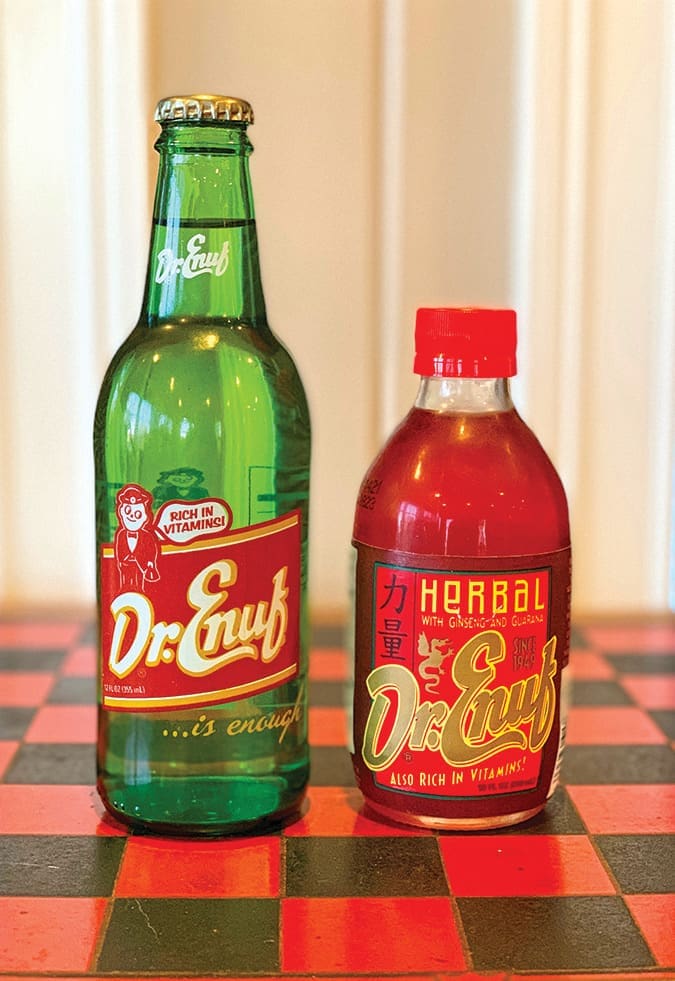
Dr. Enuf. Created by a Chicago chemist whose co-workers were complaining of lethargy and bottled in Johnson City, Tennessee, since 1949, Dr. Enuf may be America’s first energy drink. When Charles Gordon first started selling the lemon-lime-flavored product, he didn’t call it a soft drink. He promoted it as a dietary supplement which could cure “untold misery.” An early image the company used in its advertising was a little doctor in a derby hat with a black bag.
Duke’s Mayonnaise. We know chefs who stopped making their own mayonnaise after discovering Duke’s. Eugenia Duke, a forward-thinking entrepreneur, created the tangy product in Greenville, South Carolina. She slathered it onto 10-cent sandwiches and began selling them to the soldiers who came to train at nearby Camp Sevier in 1917. Light bread, a tomato and a spreading of Duke’s make one of the South’s simplest and best sandwiches.

Fried Pies. Long before daylight, at Betty’s Stockyard Café in Kingsport, Tennessee, Betty Jones is frying pies filled with fruit. She learned the skill on the family farm in Dryden, Virginia, where she was in charge of feeding her 15 brothers and sisters. Sometimes called hand pies, fried pies are often that size, but Jones’s are about the size of a large moccasin. In nearby Johnson City, Seaver’s Bakery turns out eight different flavors, using recipes that date from the company’s founding in 1949.
MoonPies. The graham cookie filled with marshmallow and coated in chocolate turned 100 in 2017. Earl Mitchell, general manager of the Mountain City Flour Mill in Chattanooga, was working a sales route in the Eastern Kentucky coalfields and asked miners at a little country store what they would like in their lunch pails. According to legend, a miner said he’d like something with those three flavors and told Mitchell to make it big, as he framed the moon with his fingers. Mitchell took the idea back to the Chattanooga Bakery, which created one of the South’s most recognizable brands. The best way to eat a MoonPie? Microwaved!

Pepperoni Rolls. Symbols of adaptation and ingenuity, West Virginia’s pepperoni rolls reflect the immigrant history of the state. Created by Italian bakers in the early 20th century as nourishment for coal miners, pepperoni rolls are now sold all over the Mountain State. Of the bakeries we visited, Tomaro’s in downtown Clarksburg stands out. It has operated on the same spot since 1914.

Pure Sugar Stick Candy. At one time, the two Bristols—Tennessee and Virginia—were home to some 10 candy companies, all making a version of pure sugar stick candy. Today, only one of those companies survives. Helms Candy Company, on the Virginia side, dates to 1909 and has been owned by the same family all that time. George F. “Buzz” Helms IV, whose great-grandfather started the business, says cooking the candy is an old but simple craft and that a strong labor force, access to railroads and just the right level of humidity came together to make Bristol the epicenter of pure sugar stick candy making in America.
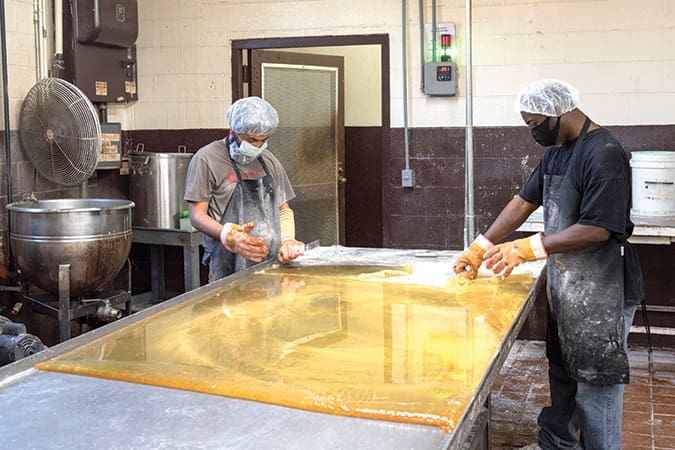
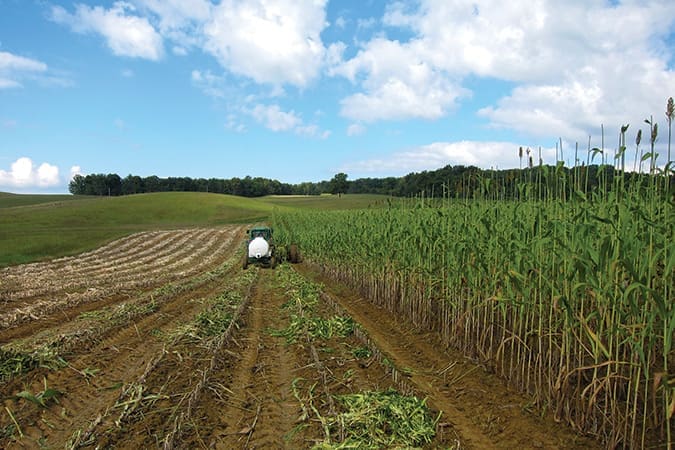
Sorghum syrup. Kentucky and Tennessee lead the country in the production of sorghum syrup. We use it as an ingredient in dried apple stack cakes and as a topping for ice cream. And it’s best right out of the jar. In the fall, juice is extracted from sorghum cane and boiled down until it is thick and amber-colored. In Jeffersonville, Kentucky, Danny Townsend is a fifth-generation sorghum maker. On the Cumberland Plateau in Tennessee, the Guenther family has been making sorghum since the early 1960s. Mark Guenther still cultivates his cane fields with mules. He says they do a better job than tractors. Both the Guenther and Townsend families are members of the National Sweet Sorghum Producers and Processors Association, an organization that makes us optimistic about the future of this sweet product.
>>> Continue to part 3: Mountain Recipes
The story above appears in our March/April 2021 issue.