Skip to content


Long before modern healthcare reached many Appalachian communities, Granny Women became trusted healers and caregivers, delivering babies, treating illness and injury, and preserving generations of healing knowledge.
By Angela Minor / Photo Above: Author Tim Carmichael’s grandmother, Granny Woman Stella Gosnell Norton, served her Madison County, North Carolina, community as a trusted healer and caregiver.
Among the immigrants making their way into the Appalachian Mountains beginning in the late 1700s were women who held generational lifetimes of healing knowledge—a vast, deep understanding of and respect for the bounty of nature and how to use it to provide healthcare to those in need. As homesteads were built and communities formed, often isolated from each other across miles of rugged terrain, access to traditional medical practitioners was rare and even nonexistent. The solution? Knowledgeable, selfless, and often heroic individuals known as “Granny” who traveled whatever distance was needed, stayed as long as was necessary, and expected no payment for their caregiving.

“Granny Women were often the people a community turned to first in times of need,” said Tim Carmichael, grandson to Granny Woman Stella Gosnell Norton. She was taught the “knowledge of healing, remedies, and caregiving by her mother and her grandmother.”

He continued, “Granny Women were respected…and trusted because they knew the people they served and genuinely cared about their well-being.”
Granny Women stepped bravely and confidently into situations where childbirth could be a life-or-death event. A minor injury, left untreated, could end badly. A “mysterious” illness could claim the life of a family member. And the stresses of daily life could debilitate a person’s fortitude. “Granny Women filled gaps in healthcare and became a source of wisdom, strength, and reassurance,” Carmichael said. “[As] Appalachian midwives and folk healers, [they] provided essential medical care, herbal remedies, and guidance. They cared for the sick [and injured], delivered babies, offered advice, and provided comfort when families were struggling.”
Through the meadows and mountains of Madison County, North Carolina, young Carmichael accompanied his granny, observing, gathering, and soaking in knowledge and wisdom from ages past. “As we walked, she would point out different plants and explain what each one was used for. [She] could spot healing plants from 30 paces away. Her hands were always stained from plants—green from pokeweed in spring, purple from blackberries in summer, yellow from goldenrod in fall. On many nights, neighbors would come pounding on our door…they all knew my grandmother could help.”
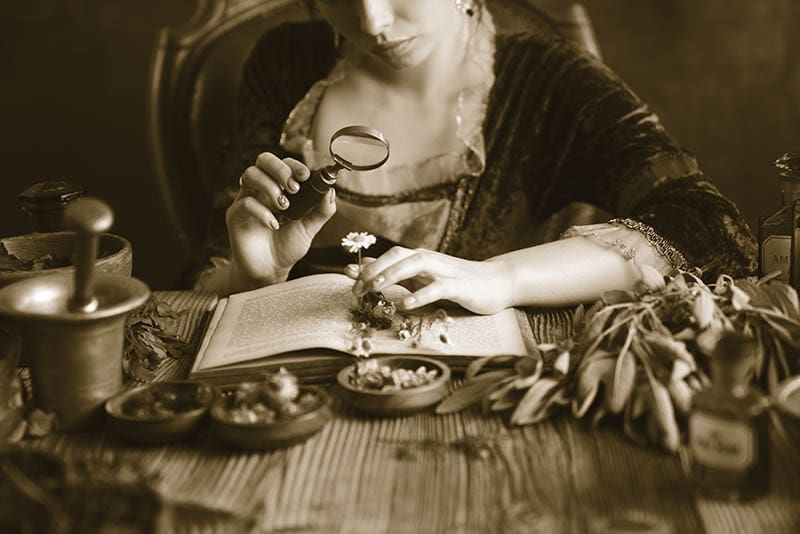
These familial matriarchs of Appalachia possessed a unique composite of information from their English, Irish, and Scottish ancestors which was expanded by the rituals and remedies of those from other European countries, African descent, and First Nation cultures. Many documented this knowledge in a journal, with each Granny adding her own new findings, interpretations, and guidance over time. This reference text field guide of sorts, often with detailed drawings of plants, was a botanical, spiritual, and valued book within the family. Carmichael shared, “My granny had a special book, handed down from her great-grandmother, that was about 10 inches thick and filled with pages of healing recipes, remedies, and sayings.
“I learned that healing wasn’t just about plants—it was about knowing people. Grannies were also emotional pillars in their communities. They were counselors who knew that sometimes a troubled spirit needed healing more than a sick body. When my grandmother treated someone, she listened to more than just their symptoms. She heard their fears, their family troubles, their secret hopes. People trusted her not just because her medicines worked, but because she saw them as whole human beings.
“Granny Women represent a way of life that is slowly fading, so it feels important to remember and respect what they contributed,” he stated. “Traditions and family knowledge are fragile. If they are not shared, they can easily be lost. Having a Granny Woman in my family [gives me] a lot of pride, respect, and responsibility. I am part of that legacy, and even the small amount of knowledge I learned is something valuable that I should remember and respect.
“I have always been a caretaker, and many of my friends and family say I get that from my granny. Today, I still use what I learned [and] even though I do not practice in the same way my granny did or serve a whole community, I still feel connected to her through those simple practices.”
Carmichael concluded, “My granny passed away in 1993…and [her] book disappeared and was never seen again. But [the knowledge she shared with me] and the pride I have for her is still with me today. My grandmother taught me that real medicine isn’t always found in pills and hospitals. Sometimes it grows wild on mountainsides, and sometimes it comes from the simple act of being heard and cared for by someone who knows both the old ways and the human heart.”
Tim Carmichael is the author of “The Magic of the Mountains: Appalachian Granny Witches and Their Healing Secrets.”
The story above first appeared in our September/October 2026 issue.