Skip to content


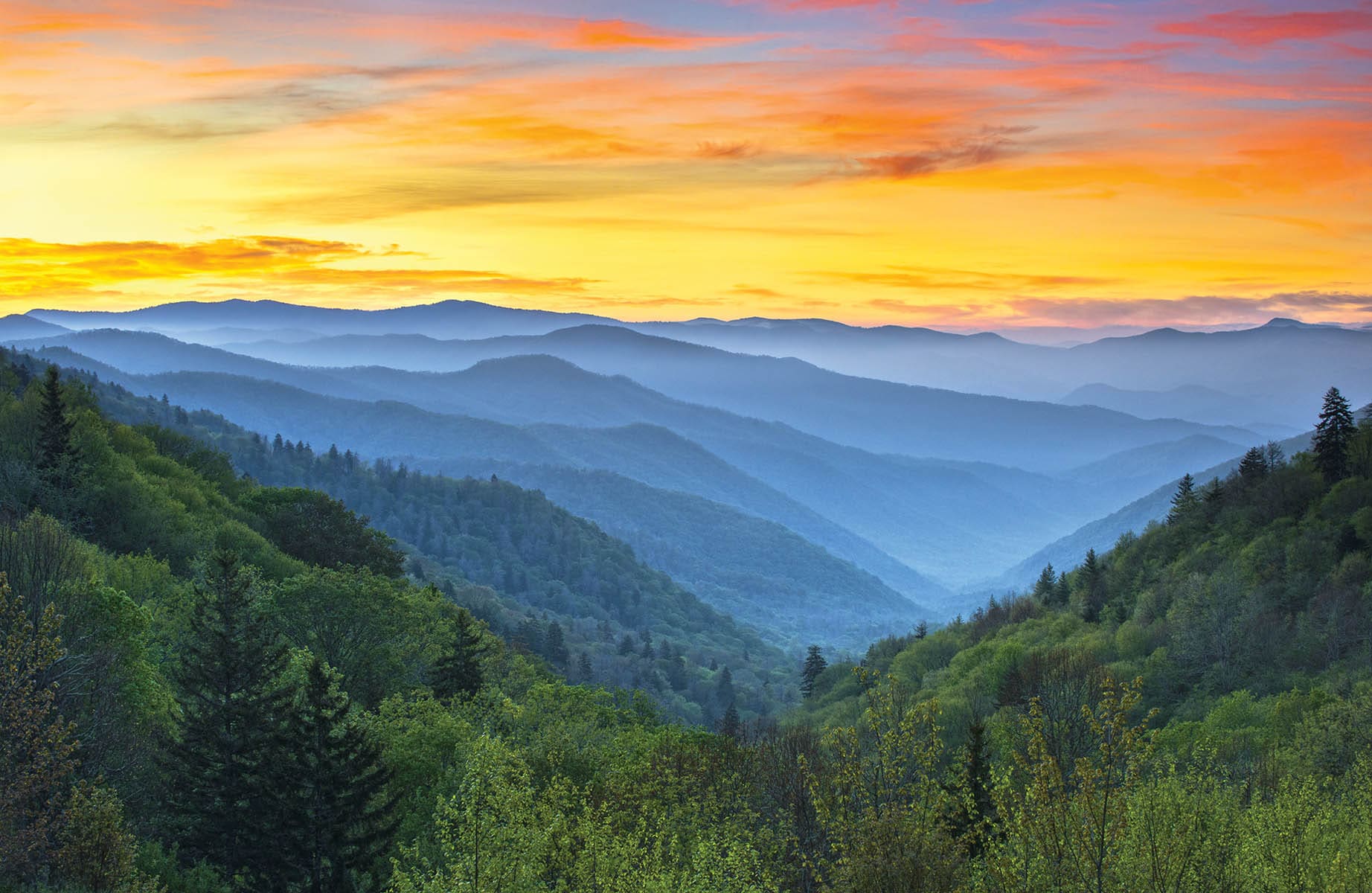
Our longtime contributing editor knows Great Smoky Mountains National Park like the back of her hand.
By Angela Minor
Drawing inspiration from countless visits over the years, she shares some of her favorite spots to explore during the warm months, plus insider tips for spotting wildlife, discovering waterfalls, finding the best family-friendly experiences in the park—and more!

If there’s one thing this writer has learned over the last five decades of exploring Great Smoky Mountains National Park, it’s this: there’s no shortage of ways to spend your time. The country’s most-visited national park welcomes more than 13 million people each year with its variety—wildlife to watch, leisurely drives to follow, trails to hike, and plenty of ways to get on or near the water—making it an especially good vacation spot during the toastiest stretch of the year.
Insider tip: Roll down those windows and get ready for neat and unexpected surprises as you drive through the park.

Let’s explore.
WILDLIFE
With 816 square miles of protected lands, the opportunities to view wildlife are, well, everywhere. Within the extensive water systems that keep the park alive, almost 3,000 miles of rivers and streams are teeming with life. Trout can be seen in clear pools and actively jumping in the Little River. At Abrams Creek—formerly named Tsiya’hi (Otter Place) by the Cherokee—these playful creatures are thriving after reintroduction.
Expand knowledge of the wildlife in the park with a visit to the Great Smoky Mountains Institute at Tremont. Participate in community science projects on birds, butterflies, amphibians, and more, and/or stay on-site for a Live and Learn workshop. Inquire about the largest North American salamander, the Hellbender, and its place in the ecosystem.
In 2001, elk were successfully brought back to the park and herds can now be seen in the remote areas of Cataloochee Valley and nearby counties. These gorgeous and graceful animals also frequent the fields around the Oconaluftee Visitor Center, an easier access point for viewing. Early morning and late evening are the prime times.
Insider tip: A “traffic jam” along the park’s roadways often means good news: a bear sighting. With a population density of approximately two American black bears per square mile in the park, a gathering of cars is usually accompanied by folks saying, “There’s a bear!”
HISTORY
Drive, hike, and stand upon one of the oldest mountain ranges in the world. The bedrock dates back more than a billion (with a “b”!) years, and “the entire Appalachian region was uplifted around 270 million years ago” (usgs.gov). Upon the landscape today, approximately 100,000 acres of old-growth forest remain at places like Ramsey Cascades and Albright Grove where 400-year-old trees still stand.
Celebrate First Nation culture at the park-adjacent Qualla Boundary, home to the sovereign nation of the Eastern Band of Cherokee Indians. Walk through the park’s human history at the recently renovated historic logging town of Elkmont, a 100-year-old resort community whose members were pivotal in the creation of this national park.
Travel a one-lane dirt road or hike Metcalf Bottoms Trail to reach a former mountain community tucked into the surrounding hills. Little Greenbrier was a self-sufficient settlement with log homes, farms, and a one-room schoolhouse that also served as the church. Built in 1881 of massive tulip poplar logs, this structure and the cemetery remain.
Nearby is the homestead of the Walker sisters, 122 acres where six unmarried women stayed on their land (via a lifetime lease) after the park was established. Theirs is an inspiring story of how they thrived using traditional, self-sufficient Appalachian ways until the last sister passed in 1964.
Insider tip: The latter two destinations are relatively lesser known, so stay awhile and (with a bit of good timing) enjoy the quiet solitude of sitting with history.


DRIVES
For a trip through the heart of the Smokies, U.S. 441 (Newfound Gap Road) is the route to take. Along the fully paved, 31-mile road are forest canopies, scenic overlooks, ample pull-offs, parking for trailheads, mountain switchbacks, access to the highest elevation in the park, and an official visitor center at either end.
For a different experience, take Rich Mountain Road out of Cades Cove. This is a one-way backcountry route that (if memory serves) once had a sign with even more descriptors than “unimproved, primitive, and one way.” This quiet and gorgeous drive is winding, narrow, and steep, and the surface is gravel.
The Roaring Fork Motor Nature Trail near Gatlinburg has the “driving” part right there in the name! And it is well worth the time to slow down for the experiences on this 5.5-mile loop road. See old growth forests, rushing streams and “Place of a Thousand Drips” waterfall, preserved historic structures, and (possibly) wildlife from your vehicle. Take a walking tour of a homestead and access trailheads for exploring deeper into the wilderness.
Insider tip: For the latter destination, parking can be a challenge. Consider taking a guided tour; let a local expert drive and share stories of the mountains along the way. Specialized companies with Jeep vehicles offer popular Roaring Fork packages. Make reservations well in advance.

HIKES
With more than 800 miles of trails, there is literally a path for everyone in the Smokies. Information is key and the place to find it is either at visitor centers or online (nps.gov/grsm/planyourvisit/hiking.htm). Preparation, safety, and trail conditions and ratings are at your fingertips.
Located just outside Townsend at the Y, the 5.6-mile round-trip Chestnut Top Trail is across the road from the parking area and named for the once-abundant trees on this ridge. It is a steady cardio climb with the chance to see banks of wildflowers along the left ascending side.
For a gentler hike among giant trees, walk the Cove Hardwood Trail at the Chimneys Picnic Area. It starts with steps, roots, and rocks at the beginning but levels out along the 0.75-mile loop. Hang to the right to get back to the trailhead.
While traveling with four-legged family members, keep in mind that there are only two dog-friendly trails in the whole park: Oconaluftee River Trail and the Gatlinburg Trail. Otherwise, they are only allowed in frontcountry campgrounds, picnic areas, and roadways.
Insider tip: If a day hike is on the agenda, access to the important details of 39 destination trails located across the park can be found online. Parking can be quite limited at the more popular spots. Pack your gear and hop on a shuttle to your chosen trailhead. Find park-authorized providers at nps.gov/grsm/planyourvisit/shuttles.htm.

WATER
For the sights, sounds, and sprays of waterfalls, the Smokies offer more than 100 to explore. Some draw large crowds, like the paved trail to Laurel Falls, the walk-behind Grotto Falls, and the colorful Rainbow Falls. But others are just as stunning with fewer people. The relatively easy 2.4-mile loop of Deep Creek has three waterfalls. Follow a former railroad bed through rhododendron and rock outcrops to the dramatic Lynn Camp Prong Cascades.
For angling adventures, venture to one of the park’s many streams that “maintain their fish populations at or near carrying capacity” (nps.gov/grsm). Remote headwater streams are alive with trout (including native brook) and smallmouth bass abound in the deeper, cool-water pools. Check online for licensing, equipment, and size and possession regulations (nps.gov/grsm/planyourvisit/fishing.htm).
For splashing, swimming, and floating, Deep Creek on the North Carolina side and the Townsend Y on the Tennessee side are the top spots. Tube rentals are readily available at both locations for a relaxing trip down the rivers with a bit of adventure waters along the way.
Insider tip: While rain during vacation may not sound ideal, it’s a bonus in the Smokies. The rivers turn up their visual and auditory volumes, particularly in a spot called The Sinks. A sharp bend in the river creates a roaring cascade of water; the bigger the deluge of rain, the better. Watch for the small parking area about 12 miles west of Sugarlands Visitor Center and stand in a secure viewing area while the river rushes toward you.

FAMILY
Gatlinburg, originally called White Oak Flats in the early 1800s, has become a world-famous tourist destination offering a unique blend of fun across a variety of interests. Walk through an underwater tunnel at Ripley’s Aquarium and catch a 360-degree view at the top of the vintage Space Needle. Journey across the continent’s longest pedestrian cable bridge at SkyPark and take a scenic tram ride to the mountaintop at Ober Mountain.
The 90-acre theme park Anakeesta has roller coasters, 16 hanging bridges, and seasonal festivals. And in the downtown area, mini-golf, laser tag, boutique shops, an escape room adventure, oddities at Ripley’s Believe It or Not, and a pinball museum await.
Come taste why folks still line up on the sidewalk to eat at the Pancake Pantry, serving deliciousness since 1960. And, for handmade caramel, fudge, and divine divinity, a stop at Aunt Mahalia’s is a must. They’ve been creating sweet treats since 1939.
Insider tip: Park the car and walk the pedestrian-friendly main street through the center of town. Officially U.S. 441, locals call it “The Parkway.” The traffic lights are numbered, making it easy to get directions and navigate the town. Gatlinburg.com and downtowngatlinburg.com are excellent resources for finding attractions, eateries, accommodations, and events for the seasons.
COMBO
Explore, discover, and experience a combination of what the Great Smoky Mountains National Park has to offer all in one place: Cades Cove. Keep a sharp eye and binoculars at the ready (particularly in the early morning and late afternoon) for many wildlife species including white-tailed deer, black bears, bobcats, foxes, turkeys, beavers, and more.
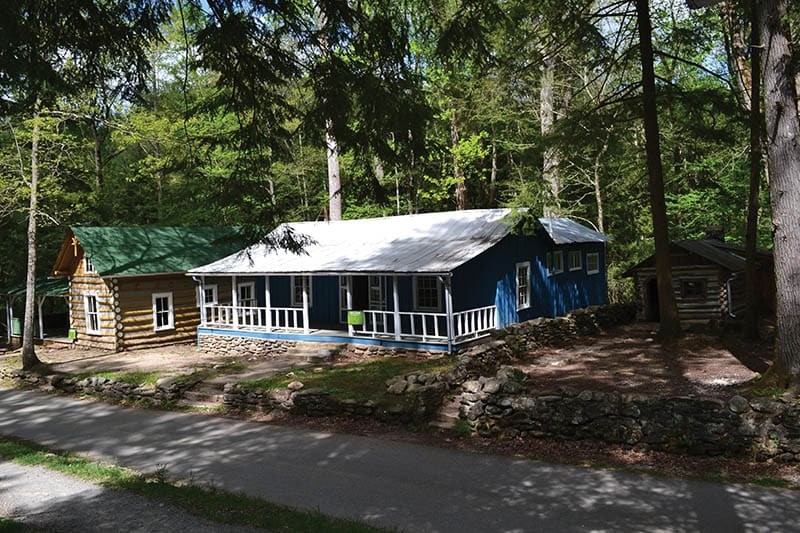
Walk in and around more than a dozen historic structures including cabins, churches, and a working grist mill. The Auto Tour Booklet is a terrific resource for maps and context as you travel along the 11-mile, one-way loop road through the cove. At roughly the halfway point, stop at the visitor center and facilities.
Access a number of trails offering varying degrees of length and difficulty throughout, including the popular Abrams Falls trail that leads to a high-volume, 20-foot waterfall. (Check online for trail conditions and closures.) Rent bicycles or take a guided horseback tour with the family, followed by a picnic in the forested day-use area. Plan an overnight stay at the campground located within Cades Cove, open year-round.
Insider tip: Take a left onto Hyatt Lane, a two-lane(ish) gravel road that goes across the cove, and drive to an open field section. Find a wide spot to park and step out for a 360-degree view that “explains” why people chose to live here.
FINAL THOUGHTS
After five decades in the Smoky Mountains, starting in childhood, it occurs to this writer that there are also times when the best travel plan is to not have one at all! Then unexpected occurrences can create fond memories for all time. Like being drawn into a pull-off by the aroma of clean, bright lemon citrus and discover the source is an entire ravine covered in hundreds of yellow trilliums. Or having a snack at a riverside picnic table when a Great Blue Heron glides in and lands its 4-foot-tall self nearby at the water’s edge for its own snack. And training binoculars through an open car window on a dark spot, way in the top of a tree, that turns out to be a napping bear cub.
The story above first appeared in our July/August 2026 issue.