Skip to content



The owners of Wytheville’s Bolling Wilson Hotel and Graze on Main make sure the town never forgets her legacy.
By Fred and Jill Sauceman | Photos Courtesy of The Bolling Wilson Hotel / Photo Above:
The hotel’s rooftop terrace, affectionately known as The Perch, offers exceptional mountain views.
The story of a downtown Wytheville, Virginia, hotel and restaurant actually begins on the lawn of the White House in Washington, D.C., in the summer of 1918.

America had entered World War I the year before. President Woodrow Wilson, in an effort to save labor and demonstrate frugality and resourcefulness during wartime, arranged to have a flock of sheep brought to the White House to graze on the lawn. Tending to those sheep became one of the responsibilities of First Lady Edith Bolling Wilson, a native of Wytheville. Her first husband, Washington jeweler Norman Galt, had died in 1908, and Wilson’s wife Ellen had died in 1914. Edith and Woodrow married in 1915.
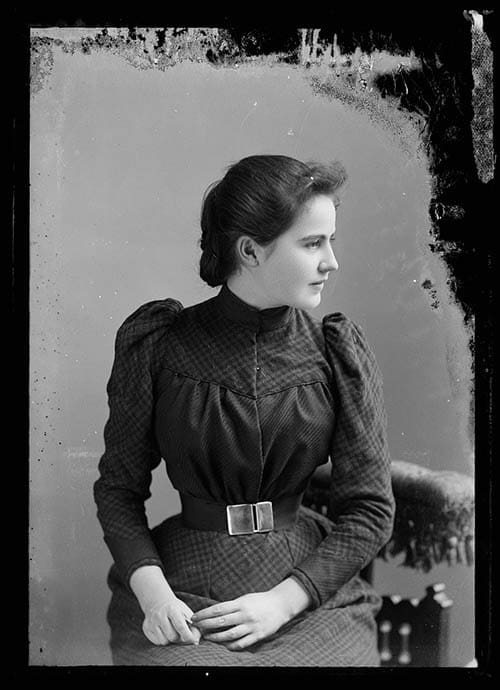
Edith Bolling during her Wytheville years.
©Edith Bolling Wilson Birthplace Museum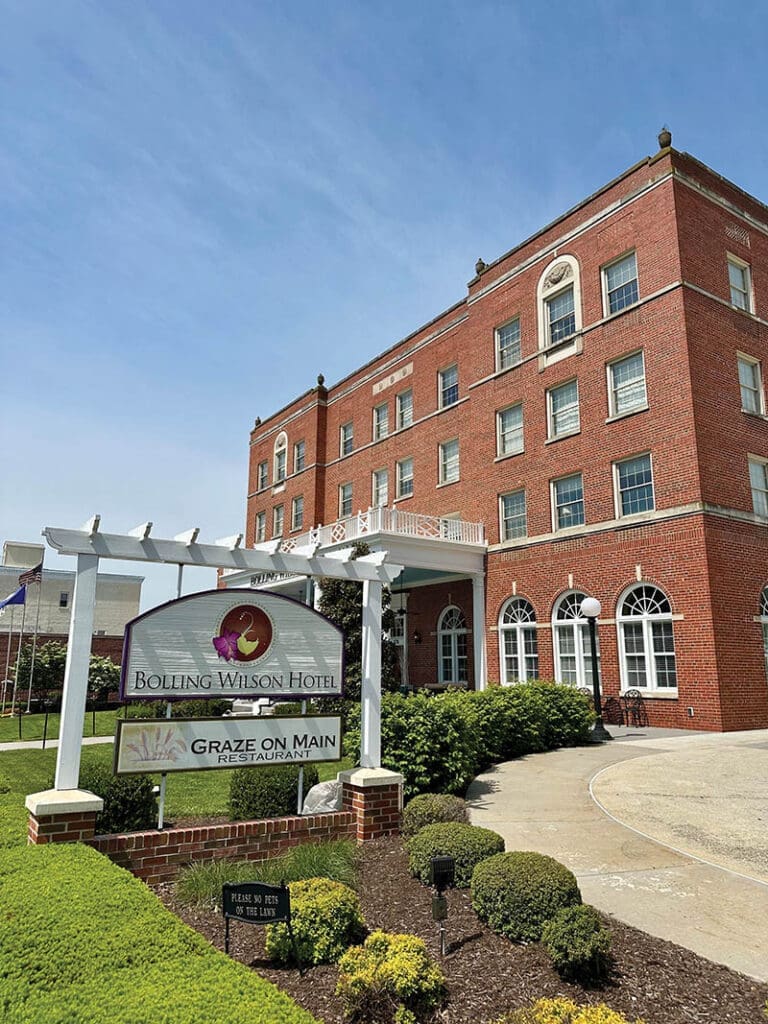
The Bolling Wilson Hotel opened in 2014 in a restored 1927 building. ©Fred and Jill Sauceman
Not only did the White House sheep eliminate the need for manpower to mow the lawn, but the wool they produced was sold at auction to support the work of the Red Cross. And, according to the Woodrow Wilson Presidential Library and Museum in Staunton, Virginia, those sheep became the most visible symbol of the Wilsons’ commitment to conservation, along with “wheatless Mondays” and “meatless Tuesdays.”
In 2010, Wytheville entrepreneurs Farron and Bill Smith purchased the former George Wythe Hotel building. They turned the 1927 structure into a 30-room boutique hotel and named the restaurant Graze on Main, recalling the story of the White House sheep. The Bolling Wilson Hotel opened in 2014 on Edith’s birthday, October 15.
The Smiths’ mission is to make sure Wytheville never forgets Edith Bolling Wilson. Not only do they own the hotel, but they also own the former Bolling home across Main Street. That building now houses the Edith Bolling Wilson Birthplace Museum.

“We always respected the story of Mrs. Wilson and her part in our country’s history,” said Farron. “After our children had grown, buying these properties was our way of giving back to a community that we love.”
Most anyone in Wytheville can recount another chapter in the story. When President Wilson suffered a serious stroke in 1919, Edith stepped in to run many of the daily affairs of the White House. She called it a “stewardship,” an unofficial assignment that lasted until her husband’s second term ended in March of 1921. It’s common around Wytheville to hear her referred to as “America’s first woman president.”

©Jacob Crvich
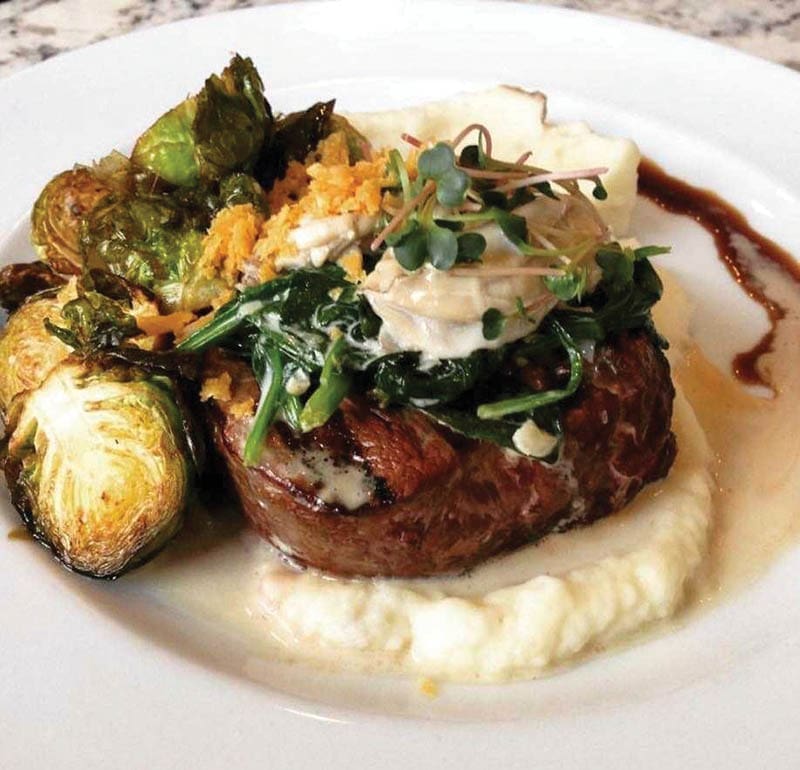
There are tributes to Edith throughout the Bolling Wilson Hotel, including her affection for orchids and bourbon. She loved canaries, even though, as a girl, she had to attend to 26 of them owned by her grandmother in their Wytheville home. A rum-based cocktail at Graze is entitled The Canary, and each evening features a bourbon flight. The menu at Graze on Main is heavily American, from Presidential Shrimp & Grits to a 6-ounce filet mignon named for Edith.
“The spirit of Edith lives on through the embodiment of resilience and trying to use everything with as little waste as possible,” said Graze’s Executive Chef Jacob Crvich. “Just like Edith and Woodrow encouraged people to do when they were in the White House.”
Crvich knows the Blue Ridge well. He grew up in Rural Retreat, nourished by his grandmother’s freshly baked breads—an inspiration for the poppyseed rolls he serves at Graze. He coupled that Virginia background with a degree from the French Culinary Institute in New York City.
Edith Bolling Wilson’s last visit to Wytheville was in 1960, to dedicate a stained-glass window at St. John’s Episcopal Church. For many people in this historic town, though, it’s like she never left.
Fred and Jill Sauceman study and celebrate the foodways of Appalachia and the South from their home base in Johnson City, Tennessee.
The story above first appeared in our September/October 2026 issue.