Skip to content

This 124-year-old soft drink company continues to innovate and thrive.
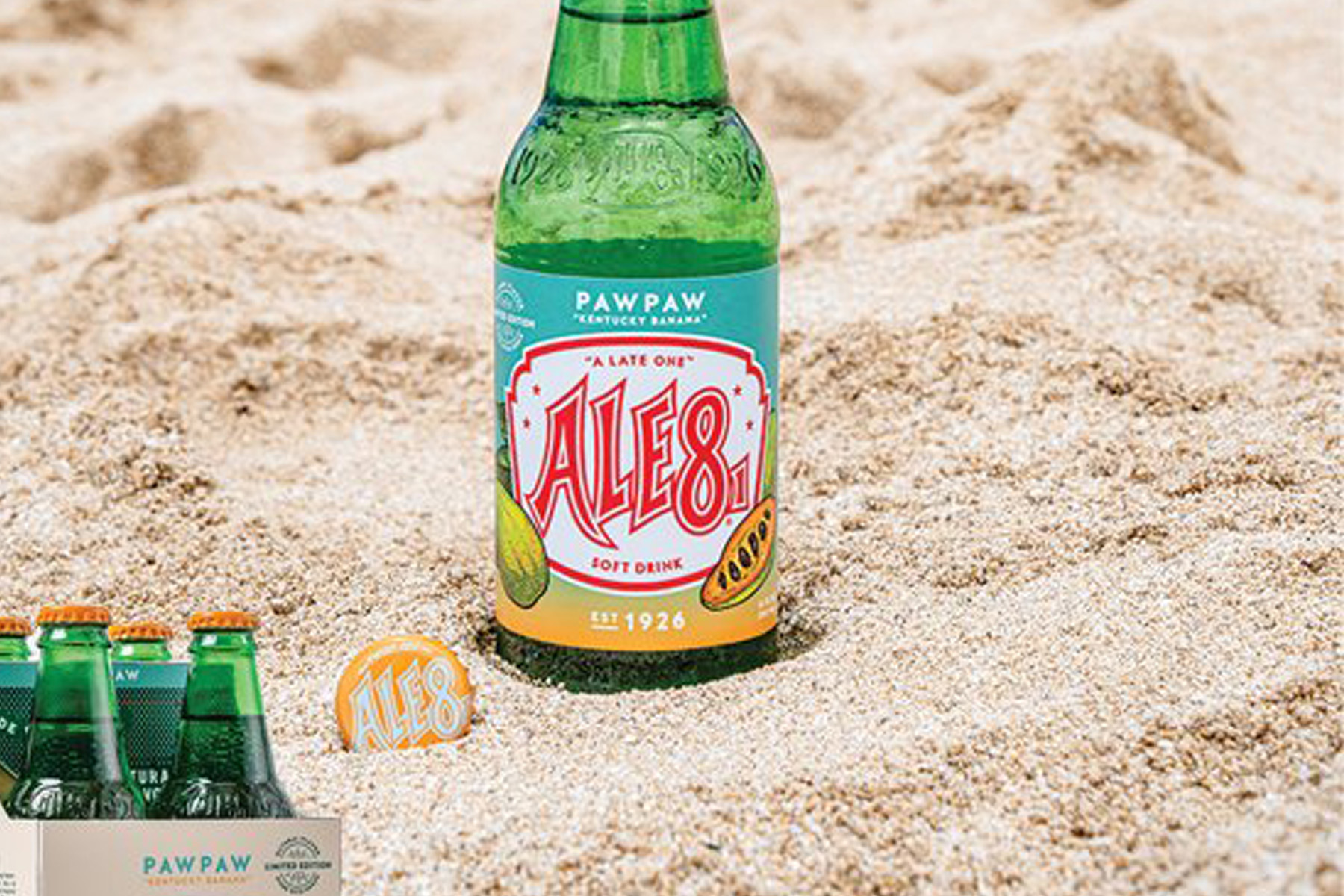
Photo Above: The pawpaw version of Ale-8-One debuted in the summer of 2025, in a limited edition. Courtesy of Ale-8-One.
Attendees at the Clark County Fair in Eastern Kentucky were introduced to a new soft drink in 1926, and initially it didn’t have a name. The gingery drink has been bottled in Winchester for 100 years.

George Lee Wainscott, who founded the beverage company in 1902, sponsored a naming contest at the fair, and the winner was a 14-year-old girl. No documentation of her name can be found, but her entry in the contest achieved soft drink immortality. She submitted the name “a late one,” meaning the very latest thing in soft drinks. Wainscott liked it, fine-tuned the term a bit, and began calling his drink Ale-8-One. The number eight doesn’t signify anything other than a rhyming link to the girl’s contest entry. And although “ale” is the first word in the name, the drink contains no alcohol.
Ale-8-One wasn’t the first southern soft drink to mimic an alcoholic beverage. North Carolina’s Cheerwine, created by L.D. Peeler in 1917, is also alcohol-free.
Kevin Price, Ale-8-One’s marketing director, describes George Lee Wainscott as a “flavor explorer.” Much of Wainscott’s soft drink research in the 1920s took place in northern Europe, where he came up with the idea for a ginger-flavored beverage, enhanced with what Price describes as a “citrus component.”
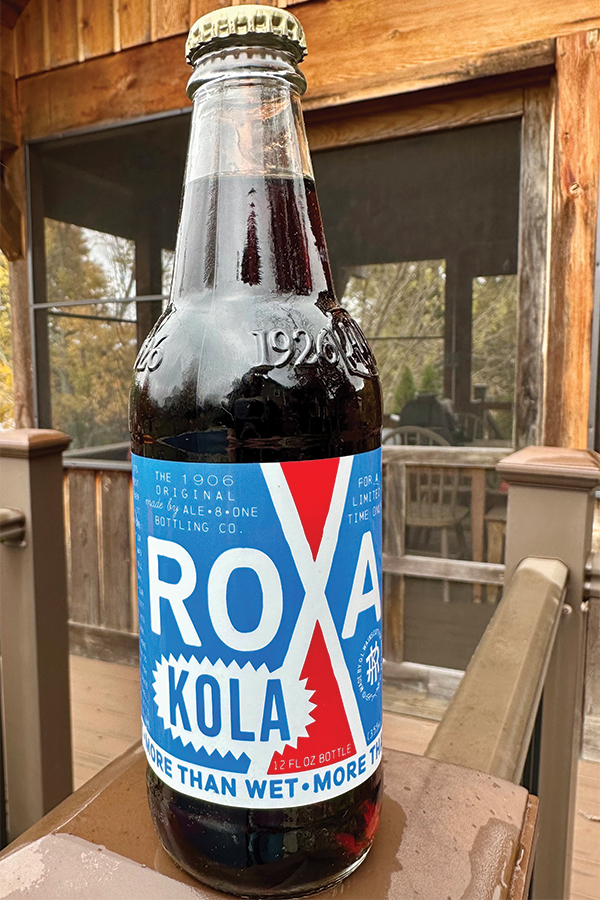
Wainscott had already entered the burgeoning American cola market. In 1906, he introduced Roxa Cola, named for his wife Roxanne. That drink, once discontinued, has recently been reintroduced by the Ale-8-One company.
“It all started with a love story,” proclaims a company lapel pin. Price says Roxa Cola “feels new but at the same time vintage.”
Preserving southern soft drink history is part of the company’s mission. According to Price, Ale-8-One is the “longest standing family-owned soda bottler in the United States.” Wainscott’s great-great-nephew, Fielding Rogers, runs the company today. Ale-8-One still bottles in glass.
For decades, the ginger version of Ale-8-One was consumers’ only choice, but gradually the company has been adding flavors such as blackberry, cherry, peach and orange cream. In the summer of 2025, Ale-8 debuted a new flavor that is closely tied to the Commonwealth of Kentucky. Pawpaw-flavored Ale-8 became an immediate hit. In fact, online sales had to be halted because of its popularity.
Kentucky State University, in the state’s capital of Frankfort, is home to the only full-time pawpaw research program in the world. Last year, KSU and Ale-8 partnered to come up with a soft drink flavor that reflects the tropical taste of the largest edible fruit native to North America.
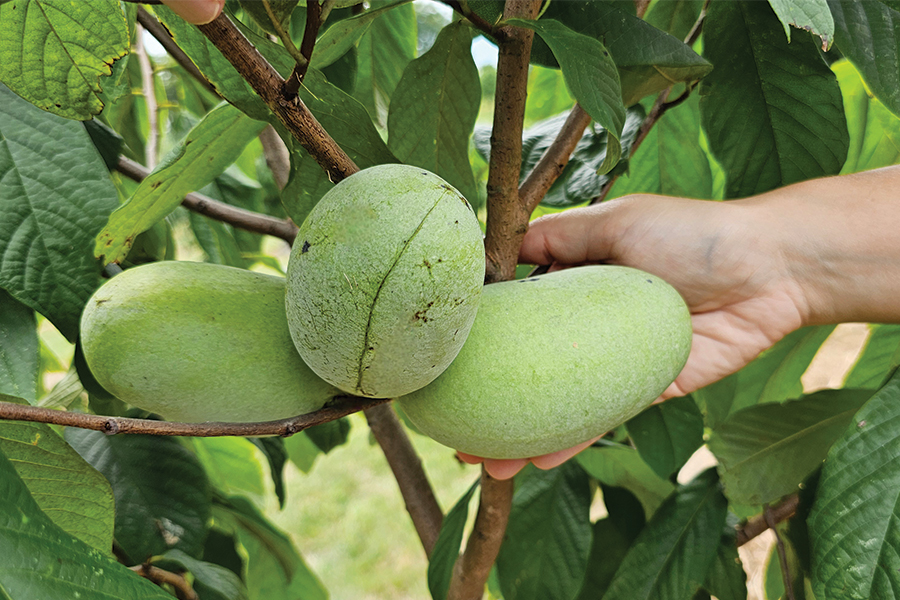
Dr. Kirk Pomper, professor of horticulture at Kentucky State, describes the taste of the pawpaw as “a blend of banana, pineapple, and mango, with a custard-like texture,” and he adds that the taste can differ, depending on the variety of the pawpaw.
Kentucky pawpaw trees bloom in April, and the fruit is harvested in the early fall. The shelf life of the fruit is short — less than a week, in fact, and only a few days more if the fruit is refrigerated. Pomper told us that extending the shelf life of the pawpaw is a central focus of the research being done at Kentucky State. About 6,000 pawpaw trees grow on the campus, covering 11 acres.
In Kentucky, Pomper reports, there were 93 commercial farms growing pawpaws in 2022. He sees a strong future for small-scale farmers interested in supplying pawpaws for the fermentation and distillation industries in Kentucky, in addition to more traditional uses such as jams and jellies. “Pawpaws make great ice cream, too,” he adds.
“It’s a great partnership between Kentucky State University and Ale-8-One,” Pomper told us. “The Ale-8 people visited us and tried a lot of different pawpaw varieties. I think they’ve captured the flavor perfectly in this seasonal drink.”
The company’s four-bottle carton describes the pawpaw as “a Kentucky staple for native people for centuries” and includes the Cherokee name for the fruit: disunki.
We hope the pawpaw version will be a regular part of the Ale-8-One line, and judging by customer response, the chances look promising. Its introduction last summer generated a renewed interest in the pawpaw statewide.
“The marketing metrics are strong,” says Kevin Price. “But just as important to me is the fact that this drink is having an impact on our state’s small farms. And that’s the best success metric I could have asked for.”
Fred and Jill Sauceman study and celebrate the foodways of Appalachia and the South from their home base in Johnson City, Tennessee.
The story above first appeared in our January / February 2026 issue.