Skip to content


One day at school, fellow Lord Botetourt H.S. teacher Brady Price brought me a hickory nut that he wanted me to identify. The thin yellowish, green husk seemed to indicate that it might be a Carya cordiformis, a bitternut, the wood of which is renown for hickory smoked meats, and the nuts themselves can be made into an oil.
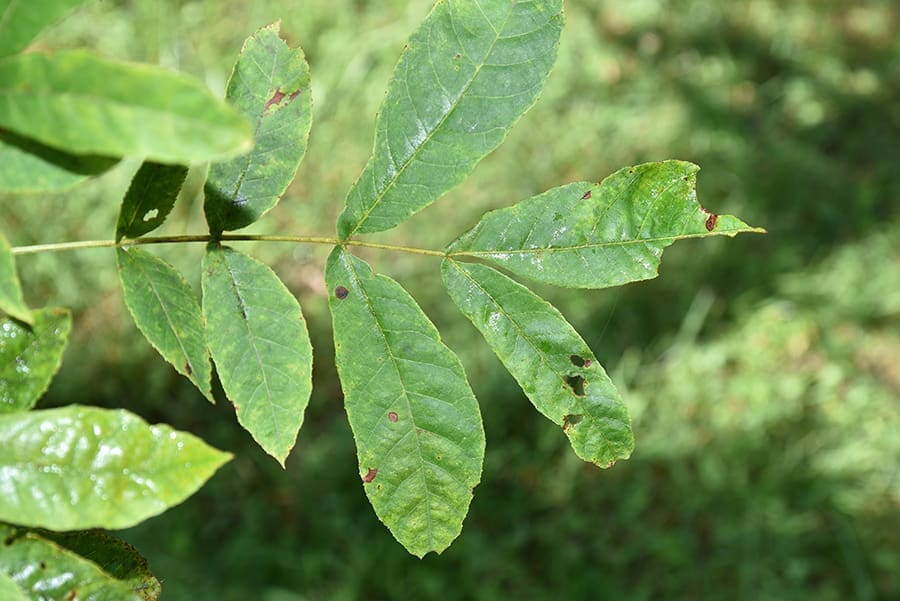
Photo Above: The compound, lancelike leaflets of the bitternut are a good identifier. © Bruce Ingram.
To confirm its identity, I told Brady we would have to remove the outer covering, which splits easily into four sections when ripe, and sample the nutmeat. Our tasting of the nut sent us both scurrying for water as, well, the bitterness of the bitternut was quite apparent. Frankly, this native species to the Blue Ridge mountains comes by its name honestly. I would eat the bitternut in a survival situation, but all other times it is best left to squirrels and mice which apparently do not have discerning palates.

Other identifying characteristics are the long, straight trunk with a short crown, the 7 to 11 compound lancelike leaflets, and the long, yellow buds which are quite evident in spring. So if you’re curious this month about what a bitternut hickory nut tastes like, give it a try. Consider having a generous supply of water nearby, though.
Bruce and Elaine Ingram wrote Living the Locavore Lifestyle about living off the land. For more information: bruceingramoutdoors@gmail.com.