Skip to content

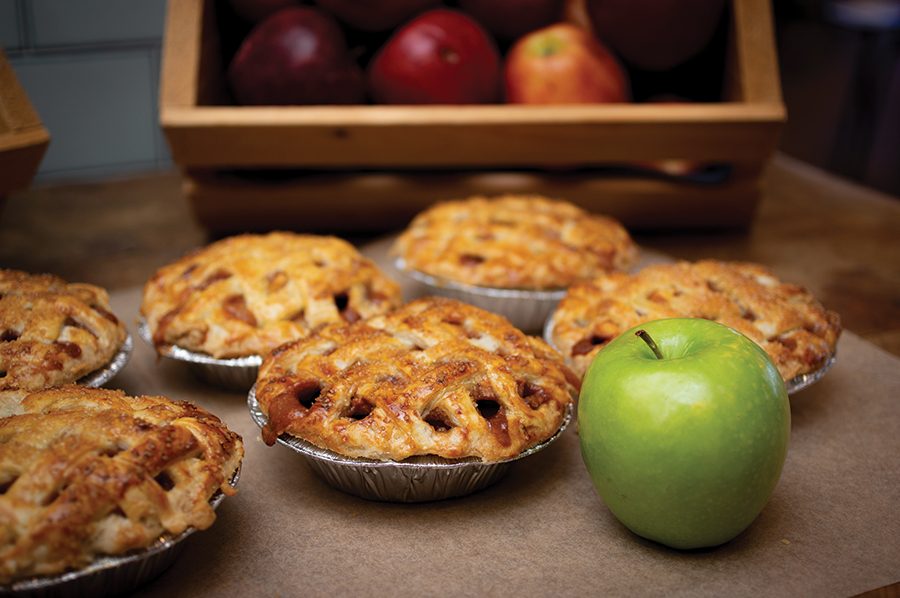
At this Greenville, South Carolina, eatery, the menu changes literally every day, based on what’s available locally.
Photo Above:The Fork and Plough name reflects the professions of the owners — chef and farmer.
Photos Courtesy of Courtesy of Fork and Plough
Jars of tomatoes, green beans and sauerkraut lined the shelves of Shawn Kelly’s grandparents’ basements in northeastern Ohio.

“There’s nothing like going down into the basement and bringing up something that you canned yourself, as opposed to friends’ houses where cans of store-bought food were opened with a can opener,” says Kelly, the co-owner of Fork and Plough in Greenville, South Carolina. “We would always get together as a family and do big canning sessions.”
Kelly’s Ohio family and neighbors were corned-beef-and-cabbage Irish and pierogi Polish. Kielbasa, sauerkraut and cabbage rolls were some of Kelly’s favorite childhood meals.
That kind of cooking is often featured at Fork and Plough. As Kelly talked to us from his Greenville office, potato and cheese pierogies were being assembled upstairs in the kitchen. Chefs at Fork and Plough often sear them on a flattop grill with kielbasa and top them with sour cream and caramelized onions.
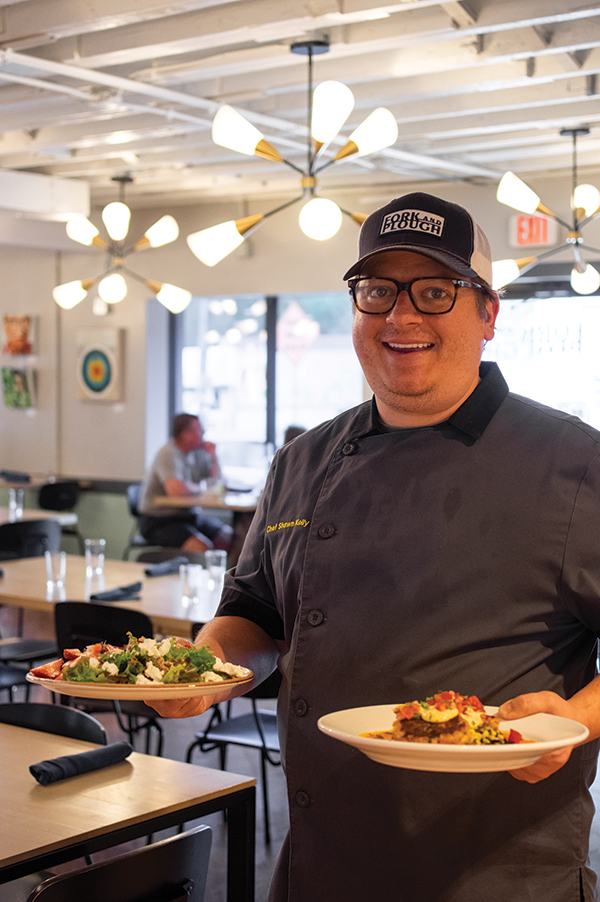
The cooking at Fork and Plough is grounded in childhood memories but also governed by what comes in the door. The menu changes every day.
“People in the neighborhood will show up with a bucket of pears that came off the tree in their back yard,” Kelly tells us. “Sometimes they just want to give them away, but I try to trade them something, barter with them, offering perhaps a cut of meat from our butcher case.”
The fig season in Upstate South Carolina was especially short in 2025, with extremely hot weather transitioning quickly into extremely wet weather. Figs weren’t around for long. But again, Fork and Plough neighbors stepped up.
“People brought me Ziploc® bags full of figs from their yards,” says Kelly. “One couple who dines here twice a week brought in five ice cream buckets full of figs for two weeks straight. A lady brought us 30 pounds every Saturday for four weeks.”
A menu that is changed daily provides Fork and Plough the flexibility to adapt to those kinds of surprises.
After graduating from the University of Akron, Kelly headed south for culinary school at Johnson & Wales in Charleston. He says it was “partially an excuse to move to the beach,” but he had always enjoyed working in kitchens, so the move had a dual purpose. He would go on to spend 14 years cooking in Charleston.
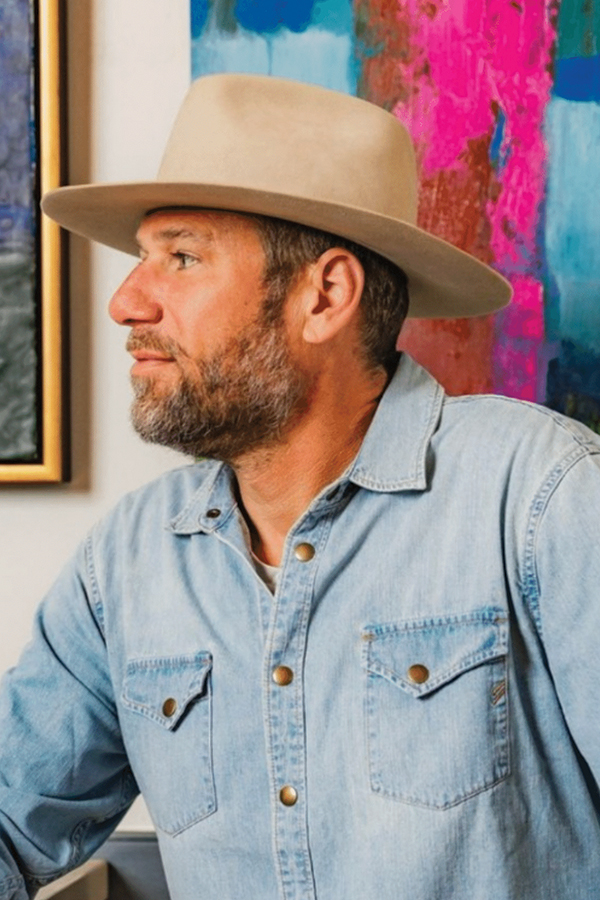
During his student days at Johnson & Wales, Kelly applied for restaurant jobs and quickly discovered that Charleston restaurants were inundated with culinary students seeking employment. He took a job as a dishwasher at Slightly North of Broad, a Lowcountry bistro overseen by Chef Frank Lee.
“I ended up working there for 10 years, the last six as sous chef,” Kelly recalls. “Frank Lee was a great mentor and teacher and the godfather of farm-to-table in Charleston.”
Kelly went on to become executive chef at High Cotton, a sister restaurant to Slightly North of Broad. His work weeks were typically 70 to 80 hours long. The restaurant has four dining rooms, and it wasn’t unusual for Kelly to be handling a 100-person wedding party in one room while serving a 400-person a la carte dinner in another. The kitchen staff alone consisted of 50 people.
After five years at High Cotton, Kelly was ready for yet another culinary challenge. At a Pastured Poultry Week event, he met Roddy Pick, an aptly named farmer from Easley, South Carolina. His work at Kingbird Pastures in Easley matched Kelly’s food philosophy perfectly. Pick raises 100 percent grass-fed, grass-finished beef and grows organic, in-season produce. In 2018, they became business partners and opened Fork and Plough, its name reflecting the professions of the owners — chef and farmer.
“At Slightly North of Broad and High Cotton, we would change the menu seasonally, but changing menus there was a process,” Kelly observes. “The menus had to be approved by about six people, and that might take 10 days. At Fork and Plough, we have the freedom and flexibility to purchase apples, tomatoes, green beans and okra at their peak and put them on the menu right then.”
With the Certified SC Grown designation, Fork and Plough centers its menus around in-season ingredients and products from South Carolina. Kelly and Pick source Charleston Gold Rice from Glenn Roberts’ Anson Mills and stone-ground grits from Adluh Milling Company, both in Columbia.
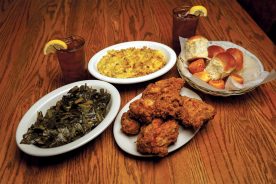
Kelly describes his wood-floored restaurant as casual — “a place where a 4-year-old would be comfortable eating chicken fingers and where, at the same time, diners can enjoy a prime strip steak or a beautiful grouper from the coast.”
And, Kelly adds, “Our honey producer is a block away.”
Fork and Plough
1629 East North Street
Greenville, South Carolina
864-609-4249
Fred and Jill Sauceman study and celebrate the foodways of Appalachia and the South from their home base in Johnson City, Tennessee.
The story above first appeared in our November / December 2025 issue.