Skip to content


Virginia’s Route 11 has been chipping away since 1992.
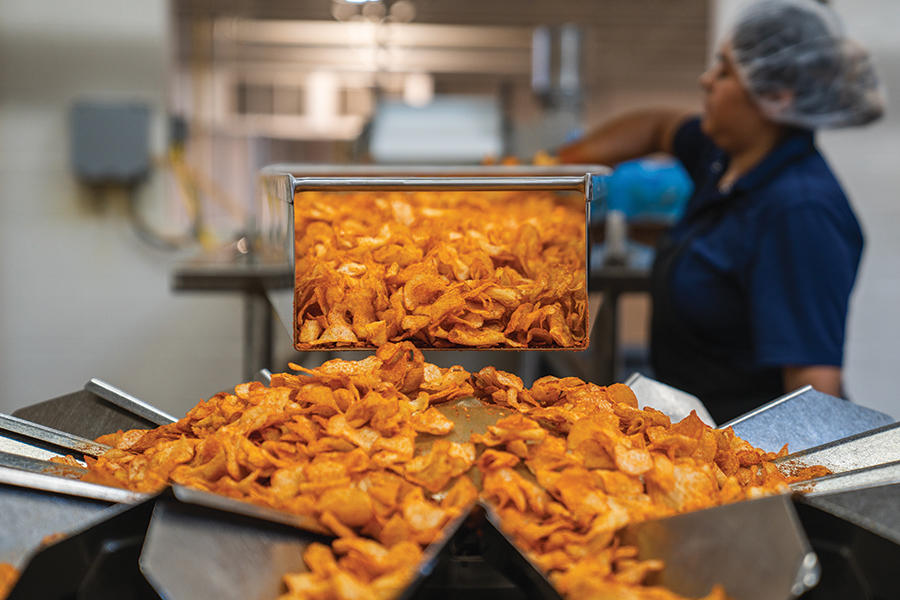
Photo Above Freshly hand-seasoned, still-warm chips distribute across a chip scale for weighing and bagging.
Photo Courtesy of Ryan Bonos.
It’s a steamy business. Sarah Cohen says the steamier the better. At Route 11 Potato Chips in Mount Jackson, Virginia, steam is a sign of success.

Walk into the building on a day when chips are being kettle-cooked, and sometimes you can barely see the employees for the steam.
In making potato chips, the objective is to cook as much water as possible out of the potatoes.
For a typical batch, 100 pounds of potatoes go in, and that amount yields 25 pounds of potato chips.
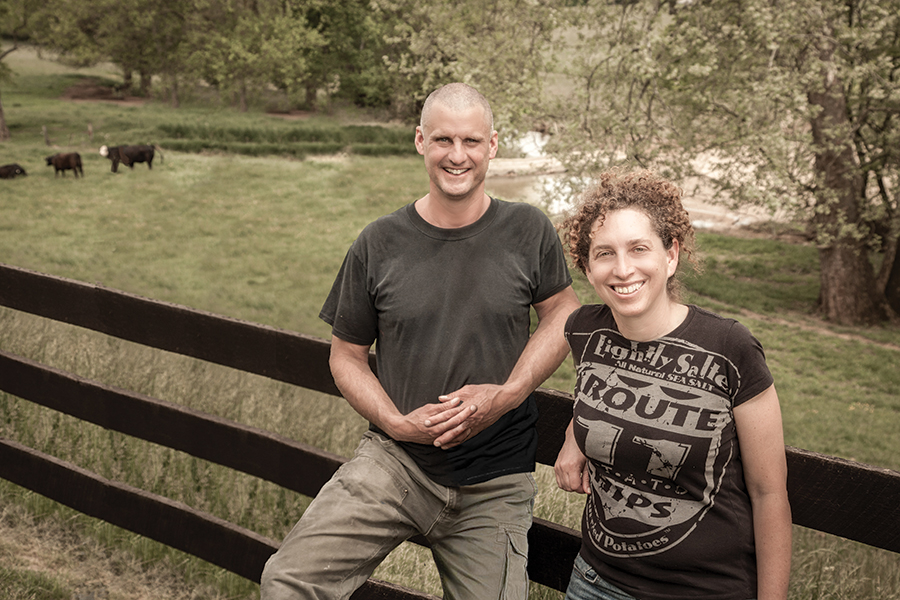
“The process is more complicated than it appears,” explains Cohen, president and founder of Route 11 Potato Chips. “We peel the potatoes and then slice them directly into hot sunflower oil. It takes eight minutes to cook a batch. We’re cooking 75 pounds of water out of every batch of chips. The more moisture we cook out, the crunchier the chip and the longer the shelf life.”
And don’t try this at home. The complex chip-making technology was designed and engineered by Cohen’s business partner, Mike Connelly. They describe the operation as “like a commercial kitchen on steroids.” Further, these are not grocery-store potatoes. They’re chipping potatoes grown specifically for Route 11. And they come from up and down the East Coast, depending on the growing season.
“We work our way up the East Coast,” Cohen says. “In April we start getting freshly dug potatoes from Florida. Then we head into North Carolina before stopping in Virginia to work with a local grower here who is in Dayton, Virginia. We work with him from August through September.”
From that grower alone, Route 11 purchases about one million pounds of local potatoes. Once those are finished, the company begins buying potatoes from growers in Pennsylvania and then New York.
The potato chip factory sits about a mile off U.S. 11. The drive to Route 11 Chips takes you to one of the only covered bridges in the state that still supports regular traffic, the Meems Bottom Bridge, built in 1892 over the North Fork of the Shenandoah River.
The public is welcome at Route 11 Potato Chips. Viewing windows allow customers to see almost every phase of production.
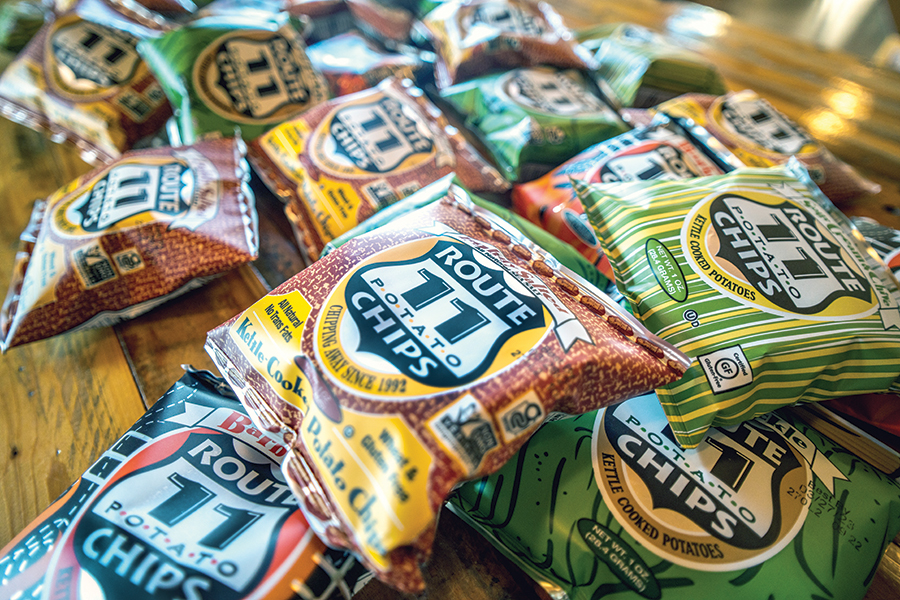
© Ryan Bonos
“And there is no charge,” Cohen adds. “We have daily specials in our retail factory store, and you can buy all the chips in the building, if you want. The only thing we require is that you try some samples, and the samples are free.”
Chips are cooked to order. Each day begins with a batch of lightly-salted chips, Route 11’s best-selling product. They’re seasoned with unrefined, mineral-laden sea salt from Utah.
“We like to give our snack food as many positive attributes as possible,” Cohen says.
© Ryan Bonos
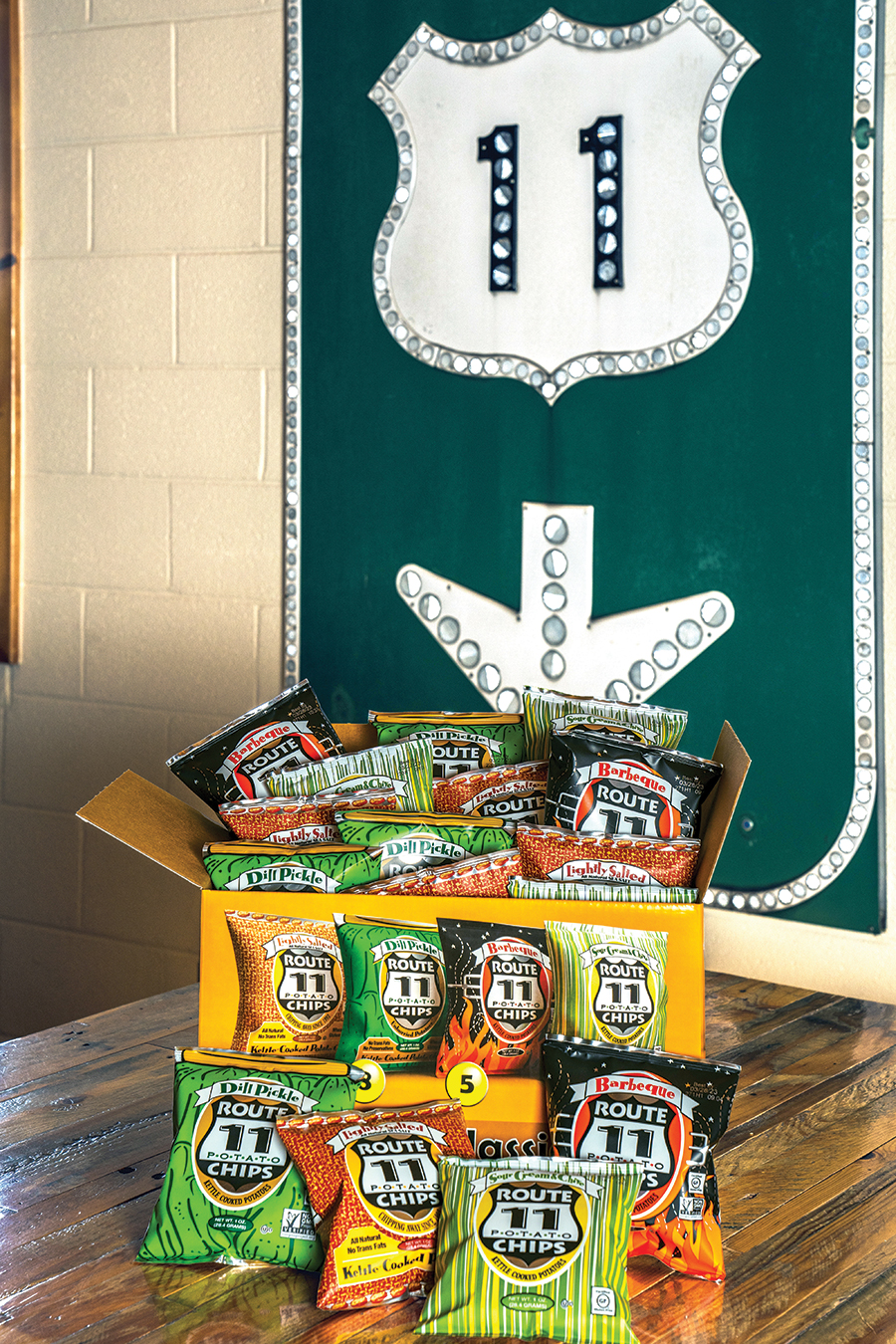
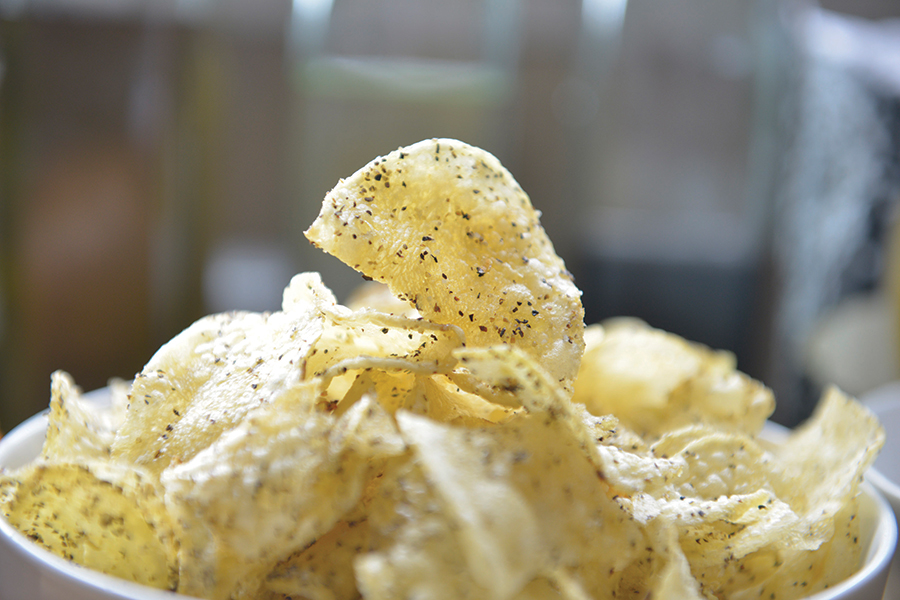
The product line includes what Cohen calls “core classics,” like barbecue chips, salt and vinegar, sour cream and chives and salt and pepper, Cohen’s current favorite.
Route 11 was the first company in the country to develop and sell a dill pickle-flavored chip. That flavor was introduced in 1995, three years after Route 11’s founding.
To flavor its Chesapeake crab chip, which the company has been making since the beginning, Route 11 uses seasoning from the J.O. Spice Company. It has been in existence in Baltimore since 1945, supplying seafood seasonings to crab houses.
The Route 11 product line also includes a habanero barbecue chip called Mama Zuma’s Revenge and a sweet potato chip made seasonally in October.
Another seasonal product is the Yukon Gold chip. Cohen points out that Yukons are not chipping potatoes.
“What we do that is different is we chip them right out of the ground, since their chemistry will change a couple of days after digging. If you chip them right after harvest, you get that buttery characteristic in the chips.”
Cohen attributes much of her success in the potato chip business to growing up in a food-focused family. Beginning at age 12, she worked in the family business, a hotel and restaurant run by her parents, Edward and Fritzi Cohen, in Washington, D.C. She aspired to be a filmmaker and even worked on a production about the history of the White House.
A garden in Virginia’s Shenandoah Valley, established by her father to supply vegetables for the family’s restaurant, eventually led Edward Cohen into the potato chip business, through an Amish factory in Pennsylvania. The Cohens sold chips door to door before answering an ad in The Washington Post in the 1980s announcing the availability of a potato chip factory in southern Maryland. The Cohens bought it, and not long after, they received a large order from the company Williams-Sonoma.
“They needed help, and this was my entry into the potato chip world,” Sarah Cohen tells us.
© Josh Cohen
She opened Route 11 32 years ago in an old feed store in Middletown, Virginia. Now Route 11, at its Mount Jackson location, employs 53 people and supplies niche markets, delicatessens and grocery stores.
Preparing for Route 11’s mail order season as the holidays approach, Sarah Cohen summarizes the primary reason for her company’s success: “People are very passionate about their potato chips.”
The full product line, some recipes using potato chips and the corporate jingle can be found at rt11.com.
Fred and Jill Sauceman study and celebrate the foodways of Appalachia and the South from their home base in Johnson City, Tennessee.
The story above first appeared in our November / December 2024 issue.