Grandfather Mountain to Host “Creatures of the Night and Bonfire Delight” October 6

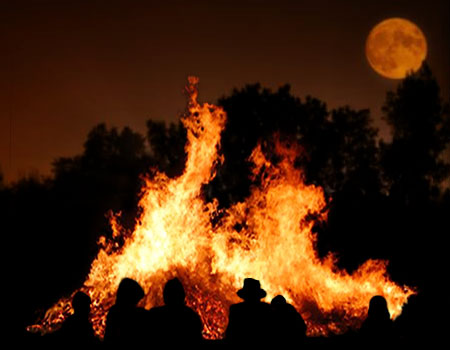
bonfire

Now this is an event to get you in the Fall AND Halloween spirit. This sounds like so much fun! Who else is ready for s’mores and hot apple cider by the bonfire underneath the stars?

“Grandfather Mountain offers an opportunity to experience the wonder of the mountain at nighttime this October. “Creatures of the Night and Bonfire Delight” is a special program on October 6 from 6:30 p.m. to 9:30 p.m. that allows participants to sign up for different tours, all of which explore a different aspect of the mountain after dark.

The different opportunities include: a history of the Mountain, a tour of the Woods Walk, a visit to the habitat bears in the dark, a nocturnal animal tour and a program to explore how we use our senses after dark.

Hot apple cider, hot chocolate, marshmallow roasting sticks and chairs will be provided. Guests should bring blankets, flashlights and s’mores ingredients to enjoy around the fire while spooky stories are told.

All proceeds from the “Creatures of the Night and Bonfire Delight” go toward renovations on Grandfather’s eagle habitat. These renovations include building a roof for the habitat that will play a vital role in sheltering any partially flighted eagles that the Mountain may house in the future.

To learn more about this project or to reserve one of the 45 spots for this event, contact the Habitat staff at 828-733-8715. Admission for “Creatures of the Night and Bonfire Delight” is $18 per adult and $12 for 8 to 12-year-olds. Participants must be eight years of age or older. Space is limited and reservations are required.

The Grandfather Mountain Stewardship Foundation is a not-for-profit corporation established to preserve Grandfather Mountain, operate the nature park sustainably in the public interest, provide an exceptional experience for guests, and inspire them to be good stewards of the earth’s resources. For more information, visit www.grandfather.com or call 800-468-7325.”

For the official release, please visit the Virtual Blue Ridge page.

Source: Virtual Blue Ridge
You Might Also Like:

White jelly snow fungus growing in the author’s Botetourt County, Virginia woodlot.

May’s Wild Edible: White Jelly Snow Fungus

“Pass the fungus,” is not common dinnertime conversation in the Blue Ridge Mountains region, but that’s because folks perhaps have not heard of the white jelly snow fungus.
Wild garlic growing in Fayette County, West Virginia.

April’s Wild Edible: Wild Garlic

Fayette County, West Virginia’s Mitchell Dech is one of my foraging mentors, and when he wants me to try an edible new to me … I’m ready to learn about it.
A May apple in bloom in Southwest Virginia.

March’s Wild Edible: May Apple

Sometime this month in the Blue Ridge Mountains, one of these highlands’ signature spring plants will ease from the soil … the May apple (Podophyllum peltatum).
e1b70596-05c8-11f1-92e0-1248ae80e59d-3-2026rueanemone--credit-Joe-Cook

March’s Mountain Wildflower: Rue Anemone

A member of the buttercup family and found in the open woodlands, rue anemone (Thalictrum thalictroides) has long, thin stems that tremble in the slightest of winds—prompting its other common name, windflower.
Pokeweed growing in Floyd County, Virginia.

January’s Wild Edible: Pokeweed

Pokeweed is one of the wild plants that is most associated with the Blue Ridge Region.
A purple-spored puffball growing in a field in Botetourt County, VA.

December’s Wild Edible: Purple-Spored Puffball

The purple-spored typically grows in this region’s fields, often appearing from October through December and into early January.
d289022c-696f-11f0-a179-1248ae80e59d-CGZ_0845-011

Ride the Rails, Explore Rockbridge County: Make a Weekend of the 611 in Goshen!

This fall, one of America’s most iconic steam locomotives is making tracks and memories.
The compound, lancelike leaflets of the bitternut are a good identifier.

November’s Wild Edible: Bitternut Hickory

Frankly, this native species to the Blue Ridge mountains comes by its name honestly.
Mullein growing in Ingram's backyard.

October’s Wild Edible: Mullein

Earlier, this year, a lone mullein plant appeared along the fence that encloses my garden, which made me curious about this plant.
An indigo milk cap growing in Botetourt County, Virginia.

September’s Wild Edible: Indigo Milk Caps

When young, indigo milk caps are one of the most stunningly beautiful mushrooms in the Blue Ridge Mountains.

CALENDAR OF EVENTS