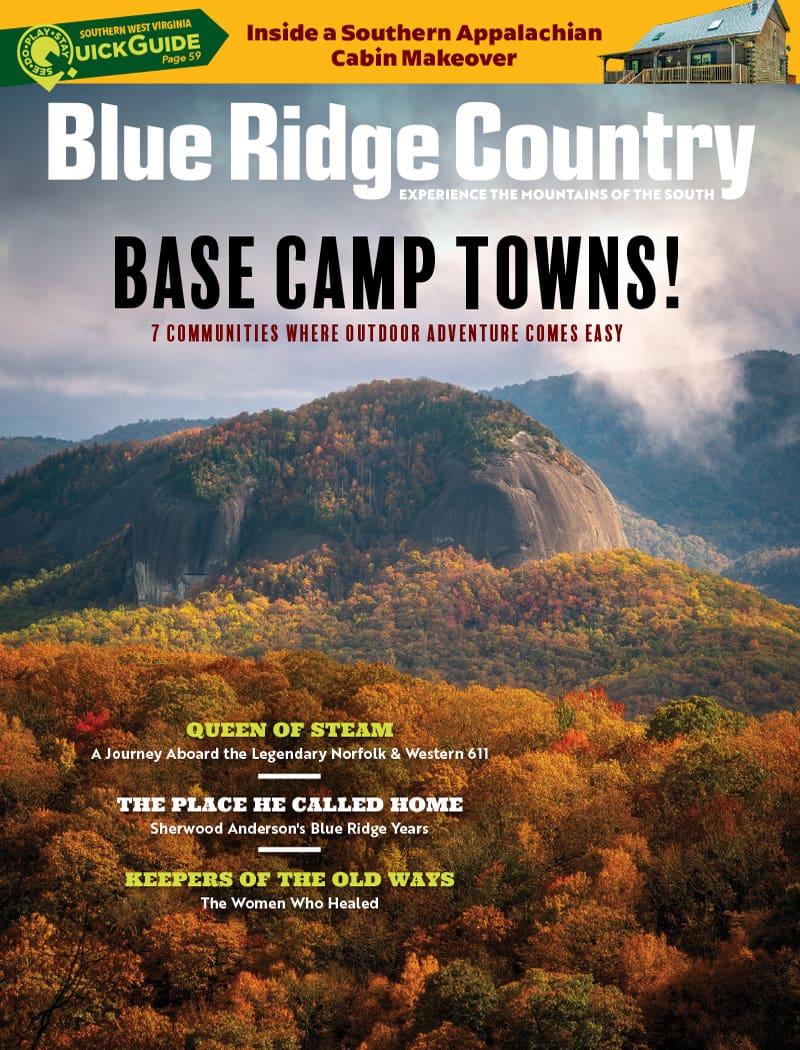
Blue Ridge Parkway Most Visited National Park

Devil's Courthouse on Blue Ridge Parkway

As locals, we’re always aware of how beautiful the Blue Ridge Parkway is and all the colors it has to offer in the fall. We love that others love the area as much as we do, so much that it makes the Blue Ridge Parkway the most visited national park in the country!

From Nooga.com:

The United States’ national parks are visited by millions of people annually. With 397 parks, each offering its own unique landscapes and attributes, it’s no wonder they are so popular in American culture. Yosemite, Yellowstone, Denali, the Grand Canyon and the Great Smoky Mountains are all household names.

But which park received the most visitors this past summer season, the most popular season for visits? You might be surprised.

The complete numbers for 2012 will obviously not be available until the year is over, so we’ve taken a look at the most popular season for visitors—the months of May, June, July and August. Below are the top areas visited in the summer season and how many visitors each area got in that time.

These numbers aren’t exact but are based on preliminary numbers. All numbers are as of Sept. 13.

1. Blue Ridge Parkway—6,765,007 

2. Golden Gate National Recreation Area—5,260,513

3. Great Smoky Mountains—4,407,208

4. George Washington Memorial Parkway—3,392,478

5. Gateway National Recreation Area—2,882,935

6. Lake Mead National Recreation Area—2,786,601

7. Lincoln Memorial—2,752,041

8. Cape Cod National Seashore—2,752,255

9. Yellowstone—2,608,697

10. Gulf Islands National Seashore—2,524,231

The Blue Ridge Parkway is a 469-mile stretch of road that routes through the Appalachian Mountains. There are scenic stops and some campsites along the way. Roaming is encouraged. Watch the video (to the left of this article) to find out more.

The most popular month to visit a national park in 2012 was July, with almost 41 million people getting outdoors and into a national park. July 2011 had just slightly more visitors, topping more than 41 million. In 2011 alone, nearly 279 million people came for a recreational visit to a national park, with almost 14 million staying overnight. The Southeast region had the most visitors (62 million), while the Alaska region received the least (almost 2 1/2 million).

You can download a full list of national park visitor numbers in Excel format here.

You Might Also Like:

e1b70596-05c8-11f1-92e0-1248ae80e59d-3-2026rueanemone--credit-Joe-Cook

March’s Mountain Wildflower: Rue Anemone

A member of the buttercup family and found in the open woodlands, rue anemone (Thalictrum thalictroides) has long, thin stems that tremble in the slightest of winds—prompting its other common name, windflower.
Pokeweed growing in Floyd County, Virginia.

January’s Wild Edible: Pokeweed

Pokeweed is one of the wild plants that is most associated with the Blue Ridge Region.
A purple-spored puffball growing in a field in Botetourt County, VA.

December’s Wild Edible: Purple-Spored Puffball

The purple-spored typically grows in this region’s fields, often appearing from October through December and into early January.
d289022c-696f-11f0-a179-1248ae80e59d-CGZ_0845-011

Ride the Rails, Explore Rockbridge County: Make a Weekend of the 611 in Goshen!

This fall, one of America’s most iconic steam locomotives is making tracks and memories.
The compound, lancelike leaflets of the bitternut are a good identifier.

November’s Wild Edible: Bitternut Hickory

Frankly, this native species to the Blue Ridge mountains comes by its name honestly.
Mullein growing in Ingram's backyard.

October’s Wild Edible: Mullein

Earlier, this year, a lone mullein plant appeared along the fence that encloses my garden, which made me curious about this plant.
An indigo milk cap growing in Botetourt County, Virginia.

September’s Wild Edible: Indigo Milk Caps

When young, indigo milk caps are one of the most stunningly beautiful mushrooms in the Blue Ridge Mountains.
ec3b964c-5201-11f0-968d-1248ae80e59d-9-2025spottedjewelweed--credit-Joe-Cook-and-Monica-Sheppard

September’s Mountain Wildflower: Spotted Jewelweed

Seek out spotted jewelweed growing beside a stream or along a moist area and you will have a good chance of getting to watch one or more ruby-throated hummingbirds flit from flower to flower.
A black staining polypore growing in Botetourt County, VA.

August’s Wild Edible: Black-Staining Polypore

The black-staining polypore is certainly one of the more fascinating wild edible mushrooms.
Northern Dewberry growing in Botetourt County, Virginia.

July’s Wild Edible: Northern Dewberry

For several reasons, the northern dewberry is often overlooked as a summer berry in the Blue Ridge.

CALENDAR OF EVENTS