Shortly after the Civil War, community cookbooks began to flourish in America, originally as a means to raise money for veterans and their families. In the decades following, civic clubs, churches, junior leagues and schools found collecting and publishing recipes not only a way to raise money, but also a means to tell their stories.
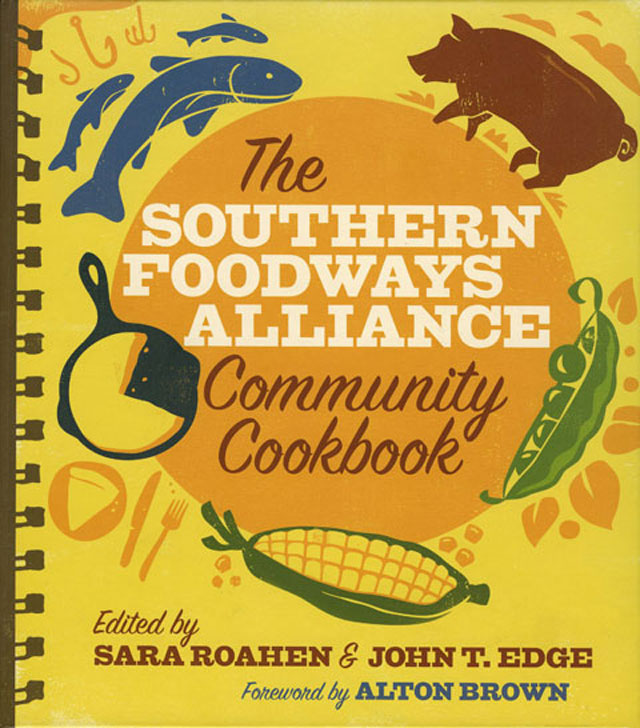
In tribute to that great American spiral-bound tradition comes “The Southern Foodways Alliance Community Cookbook,” published by the University of Georgia Press in partnership with the SFA, headquartered on the campus of the University of Mississippi. In existence now for over a decade, the SFA documents, studies and celebrates the diverse food cultures of the changing American South.

Kentucky’s Benedictine spread; cheese straws from Georgia; redeye gravy from Tennessee; spinach and rice casserole from a Greek-owned eatery in Bessemer, Alabama; fried dill pickles with comeback sauce from Mississippi; and dried apple stack cake from Virginia are offered up in the new SFA cookbook, along with stories about the people who have passed the recipes through the generations.
“I have no idea how the folks at the Southern Foodways Alliance pulled it off,” writes the Food Network’s Alton Brown in the book’s Foreword. “To come up with such culinary gold, they must have dug through countless shoe boxes, lock boxes, notebooks and kitchen drawers. They must have sifted through piles of scraps, napkins, store receipts and post cards.”
Like any good church circle cookbook, this one is the product of many hands. The SFA’s director, John T. Edge, edited it, along with Sara Roahen of New Orleans. Sheri Castle of Chapel Hill, N.C., tested every recipe. Chapter introductions and recipe headnotes were written by Timothy Davis of Nashville; April McGreger of Chapel Hill; Angie Mosier of Atlanta; and by me.
It is a book with an entire chapter devoted to the subject of gravy, “born of the marriage of fat and flour and liquid, of skillet stirring and innovation.”
Cheerwine Barbecue Sauce
Recognizing that most American soft drinks originated in the South, including Cheerwine – crafted in Salisbury, N.C., since 1917 – the editors included this recipe in the “Yardbird” chapter, courtesy Sara Gibbs of Taylorsville, Ky.:
1 tablespoon butter
1/2 teaspoon minced garlic
1 cup ketchup
1 cup Cheerwine (not diet)
3 tablespoons Worcestershire sauce
1/4 cup A-1 sauce
1/4 teaspoon ground cayenne pepper
1/2 teaspoon ground black pepper
1/2 teaspoon dry mustard
2 tablespoons distilled white vinegar
Melt the butter in a heavy 2-quart saucepan over medium heat. Add the garlic and cook, stirring, for 30 seconds. Whisk in the ketchup, Cheerwine, Worcestershire sauce, A-1 sauce, cayenne, pepper, mustard and vinegar. Bring the sauce to a boil; reduce the heat to medium-low and simmer until the sauce is slightly thickened, about 20 minutes. Cool to room temperature, cover, and refrigerate until chilled.
“The Southern Foodways Alliance Community Cookbook,” University of Georgia Press. ugapress.org, southernfood-ways.com.
296 pages. Hardcover, $24.95.