Retail, wholesale and dine-in: Bristol, Virginia’s Greene’s Seafood covers the waterfront, right here in the mountains.
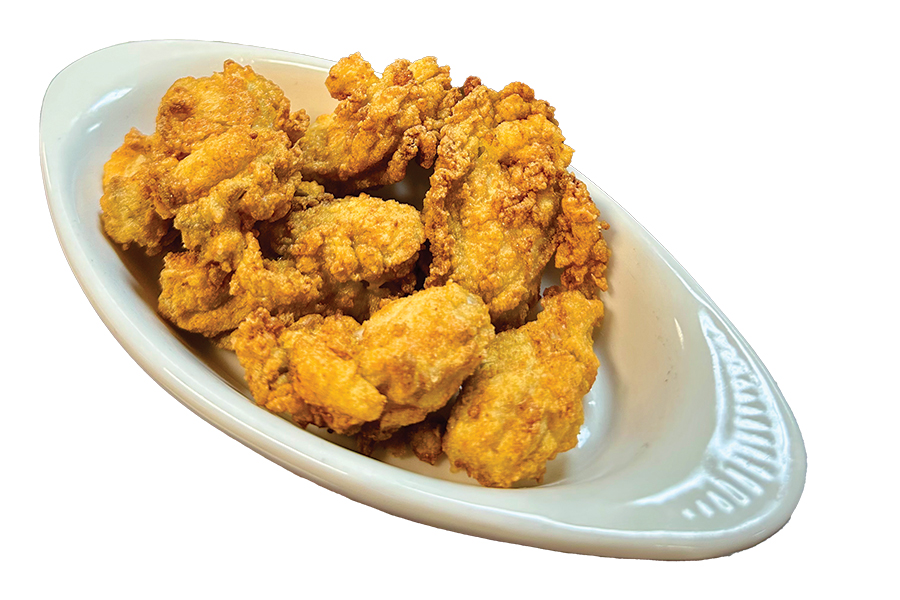
Photo Above: These oysters are a reminder of how Greene’s Seafood got started.
Photos Courtesy of Fred Sauceman
Wayne Greene’s last wish before his death in March of 2020 was that his restaurant continue on in the family.

Bristol, Virginia, had never been known as a seafood city. The Atlantic Ocean is about 400 miles away. But Wayne and Ann Greene made sure that when diners thought of Bristol, shrimp and oysters were right up there with soup beans and stick candy.
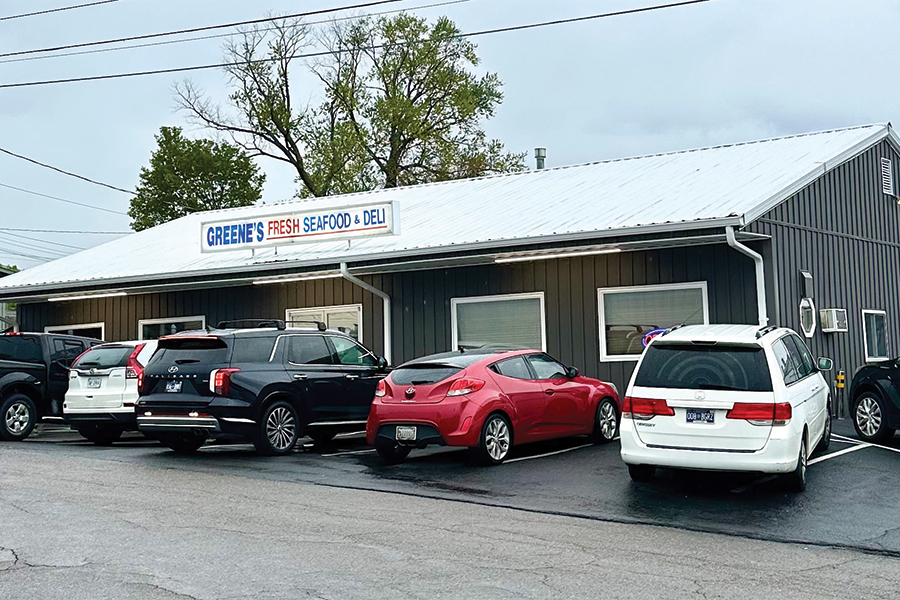
Wayne and Ann’s eldest son Marty and his wife Krista run Greene’s Seafood today, on the Virginia side of State Street, just west of downtown. In a modest building near the 19th Street intersection, the seafood selection rivals any seaside restaurant.
“Marty is doing a fantastic job,” says his mother Ann, now 81. “Wayne was old-school. He did everything on paper. Marty uses computers.”
But Marty and the staff still fry catfish just as Ann likes it. And the hushpuppies are still shaped into rings.
Ann remembers telling Wayne, when he first started talking about selling seafood, “That’s the craziest thing you’ve ever come up with.”
Wayne had a secure job, or so he first thought, driving a truck for Mason-Dixon in nearby Kingsport, Tennessee. But there were rumors that the company might close the facility.
Wayne’s supervisor at Mason-Dixon, the dock boss who doled out assignments for long-distance truck drivers, supplied him with six quarts of oysters, procured through a source in Richmond, Virginia, in 1978. They sold quickly. The next week, Wayne sold 12 quarts, out of the back end of his Datsun station wagon.
The speed of those initial sales caused Ann to think again about selling seafood in East Tennessee and Southwest Virginia. What initially seemed crazy began to look lucrative. Wayne would work graveyard shifts for Mason-Dixon so he could peddle seafood during the day. On his days off, he would drive to Richmond and buy more.
“We were peddlers,” Ann tells us. “Today you couldn’t do that.”
As sales grew, Wayne and Ann moved the fledgling business into their garage.
“Soon we added shrimp,” Ann recalls. “We were selling at courthouses, school board meetings, beauty shops. Eventually we bought a freezer truck to haul more products.”
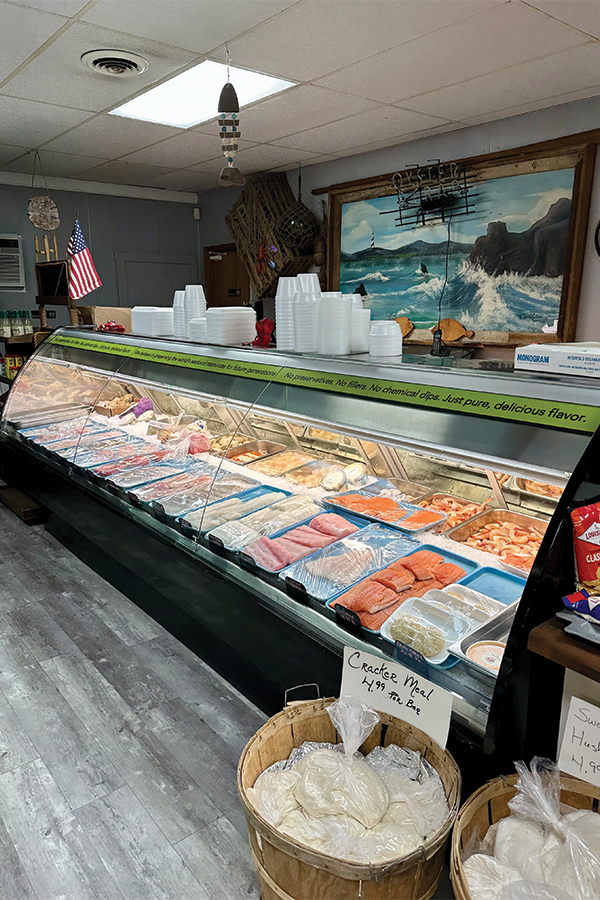
In 1980, they purchased the property where Greene’s Seafood is located today, just a few feet inside the Virginia line. The original building on that lot had no heat and no air-conditioning. Into that shell of a building, Wayne and Ann added a display case and began selling seafood to walk-in customers. They built a new store on that same property in 1985. Today, the seafood market at Greene’s brings customers from all over Southern Appalachia, in search of grouper, lobster, salmon, scallops, oysters, shrimp, and more.
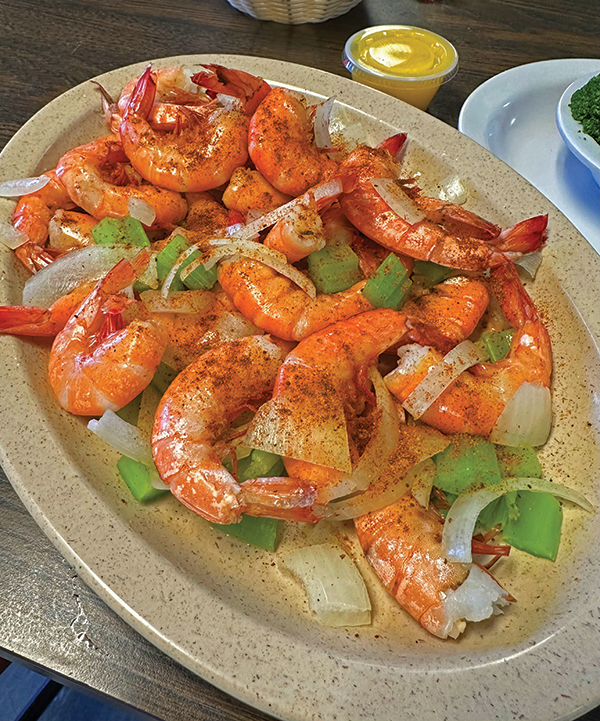
“We buy the best,” says market manager Jeff McNew, who has been with Greene’s since 1984. “Our shrimp come in fresh from the Gulf, off the shores of Texas and Louisiana, and we’re getting oysters from Maryland’s Chesapeake Bay.”
The display case, open six days a week, is in plain view for customers who come to Greene’s for a sit-down meal, available Tuesday through Friday from 11 a.m. to 8 p.m. Our neighbor, a Floridian, says the seafood at Greene’s is as fresh as it is at the beach.
Getting a seafood business up and going in Southwest Virginia involved risk and sacrifice.
“When you have four children you’re trying to feed, then you learn to do a lot of things,” says Ann.
In her case, one of those duties was cleaning fish. At first Greene’s sold them whole, but customers demanded filets.
“I had to learn how to cut the heads off and gut them. I would cover the heads when I did it,” Ann adds.
In addition to sit-down meals and retail seafood sales, Greene’s runs a wholesale operation, selling to country clubs and restaurants across the region.
Ann says the company, originally driven by her husband’s fear of possible unemployment, has grown beyond her expectations.
“I didn’t know what we were going to do if he lost his job at Mason-Dixon. But through the grace of God, we made it. We put our heart and soul into this business.”
As customers’ tastes have changed, steamed, broiled and blackened are common cooking methods now in the kitchen at Greene’s, but devotion to fried seafood is still strong in the region. That pleases Ann Greene, who notes that under the management of her son Marty, the popcorn shrimp are as crispy as ever.
The full Greene’s Seafood menu is available at greenesseafood.com.
Fred and Jill Sauceman study and celebrate the foodways of Appalachia and the South from their home base in Johnson City, Tennessee.
The story above first appeared in our July / August 2025 issue.