Skip to content

Around Christmas time, in days long past, the young women in Ada Hornsby Earnest’s home economics classes at East Tennessee State College used to receive a special gift.
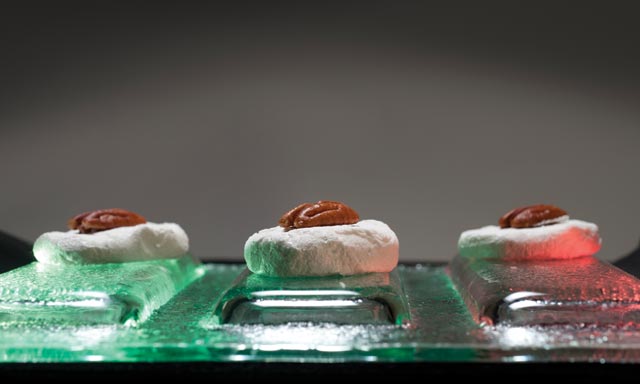
For the train trip back home, they packed away cartons of divinity candy, stirred and stiffly beaten by the hands of their teacher, who claimed her foamy formula “never failed.”

East Tennessee State University, my employer and alma mater, is celebrating its centennial this year. When it opened in 1911 as East Tennessee State Normal School, one of its original departments was called Domestic Science.
Ada Hornsby (later Earnest) enrolled as a student in that department during the school’s very first year, and she went on to spend 43 years on the campus, where she eventually came to serve as chair of what evolved to become the Department of Home Economics.
According to an early catalogue from the college, the required course in home economics was concerned with “the necessities of daily home life, the material and forces with which the housekeeper has to deal.”
For Mrs. Earnest, divinity candy was a way to add grandeur and elegance to those necessities, elevating the most accessible of ingredients – water, sugar, syrup, eggs, vanilla and nuts – to a confection worthy of its churchly name, and of being a going-away gift for students embarking on their holiday break before returning to the rigors of the kitchen and other aspects of that “daily home life” the course descriptions talked about.
Mrs. Earnest, who died in 1982 at age 96, used to recite “Prayer of a Homemaker” to each one of her home economics classes at East Tennessee State. The prayer speaks of the homemaker seeking sainthood not by quiet contemplation and study but through the dignity of work, of doing the humble tasks of “getting meals and washing up the plates.”
Folks around East Tennessee who have made Ada Earnest’s divinity recipe late in December without blemish, fault or imperfection for years say her prayer has been answered, many times over and to the delight of many.
Mrs. Earnest’s Never-Fail Divinity Candy
1⁄3 cup water
1 1⁄3 cups white sugar
1⁄3 cup white Karo syrup
1 egg white, stiffly beaten
1 teaspoon vanilla
½ cup chopped nuts, coconut or candied cherries. Mrs. Earnest used green and red cherries at Christmastime. When she used nuts, it was usually pecans or black walnuts.
Cook together the water, sugar and Karo syrup until it spins a thread. (Some old candy thermometers have a marking for “Thread,” at around 230 degrees. The “thread” is a very thin, wispy filament that appears when you dip a spoonful of the mixture out of the pan.) Pour half the syrup over the stiffly beaten egg white, beating all the time. Cook the remaining syrup to the “crack” stage (300 degrees) when tested in cold water. Continue beating the first mixture while pouring the rest of the syrup into it. When it begins to hold its shape, add vanilla and nuts, coconut or cherries. Continue beating until it holds its shape well. If it should not hold its shape as desired, add a tablespoon of sifted powdered sugar, or 2 tablespoons, if needed. Drop from a teaspoon onto waxed paper. Store in an airtight box when it cools.