Skip to content


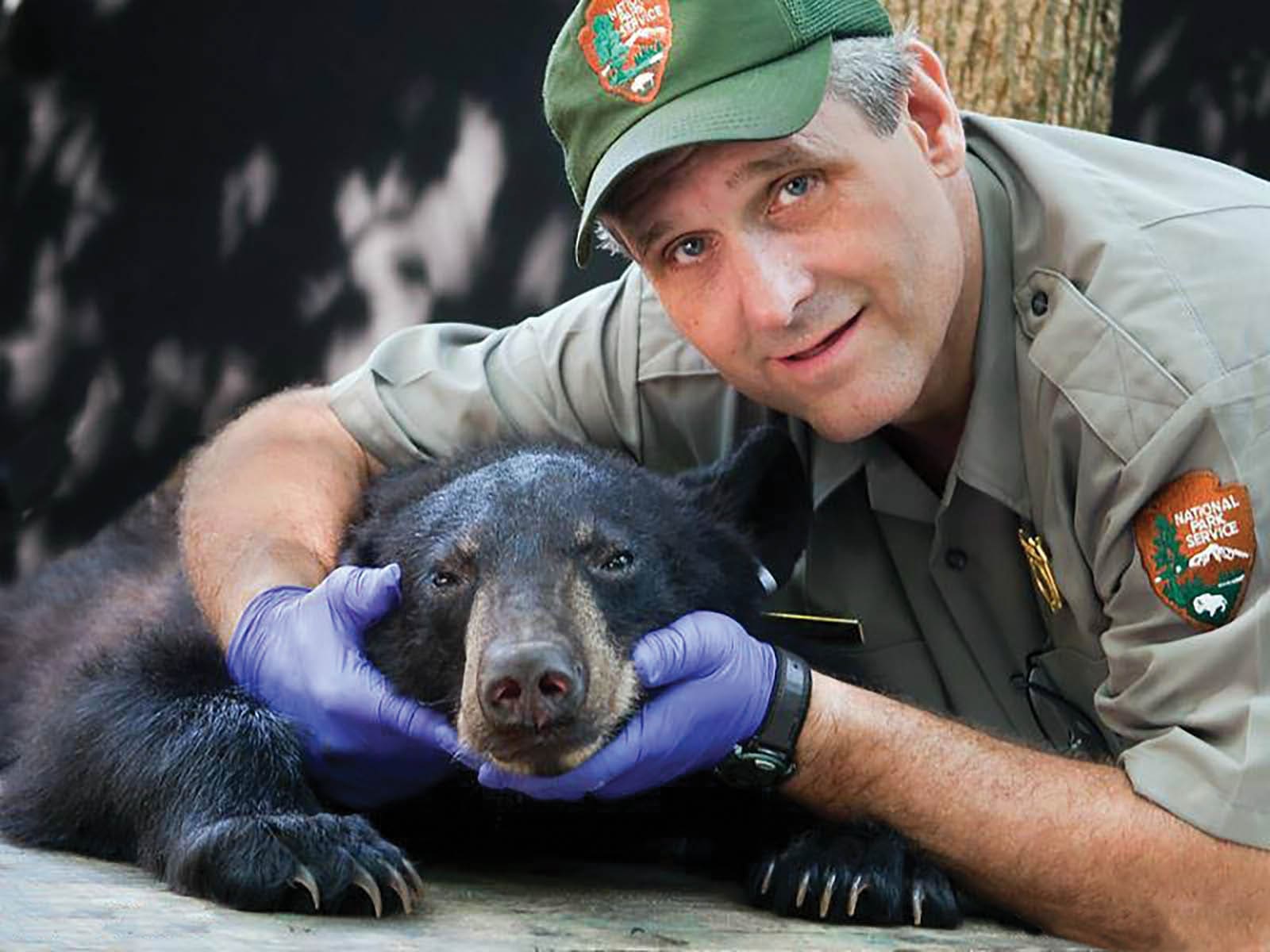
He’s cared for wild animals for nearly five decades, and his innovative work led to the highly successful reintroduction of elk into Great Smoky Mountains National Park. Today, more than 250 elk roam the nation’s most visited national park.
Text by Mary Leidig | Photo by Susie Neel
How did growing up on a farm in Seymour, Tennessee, lead to a science degree and the Great Smoky Mountains National Park—which you’ve described as your home away from home?
You might say early on I was just a farm boy with a southern accent who loved animals. Anything outdoors worked for me. We had cattle, hogs, tobacco, hay, and 13,000 chickens. Life on the farm was, most of the time, a great life for a kid. You learned things whether you wanted to or not.
After starting at the University of Tennessee, majoring in animal science, I planned to become a farm manager or veterinarian. One night Dad called me to help with a cow that was calving and in great distress. You could say it was not a pretty sight. This poor cow was lying in a cold, wet ditch. The training session was short and sweet. I recall looking up at the sky and thinking there must be an easier way to make a living. The next day I changed my major to wildlife and fisheries science. I say now, I owe my career as a wildlife biologist to the rear end of a cow. Many look at me a little funny.
Describe your work as a “fixer.”
A person raised on a farm knows very well the job of a fixer. When something breaks and you’re the only one around, you quickly learn what to do. When working with wild animals in the Smokies, there was no book or YouTube to tell you what to do. The old saying “experience is the best teacher” is very true. I know.
How did being a wildlife biologist and park ranger prepare you for a massive project to reintroduce elk into Great Smoky Mountains National Park in 2001? You call it a “people program” and a model for the Southeast.
Reintroducing elk to the Smokies was a big deal! We already had success with peregrine falcons and river otters. I quickly learned that bringing back elk was doable. However, the human element posed a significant challenge. Before releasing elk, my job was to educate all who were interested in what we were doing. That turned out to be many—everyone from the governor to a raccoon hunting club. When the dust finally settled, 52 elk were released. Seeing elk free-roaming back in the Smokies made it all worthwhile.
What do you and your family enjoy when you’re not working your 160-acre farm?
My wife and I have four grandsons who love family and life. They compete in golf, tennis, football, baseball, and wrestling, and love the beach, hunting, and fishing. It’s easy to fill your schedule. We have a special “Papa Day” when we eat breakfast, grab a dozen Krispy Kreme doughnuts (when the hot light is on), play some Hillbilly Golf, and on the way home stop for slushies during Sonic’s Happy Hour (a new one for me). We definitely make memories!
What is next?
After I retired from the park, I worked 12 years at Rocky Mountain Elk Foundation and Appalachian Bear Rescue, and wrote two books, Bear in the Back Seat (I and II). The first made The Wall Street Journal bestseller list. Both are short stories written in spoken dialect about my experiences with wild animals, some good and—well, you know—the others. Now, I’m back on the farm raising calves, cutting hay, and completing my “honey do” list. It’s a challenge!
I am extremely blessed with a good life. Faith and family are my priorities. If I had to do it over again, I would not change a thing, except maybe the cow story.
The story above first appeared in our May/June 2026 issue.