Skip to content



The 120-acre mountaintop property is the only high-elevation native plant garden in the eastern United States. It’s been called the largest, most diverse collection of native Southern Appalachian plants and their cultivars, and it’s protected by North American Land Trust.
How did the Southern Highlands Reserve begin, and how did your childhoods inspire you?
Years ago, Betty and I discovered Lake Toxaway, North Carolina, fell in love with the area and built a home there. Both of us grew up with a love of the outdoors and parents who were inveterate, dirt-under-the-fingernails gardeners. Betty spent her childhood gathering wildflowers in the countryside around Nashville, and I spent considerable time hiking the North Georgia and Western North Carolina mountains as a Boy Scout.

During years in Atlanta raising our children, we were determined to protect them from “nature deficit disorder” — a metaphor coined by Richard Louv describing the negative impacts on humans, particularly children, resulting from a lack of time spent in the natural world. Over the years, we had an opportunity to acquire adjacent property, which we ultimately placed under conservation easement to protect it from development. We established Southern Highlands Reserve as a non-profit native plant arboretum and research center in 2002.
What is the Red Spruce Project at the Reserve, and why is it so important?
The high-elevation spruce-fir forests of the Southern Appalachian Mountains are North America’s second most endangered ecosystem. About 12 years ago, our executive director, Kelly Holdbrooks, helped form an organization called the Southern Appalachian Spruce Restoration Initiative. This partnership includes our Southern Highlands Reserve, Nature Conservancy, U.S. Forest Service, U.S. Fish and Wildlife Service and North Carolina Wildlife Resources Commission to help restore this keystone species.
Today, the Southern Highlands Reserve has grown more than 8,000 mature, one-gallon red spruce trees and planted them on federal lands in North Carolina, Virginia and Tennessee. This unique ecosystem supports endangered species including Carolina northern flying squirrel, saw-whet owl and America’s smallest tarantula — the spruce-fir moss spider. We were recently approached by the U.S. Forest Service to grow 50,000 red spruce trees, so this summer we completed construction of a state-of-the-art greenhouse that will allow us to meet this goal!
How can the public enjoy the Reserve?
We’re open to the public by reservation from April through October. Guests can sign up for visitor days or private tours via southernhighlandsreserve.org. Folks can also follow us on Facebook and Instagram.
From the start, Betty has been “editor” of the gardens. What does this mean?
One of the wonderful things about gardening is we’re able to create an emotional response to landscapes through thoughtful design using plant material with textures and colors that evolve over time. As chairman of The Garden Conservancy, I’m privileged to have broad exposure to how gardens are best preserved. As gardens mature, “editing” is critical, whether pruning, weeding or removing decay. This is Betty’s forte! I think of gardening as the slowest of the performing arts.
What is the Reserve’s purpose today, and what’s next?
First, our goal is to show how each of us can play a part in conserving our natural world by demonstrating the use of native plants in a landscape setting to improve ecological diversity and deal with stormwater mitigation in an era of climate change. Second, through our research we’ve created a living laboratory through our plant records, phenology and the partnerships we’ve developed with universities and botanical institutions.
Finally, I hope visitors come away with a sense of “genius loci” — the spirit of the place — and experience a deep, spiritual connection to the land through the paths and garden rooms we’ve created. The site, at an elevation of 4,500 feet along the Eastern Continental Divide, was beautiful to begin with. Our goal has been simply to polish this gem and perhaps one day showcase all the plants that grow in the Great Smoky Mountains National Park. That’ll keep us busy for a while!
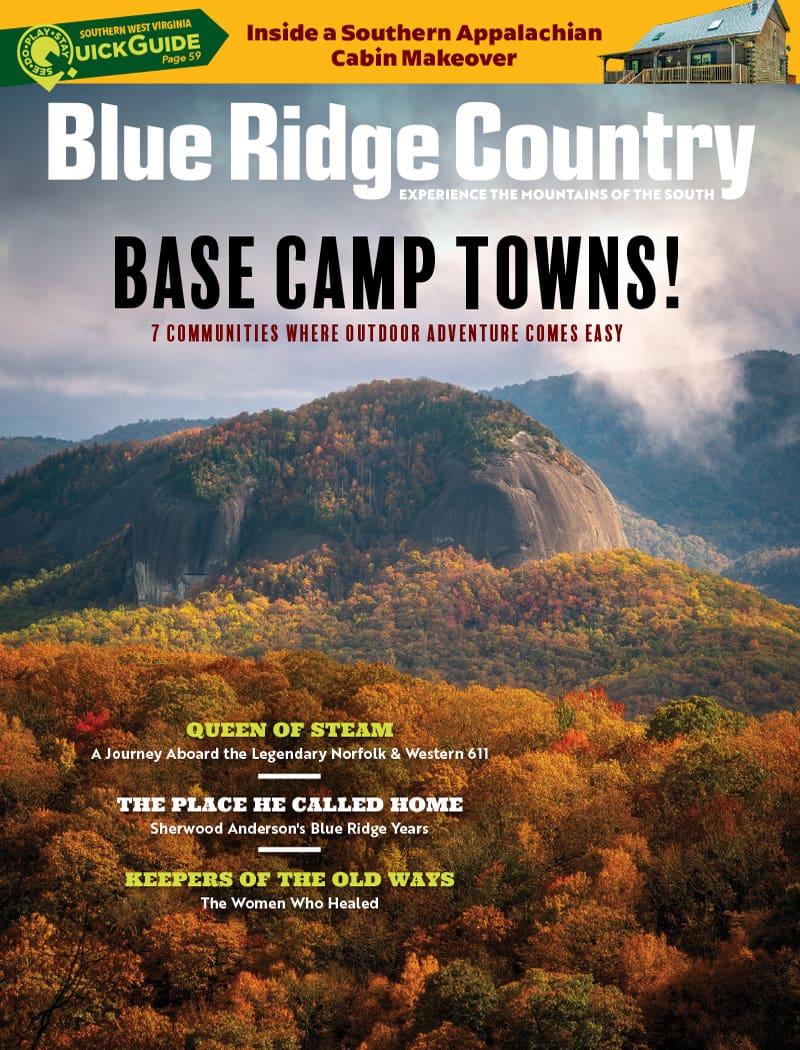
The story above first appeared in our November / December 2025 issue.