Skip to content



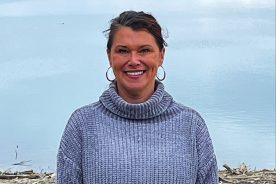
She returned to her native North Carolina after a career in Tampa Bay, Bermuda, and the nation’s capital. Since December 2021, she has been leading tourism in Asheville as the region continues to recover from Hurricane Helene—the deadliest hurricane in the mainland U.S. since Katrina in 2005. “At my core, I’m a proud Carolina girl, foodie, travel and music lover, and farmer’s daughter.”
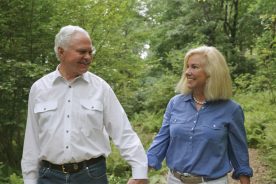
By Mary Leidig | Photo courtesy of Vic Isley
What was it like growing up on a farm in rural North Carolina, and how do you and your family enjoy the Asheville region today?
The Isleys have been tobacco farmers in Rockingham County for at least seven generations. Growing up in that environment teaches you the value of hard, long work, and you grow up wiser. That foundation carried me through the University of North Carolina at Chapel Hill, jobs, scholarships, and student loans.
We love that the Asheville area is among the most biodiverse places in the world, with some of the world’s most ancient mountains and one of its oldest rivers! This community constantly punches above its weight in food culture and live music, which we regularly enjoy.
How did your career take you full circle to Washington, D.C., then back to North Carolina?
When I was in business school, I never knew my career existed. There was one paragraph about place marketing in the textbook Principles of Marketing. My first flight was my sophomore year, and travel has opened my eyes and heart to different places, people, and cultures. I’ve been blessed to start in Durham, then Tampa Bay, D.C., and Bermuda before moving to Asheville.
What is Explore Asheville?
We are the official destination marketing and management organization for Asheville and Buncombe County, powered by a public authority investing in this community since 1983. We tell the Asheville area’s story to the world. Our work is also about balancing the needs of visitors with the quality of life for our residents. Asheville is one of the most deeply rooted and ever-evolving destinations in the country, and it is our responsibility to support its economic and creative vitality.
Hurricane Helene hit the region in September 2024. What is still in recovery, and what is new?
Downtown Asheville is beautiful, the River Arts District is thriving with artists in their galleries and new businesses joining the neighborhood, and Black Mountain is a quaint town ripe for exploring. The Asheville Regional Airport opened a new concourse and seven gates as part of a $420 million expansion project set for completion in 2027. Fifteen Asheville restaurants were recognized in the first MICHELIN Guide – American South.
There is still work ahead. Lodging numbers are climbing back, and we’ve committed $12.4 million to eight community capital projects. We rebounded in 2025. In 2026, we are propelling forward. The Appalachian spirit that carried us through has not wavered.
What is resilient tourism, and what does it mean for the Asheville region?
Resilient tourism is the idea that a community’s travel and hospitality economy isn’t just rebuilt after a crisis, it’s the frontline for the rebound. Visitors contribute nearly $3 billion to our local economy. Explore Asheville created an emergency grant fund for independent, visitor-facing businesses and invested over $10 million in marketing the area. Visitors returned focused on supporting this community. Asheville has become a case study for destinations worldwide in how tourism can anchor a community’s recovery.
You call Asheville a “city on the rise.” What do North America’s largest pump track and the PGA Tour mean to the region?
Beacon Bike Park is being built on the former site of the Beacon Blanket Mill in Swannanoa, once the community’s manufacturing heartbeat. The park includes one of the largest all-wheel bike facilities of its kind in North and South America, alongside green space, walking loops, and communal space. Beacon demonstrates that parks and green spaces are essential for rebounding and propelling this community forward.
The PGA TOUR’s Biltmore Championship Asheville is part of the same trajectory, bringing TOUR professional golf back to the region for the first time in over 80 years and positioning the area on a national stage. Together, they show that the Asheville area is investing in experiences rooted in community, built with intention, shaped by resilience, and shared in a way that brings people together.
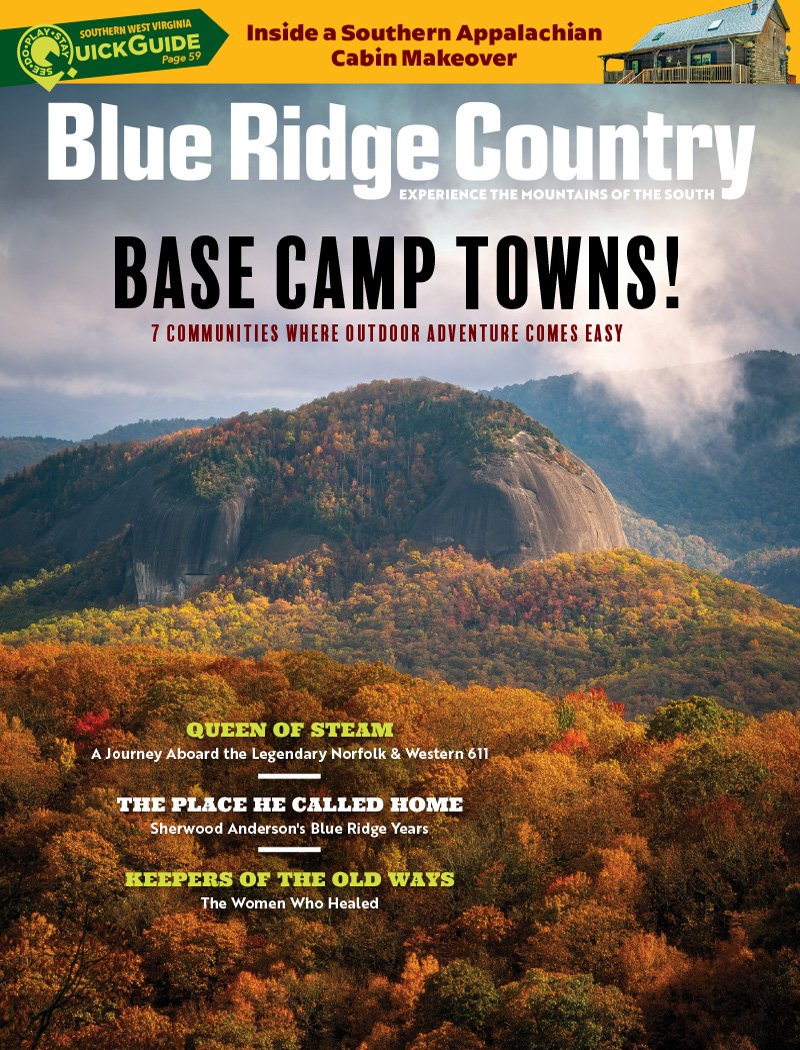
The story above first appeared in our September/October 2026 issue.