Skip to content


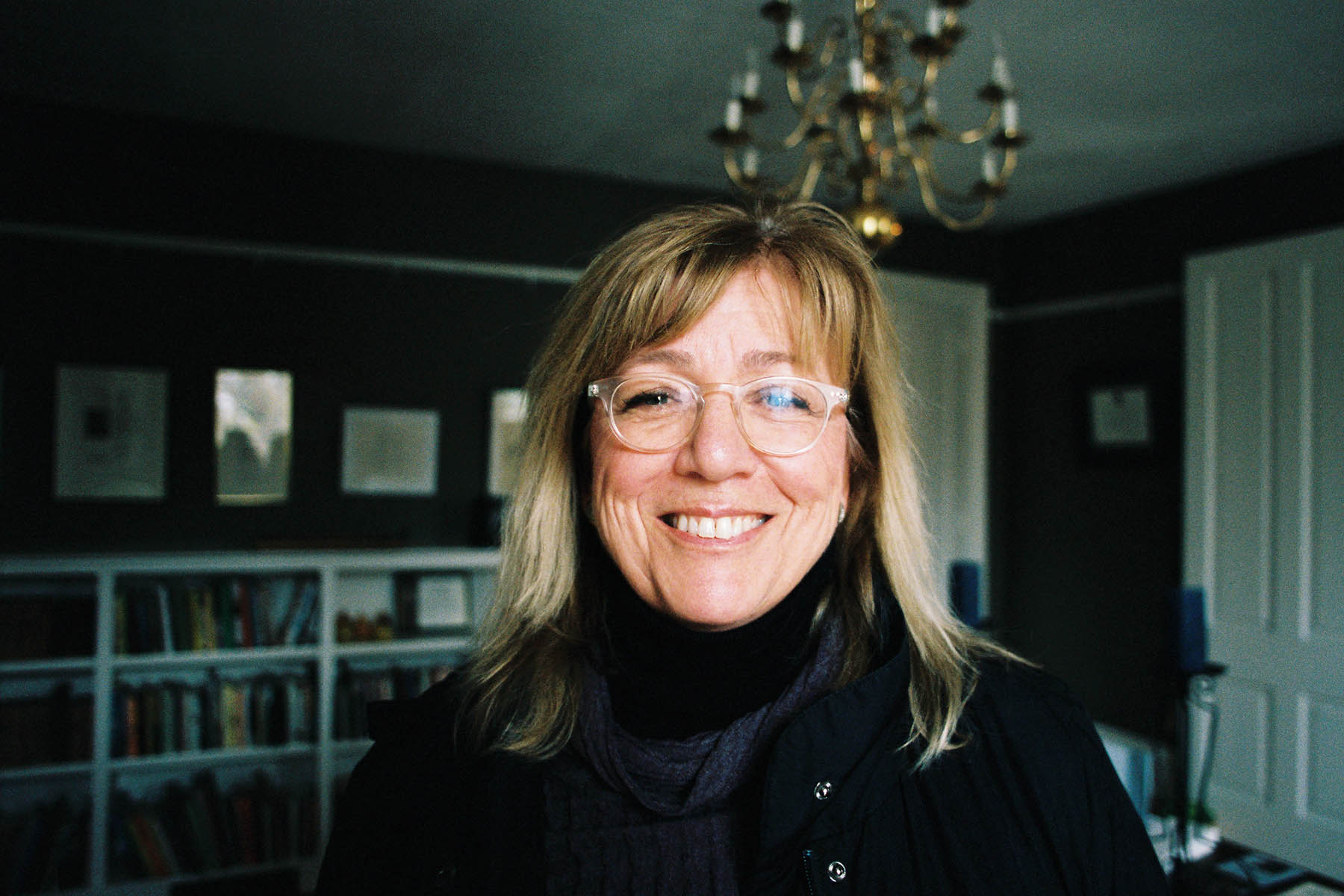
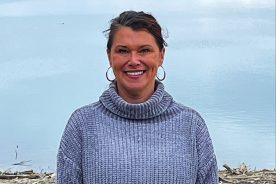
Mary Berry is the daughter of Wendell Berry—poet, conservationist, author of more than 50 books, and recipient of the 2010 National Humanities Medal.
She speaks across the nation in support of the center, putting her father’s writing to work, restoring a culture that supports good farming, and exploring relationships with the land and the community.
By Mary Leidig | Photo by Ethan Payne
As the daughter of world-renowned author and conservationist Wendell Berry, tell us about growing up at your father’s ancestral home on Lanes Landing Farm in Port Royal, Kentucky. What do you enjoy there today?
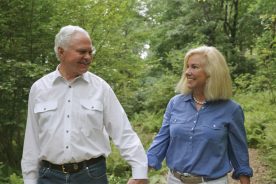
It is impossible for me to think of my childhood on Lanes Landing Farm and not include the farming community of friends and family that were a part of our daily life. I grew up around many of the same people that my father calls his most important teachers. They were mine, too. My mother was not raised on a farm, and she says that the farm women around us taught her what she needed to know to be at home in Henry County, Kentucky. It is important to note that my father came home to Lanes Landing. My mother made a home for herself and for her family. This is important to share when so many people feel disconnected from the land and from each other. As she says, “You can make a home, just stop somewhere.”
You farmed for a living in Henry County, Kentucky, for 30 years before you founded The Berry Center in 2011. Why did you start The Berry Center, and what is the importance of Wendell Berry in the world today?
I came home to live and farm in 1980. My husband and I bought a farm and started a dairy, raised tobacco, our children, gardens, and joined a fairly cohesive farm culture and community.
We soon joined efforts to get local food into surrounding cities, taking vegetables, pastured poultry, and beef to farmers markets in Louisville. My husband, Steve Smith, started the first Community Supported Agriculture farm in Kentucky while waiting to join this local food system that people were talking about. It was the realization a couple of decades later that we were no closer to a local food system that got me going. The Burley Tobacco Program supported the agrarian culture that I came home to. My grandfather, John Berry Sr., wrote the federal legislation that protected small farmers for 60 years. So, I started the center to hold on to these remnants of good farming we have left and to work for a culture and an economy that will support good farming. My father has attempted to figure out what has happened to places like Henry County, Kentucky, and why it matters to all of us.
How has your work as executive director of The Berry Center evolved?
We don’t have just an agricultural problem in America—we have a cultural problem. I started with an inventory of what we still had left of the agrarian culture I grew up in and started there. With the help of an excellent staff, we now have four programs at the center: The Farm and Forest Institute, Our Home Place Meat, The Agrarian Culture Center and Bookstore, and the Archive at The Berry Center. All this means that the short answer is: life and work are busy.
Is there an overarching theme in your work, and what does it mean for visitors?
We are delighted to have visitors. People come from all over the country and the world to learn about the work of my father, and in so doing they learn the value of good land use and what it takes to have it. And they learn that the work is fun, hopeful, and anyone can take part.
What is next for you, your father, and for The Berry Center?
My father will be 92 in August and as I sit here, he is sitting in the place he has written about for six decades. He and my mother are living in their house by the Kentucky River, enjoying their children, grandchildren, and great grandchildren. At The Berry Center, we continue the work that, as he says, “must be done,” and it is with much gratitude that we do it.
A note from the writer: When I was a freshman in college, Wendell Berry came to campus for a special author event. He signed A Part, one of his books of poetry, for me. I cherish it.
The story above first appeared in our July/August 2026 issue.