Curios: The Bridge the Soviets Nearly Built On the West Virginia-Kentucky Border

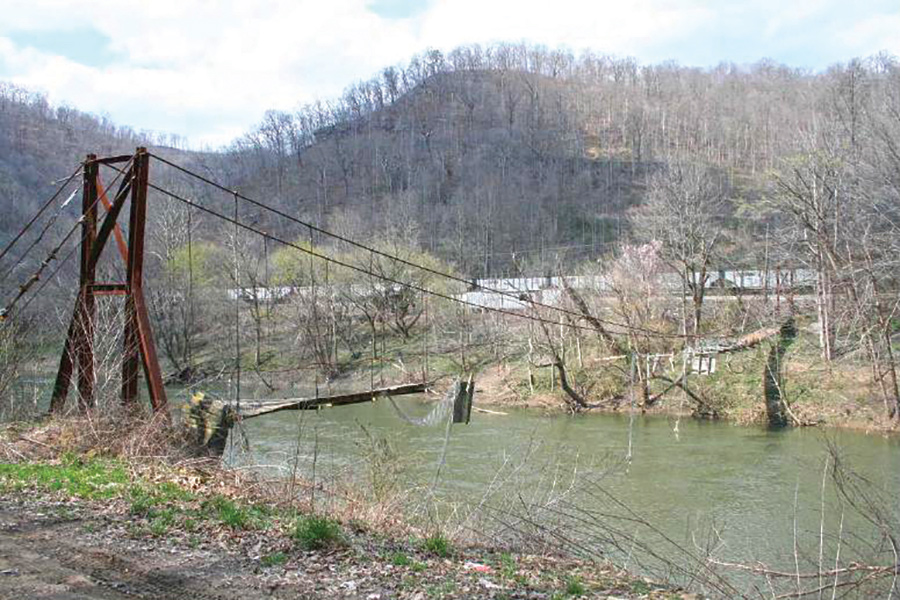
Undated photo shows the remains of the original swinging bridge from Vulcan, West Virginia, across the Tug River to Kentucky.

In the 1970s, the tiny West Virginia community of Vulcan became so desperate for a crossing into Kentucky that they reached out to Russia.

Photo Above: Undated photo shows the remains of the original swinging bridge from Vulcan, West Virginia, across the Tug River to Kentucky.

The tiny West Virginia community of Vulcan sits on Mingo County’s border with Kentucky, surrounded by mountains on three sides and the Tug River on the other. Once Vulcan was a booming coal town, but its real claim to fame is the bridge linking it to the outside world, a bridge that was almost built by the Russians to insult the U.S. some 40 years ago.

The 50 or so families of Vulcan went for nearly six years without a passable bridge—or a legal road. They had no safe way to drive out of town after the bridge that had been built by the coal company collapsed in 1974. The only way people could get in and out was to drive up the Kentucky side of the Tug and walk across a narrow swinging bridge. For years, John Robinette, Vulcan’s self-appointed mayor, pleaded with coal companies and legislators at all levels for a rebuild. They all said there was no money.

The situation was dire. Children had to crawl under parked railroad cars at the railroad’s bridge to get to school. A kid lost a leg doing that. A few motorists tried to take the railroad right of way over the river to the roads in Kentucky, but there wasn’t much room next to the live tracks. Twice, elderly couples flinched, jerked their trucks, and ended up in the river. The railroad began prosecuting anyone caught on their property.  
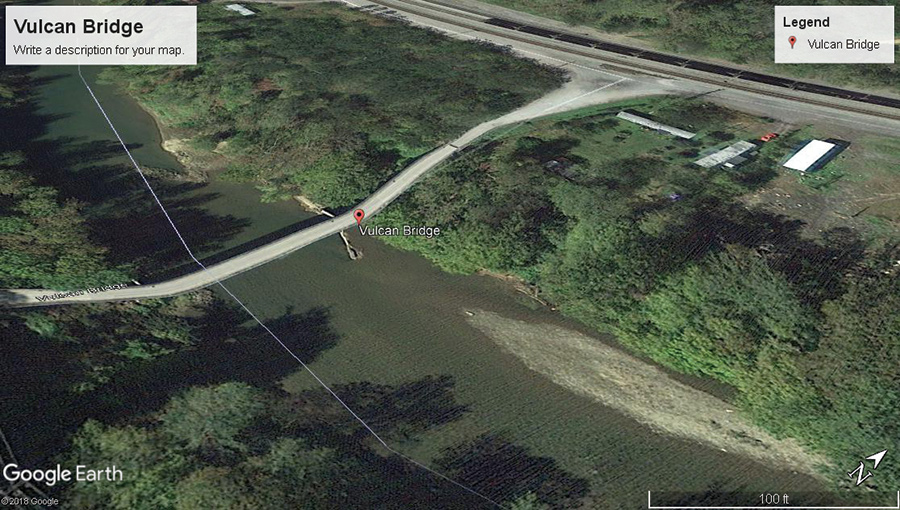
Google Earth photo showing the 1980 bridge.

Robinette and the town were losing patience with their government. A bartender and carnival worker who flew Old Glory over his trailer, Robinette was ready for a drastic move. In 1977, he wrote the Soviet embassy in Washington, DC, as well as officials in Communist East Germany, describing Vulcan’s plight and requesting foreign aid for a bridge. The Soviets savored the opportunity to embarrass the U.S. and dispatched a journalist, Iona Andronov, to Vulcan. Andronov said the Soviets would fund the bridge if the American government did not.

By witnessing and broadcasting the locals’ woes, the Soviet journalist finally brought attention to the ignored community. Within hours of Andronov’s visit on Dec. 16, 1977, word came down from Gov. Jay Rockefeller that West Virginia was working with Kentucky to build a new bridge.

Newspapers across the nation were talking about Vulcan’s appeal to the Kremlin. Some fervent anti-communists were not amused. Local newspapers and radio stations in West Virginia received threats that any bridge built with Red aid would be blown up. 

But Rockefeller kept his promise. Two years later, on July 4, 1980, the 300-ft bridge was dedicated. It had cost over $1 million, the costs split between Kentucky and West Virginia. According to news reports, Vulcan residents celebrated with illegally imported Russian vodka and the American flag hung high.


The story above first appeared in our January / February 2023 issue.
You Might Also Like:

Built in Roanoke, Virginia, in the 1950s, the “Queen of Steam” remains one of the nation’s most celebrated steam locomotives.

The Queen Still Reigns

More than 70 years after she first took to the rails, the legendary Norfolk & Western Class J No. 611 continues to inspire both passengers and the volunteers who keep her running.
In West Virginia, the rugged trails of Dolly Sods Wilderness lead to sweeping overlooks and untamed mountain scenery.

Blue Ridge Base Camp Towns

More than outposts for gearing up, these seven mountain communities are destinations in their own right, pairing easy access to some of the region’s best outdoor adventures with walkable downtowns, local flavor, and much more.
Interior designer Maisie Leach and her pup Stella Bea traded Roanoke’s bustling Grandin Village for a slower pace of life in Eagle Rock

Refuge in the Woods

A log cabin in Eagle Rock, Virginia, is the latest project for Maisie Leach of Hermione Interiors—and her most personal.
Author Tim Carmichael’s grandmother, Granny Woman Stella Gosnell Norton, served her Madison County, North Carolina, community as a trusted healer and caregiver.

The Heart of the Hills

Long before modern healthcare reached many Appalachian communities, Granny Women became trusted healers and caregivers, delivering babies, treating illness and injury, and preserving generations of healing knowledge.
Sherwood Anderson and printer Howard White outside the Marion news office, in one of the last photos taken of Anderson.

Finding Home in the Mountains

In 1926, renowned writer Sherwood Anderson moved from center stage in Chicago to the mountains of far Southwest Virginia. Why?
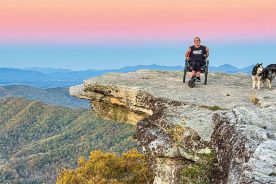
Carly Pearson smiles at the summit of McAfee Knob in Virginia

Trailblazer

Former wildland firefighter Carly Pearson became an accidental advocate for people with disabilities.
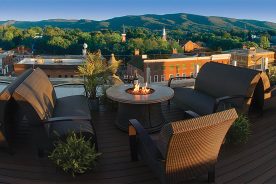
The hotel’s rooftop terrace, affectionately known as The Perch, offers exceptional mountain views.

Walking in the Footsteps of an American First Lady

The owners of Wytheville’s Bolling Wilson Hotel and Graze on Main make sure the town never forgets her legacy.
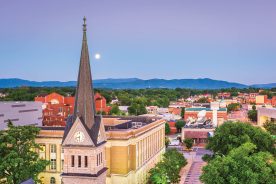
Roanoke, Virginia, USA downtown skyline at dawn

2026 Happiest Mountain Towns

Ten years after this poll’s inaugural launch, we once again turned to our knowledgeable readers for their picks. The results? A brand-new collection of 71 exceptional Blue Ridge communities that excel at bringing big smiles to the faces of both residents and visitors.
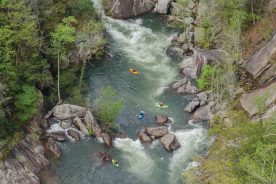
Kayaks on Toccoa River Below the Falls

7 Fabulous Float-to-Stays

Paddling trips on scenic rivers to great mountain towns make for perfect summer getaways.
Blooming rosebay rhododendrons frame a lovely, fast-moving cascade along the Oconaluftee River in Great Smoky Mountains National Park near Cherokee, North Carolina. Photo by Robert Stephens

Currents & Cascades: A Photo Essay

Our contributing photographers followed the flow of summer.