Skip to content


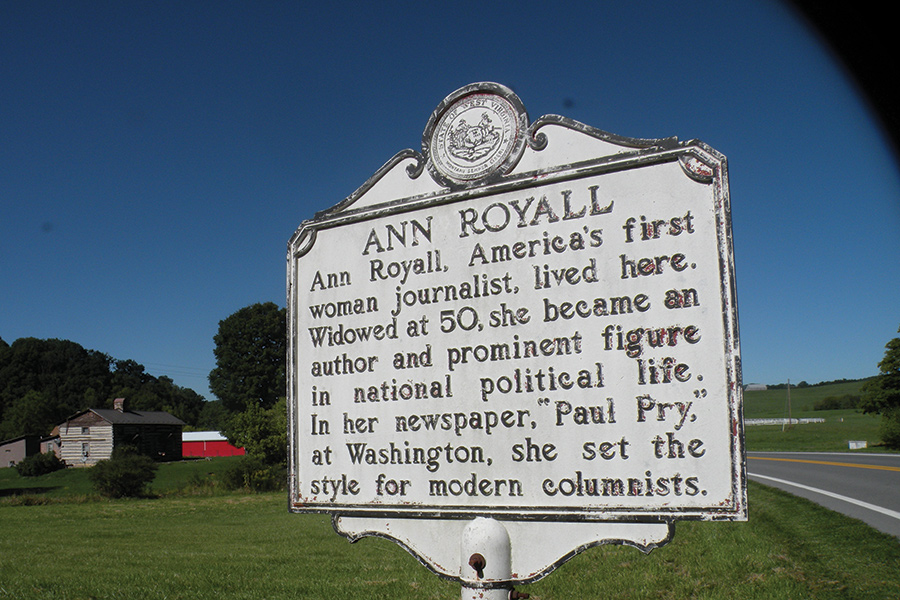
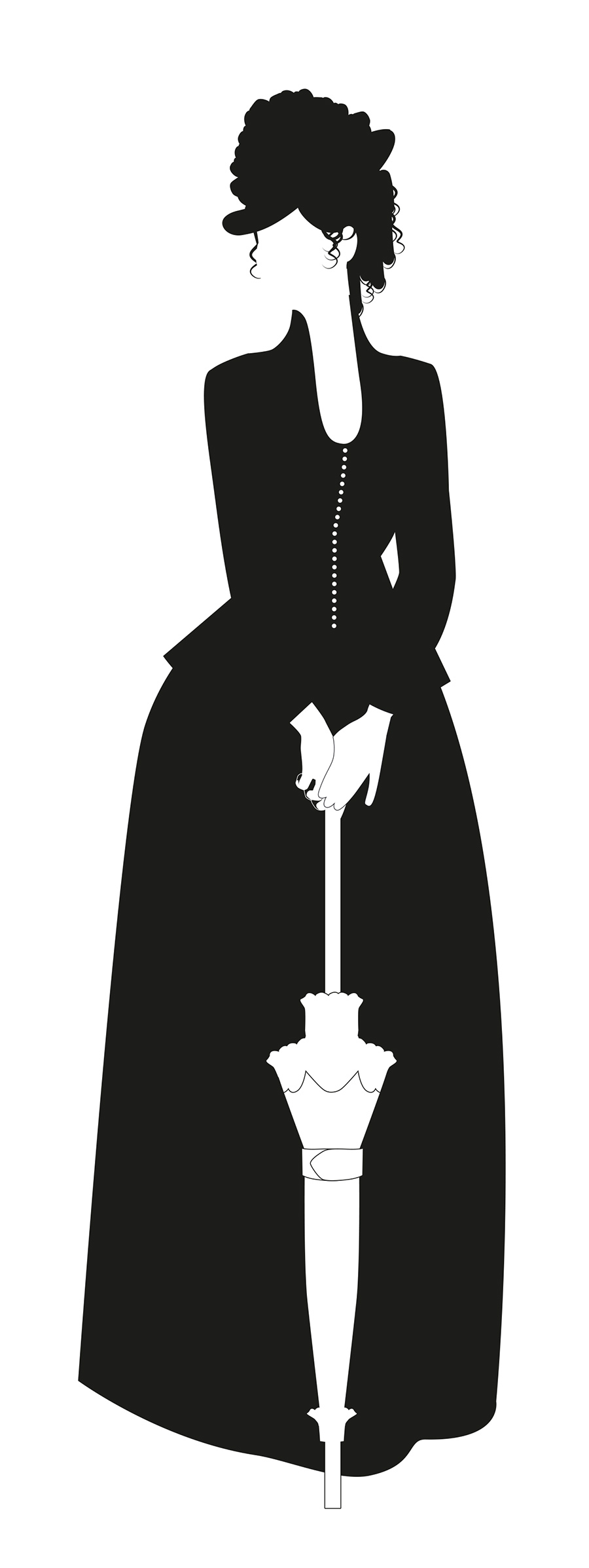
A West Virginia state historical marker is one of few reminders of the life of Anne Royall. No likeness has survived. Su Clauson-Wicker
The West Virginia-based firebrand took on the powerful with investigative reporting that set the path for muckrakers to come.

Tooling along a narrow West Virginia road in secluded Sweet Springs Valley, travelers are surprised to find a marker denoting the spot where the first U.S. woman journalist lived. Even more remarkable—this journalist was born while the U.S. was still a British colony and she didn’t write professionally until she was well past 50.
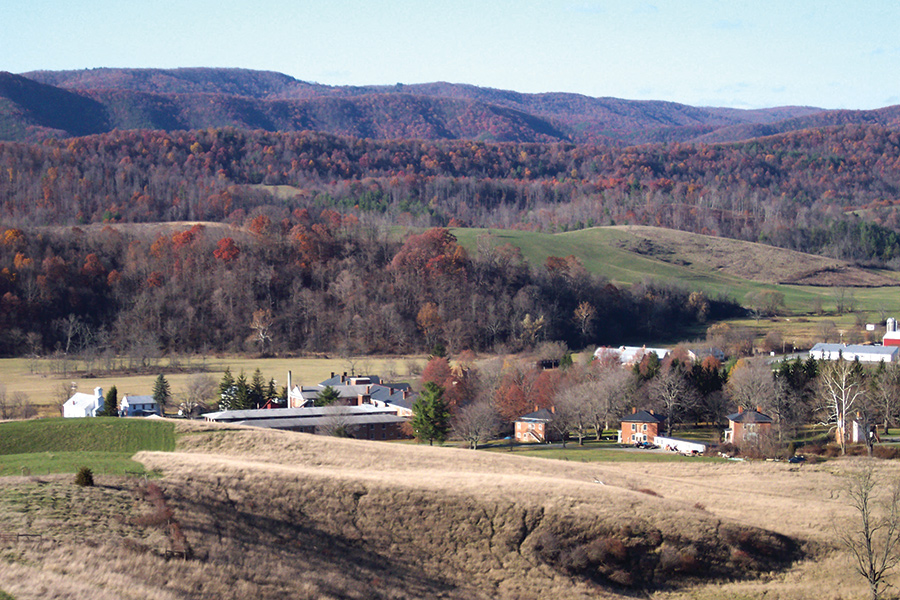
Anne Newport Royall was born in Baltimore and raised on the Pennsylvania frontier, but it was in Sweet Springs, West Virginia, where the seeds of her literary life were planted. She came there as a teen with her widowed mother to work as servants for William Royall, a wealthy Revolutionary War veteran. Royall noticed Anne’s interest in books and arranged for her education, introducing her to the works of Voltaire and Shakespeare and giving her access to his vast library of enlightenment and reason. Royall, 20 years Anne’s senior, ended up marrying her.
It wasn’t until he died and his extended family left Anne nearly penniless that she became a journalist and newspaper publisher. That is when she became an itinerant literary storyteller, according to biographer Jeff Biggers, traveling to the new state of Alabama where she wrote the first of her series of “Black Books.” The volumes were informative, entertaining and often derisive portraits of the residents, particularly the elite. Royall’s razor-sharp descriptions of American life and individual Americans from many walks of life became popular reading and a contrast to the sentimental literature usually penned by female writers of her day.
Royall reinvented herself as a “woman politico” long before the women’s suffrage movement. She was a pioneering travel writer and satirist a generation before Mark Twain, and an investigative journalist who took on bankers and prison conditions a half century before other muckrakers.
Royall had no fear of authority. A popular anecdote has her catching President John Quincy Adams during his habitual early morning nude swim in the Potomac. The story has her gathering the president’s clothes and sitting on them until he answered her questions.
The story is untrue—Adams and Royall were actually friends when the anecdote supposedly occurred. They met in 1824, when Royall visited Washington to try to claim her late husband’s military pension. Not only did Adams support her appeal to Congress, he invited her to the White House and described her as a pest he liked. One thing is certain: Royall was a fearless journalist who defied society’s boundaries for women. Some sources claim Royall was the first female journalist granted an interview with an American president.
In her Washington newspaper, Paul Pry, Royall set the style for modern columnists. Sold as single issues, it contained her editorials, letters to the editor and her responses, and advertisements. It was published until 1836, when it was succeeded by her somewhat more polished newspaper, The Huntress. Royall hired orphans to set the type and faced constant financial woes, exacerbated when postmasters refused to deliver issues to subscribers.
Royall was a fearsome figure to many politicians, a whistleblower on corruption, fraudulent land schemes and banking scandals. She was critical of the powerful evangelical movement sweeping the country and harangued her readers about keeping religion separate from government. She felt strongly about sound money, the abolition of flogging in the Navy and ultimately a free press.
Royall’s admirers respected her, sting and all. Baptist pamphleteer Reverend Greatrake declared that Royall “may be rude, very rude … but she has more intellectual energy and more moral courage than a 1,000 of her bitterest prosecutors.”
Royall’s stances earned her powerful enemies, ones who ultimately gave her a new distinction—the only U.S. woman to be tried and convicted for being a “common scold.” In 1829, Royall criticized Washington, D.C. for blurring the lines between church and state by allowing evangelists to use the fire hall for services. The congregation visited Royall’s house to harangue her. Royall cursed at them and was promptly arrested.
She was tried and convicted for being a “public nuisance, a common brawler and a common scold.” Although a dunking stool was set up outside, the court commuted her sentence to a $10 fine—she was over 60 and it was winter. Two Washington reporters paid her penalty.
Royall died at 85 in 1854, bringing an end to her 30-year news career. Contrary to popular lore, she was not the first American female editor, just the first self-supporting one. Several hundred women editors and printers took the reins of newspapers before 1820, but every one of them inherited her role from ill, deceased or incarcerated husbands. Royall was probably the most notorious female editor of her day, and she was certainly the only one who could claim to be a self-made female newspaper publisher.
The story above first appeared in our July / August 2022 issue.