Birds of the Blue Ridge: Blue Jay

This familiar, friendly and fun bird is not actually blue!

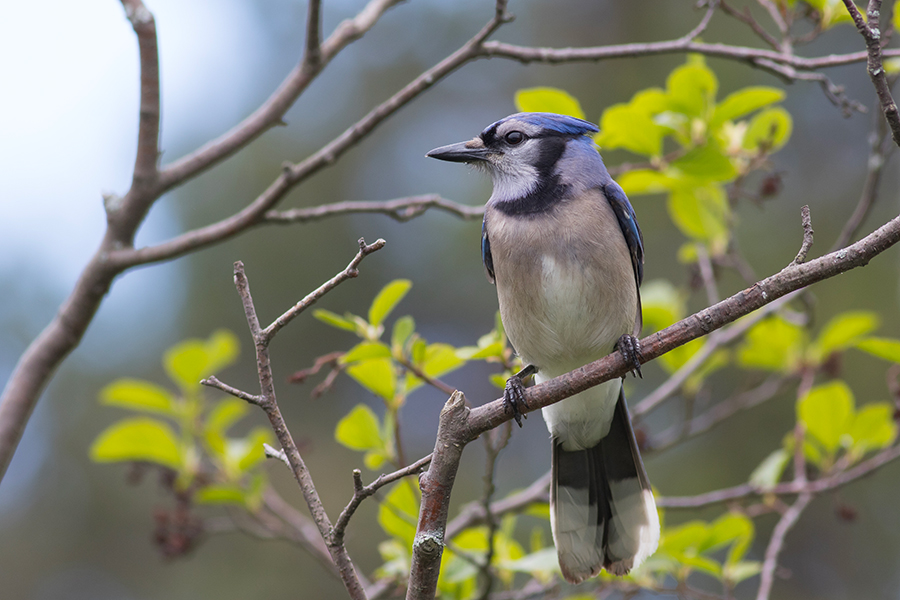
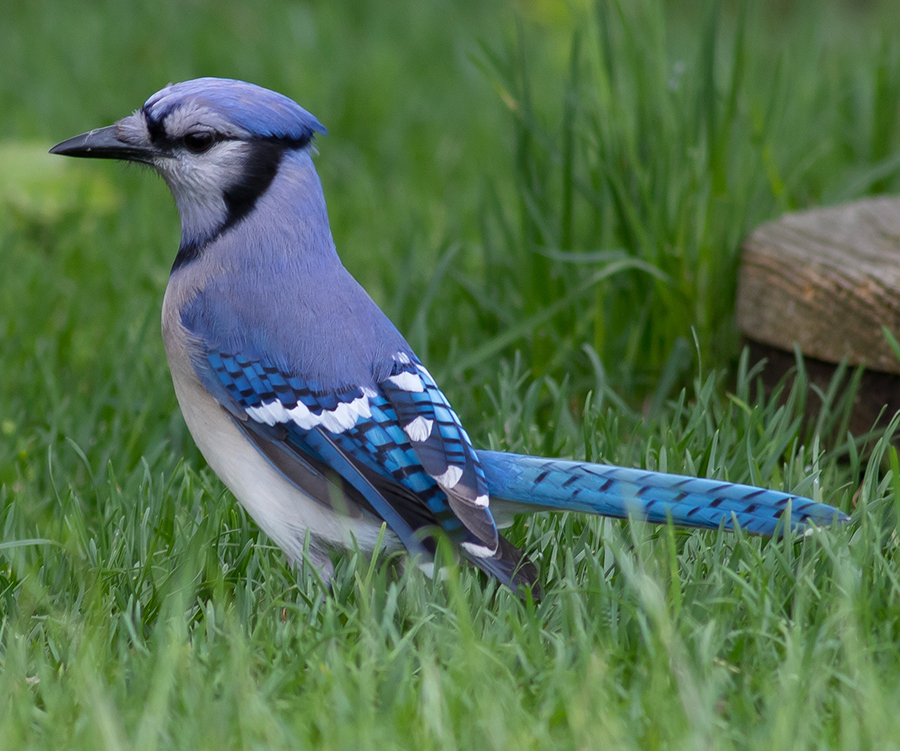
Their feathers are a dull brown. Like our Indigo Buntings and Eastern Bluebirds, the light is scattered and reflected creating their blue color. Have a close look at the black bridle and necklace. There are subtle yet extensive variations between individual birds.

Blue Jays are omnivores with a taste for peanuts and acorns. They have an expandable throat pouch and can be seen packing up and flying away from feeders – stashing for the upcoming winter. This species has been credited with helping “plant” oak trees since they sometimes forget where they hid all the acorns.
This bird has a large vocabulary and can mimic human speech, a cat’s meow and (most famously) the calls of hawks, eagles and owls. They mate for life and display close family bonds within their complex social communities.

Fun Facts

One banded wild Blue Jay reached the impressive age of 26 years, 11 months.

How to Identify a Blue Jay

Look for the feathered crest on the head, which can be raised and lowered according to their mood or purpose. Blue Jays are robin-sized with black bills, eyes, legs and feet.

Blue Jay Habitat

Frequently seen in urban and suburban landscapes as well as many types of forest edges.

Conservation Note

This intelligent bird has adapted well to human alterations upon the land. While numbers have declined, they still rate as a species of low concern – facing the usual dangers of housecats, poisons and window strikes.


ABOUT THIS SERIES:

“Birds of the Blue Ridge” showcases frequently seen and rare birds across the southern Appalachian region. For over four decades, Angela Minor has traveled with binoculars and field guides across the continental U.S., Alaska, the Caribbean and seven European countries. She is a contributing editor with BRC magazine and a freelance writer, penning travel and nature feature articles for several regional and national print publications. Angela created and authored the state park birding series for Bird Watcher’s Digest.

Read More by Angela Minor: BlueRidgeCountry.com/AngelaMinor

You Might Also Like:

e1b70596-05c8-11f1-92e0-1248ae80e59d-3-2026rueanemone--credit-Joe-Cook

March’s Mountain Wildflower: Rue Anemone

A member of the buttercup family and found in the open woodlands, rue anemone (Thalictrum thalictroides) has long, thin stems that tremble in the slightest of winds—prompting its other common name, windflower.
Pokeweed growing in Floyd County, Virginia.

January’s Wild Edible: Pokeweed

Pokeweed is one of the wild plants that is most associated with the Blue Ridge Region.
A purple-spored puffball growing in a field in Botetourt County, VA.

December’s Wild Edible: Purple-Spored Puffball

The purple-spored typically grows in this region’s fields, often appearing from October through December and into early January.
d289022c-696f-11f0-a179-1248ae80e59d-CGZ_0845-011

Ride the Rails, Explore Rockbridge County: Make a Weekend of the 611 in Goshen!

This fall, one of America’s most iconic steam locomotives is making tracks and memories.
The compound, lancelike leaflets of the bitternut are a good identifier.

November’s Wild Edible: Bitternut Hickory

Frankly, this native species to the Blue Ridge mountains comes by its name honestly.
Mullein growing in Ingram's backyard.

October’s Wild Edible: Mullein

Earlier, this year, a lone mullein plant appeared along the fence that encloses my garden, which made me curious about this plant.
An indigo milk cap growing in Botetourt County, Virginia.

September’s Wild Edible: Indigo Milk Caps

When young, indigo milk caps are one of the most stunningly beautiful mushrooms in the Blue Ridge Mountains.
ec3b964c-5201-11f0-968d-1248ae80e59d-9-2025spottedjewelweed--credit-Joe-Cook-and-Monica-Sheppard

September’s Mountain Wildflower: Spotted Jewelweed

Seek out spotted jewelweed growing beside a stream or along a moist area and you will have a good chance of getting to watch one or more ruby-throated hummingbirds flit from flower to flower.
A black staining polypore growing in Botetourt County, VA.

August’s Wild Edible: Black-Staining Polypore

The black-staining polypore is certainly one of the more fascinating wild edible mushrooms.
Northern Dewberry growing in Botetourt County, Virginia.

July’s Wild Edible: Northern Dewberry

For several reasons, the northern dewberry is often overlooked as a summer berry in the Blue Ridge.

CALENDAR OF EVENTS