Skip to content

Wherein the family matriarch resorts to semi-extreme measures to have fall’s favorite snack on the Thanksgiving table.
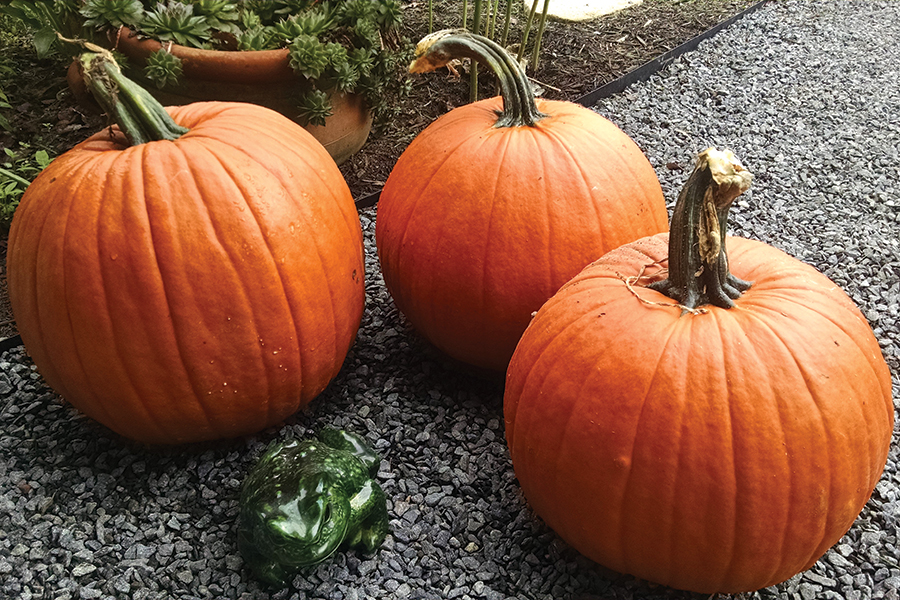
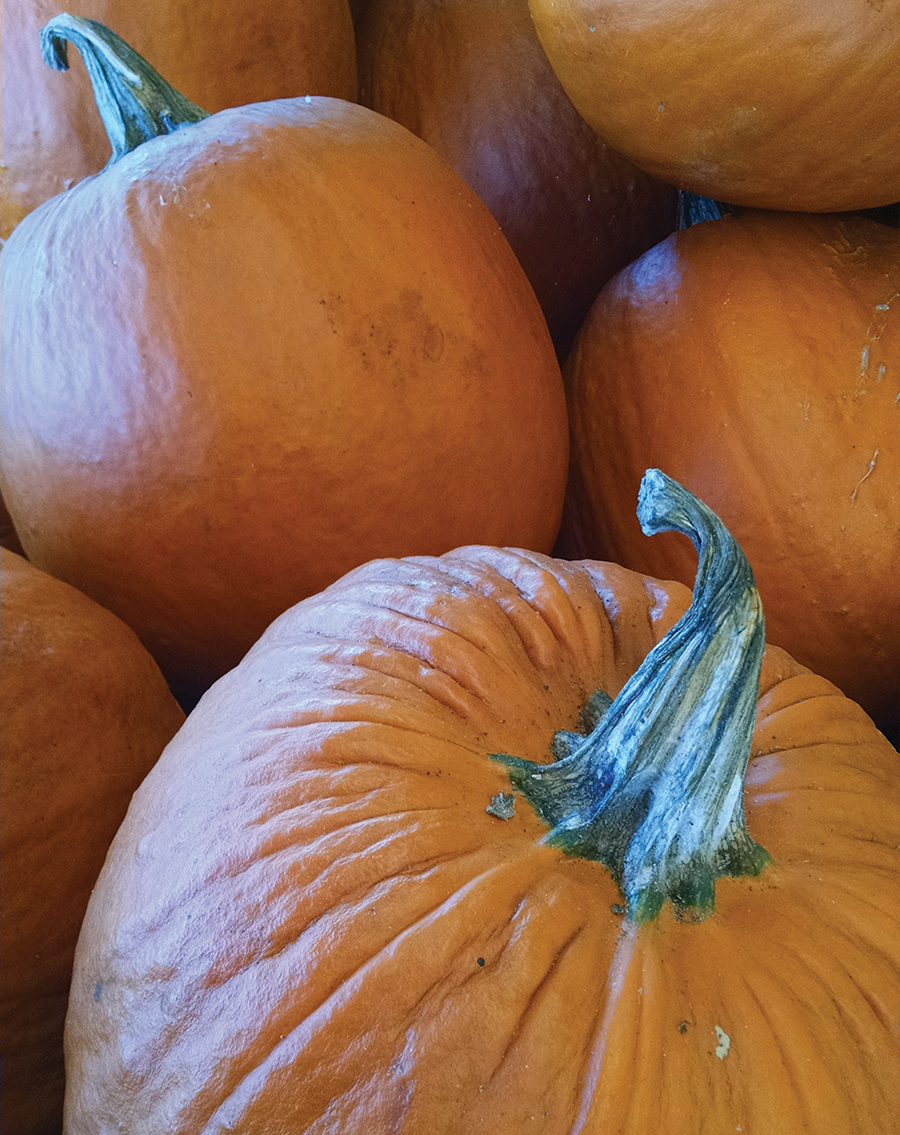
Photo Above: Pumpkins are a major source of fall fun, but be sure to secure your supply of seeds well before the days before Thanksgiving.
Photos Courtesy of Nan K. Chase.
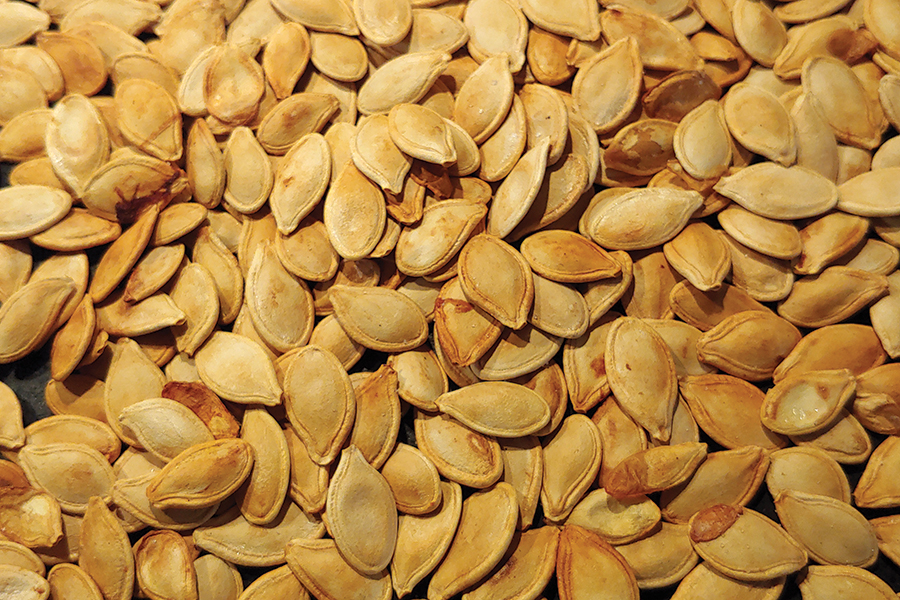
Best snack ever? That’s easy: home-cooked pumpkin seeds, roasted in the oven and lightly salted. And so simple to make!

Yeah, simple to make, but try finding the main ingredient—pumpkins—three weeks after Halloween. Little did I know when I volunteered to bring a batch of my roasted pumpkin seeds to our family’s Thanksgiving feast last year that making my “easy” dish would take several days of dogged investigative work and many miles driving the back roads of southwest Virginia. Plus some petit larceny.
Thanks to our nation’s holiday-sensitive retail environment, by the time I was ready to start baking—for 16 big eaters assembling in South Carolina—pumpkins had disappeared from the stores and been replaced by pyramids of yams and garlands of candy canes. I scoured every produce mart and grocery store in Galax, Virginia, without finding a single pumpkin.
Finally, I cornered a store manager and asked in desperation, “Don’t you have any old pumpkins in the back?”
“No, but there’s a pumpkin patch out next to I-77 near Fancy Gap, and they’re about to plow the field under,” he said, waving his hand vaguely toward the northeast.
Actually, I thought I had seen that field a few days earlier on a visit to the hamlet of Draper. And I knew that in years past there had been some pumpkin fields closer to my home. But where exactly, on which dirt roads?
So, early the next morning I set out in the cracking November cold to find a pumpkin patch, any pumpkin patch. As hunters know, stalking the prey and learning its habits are crucial to success.
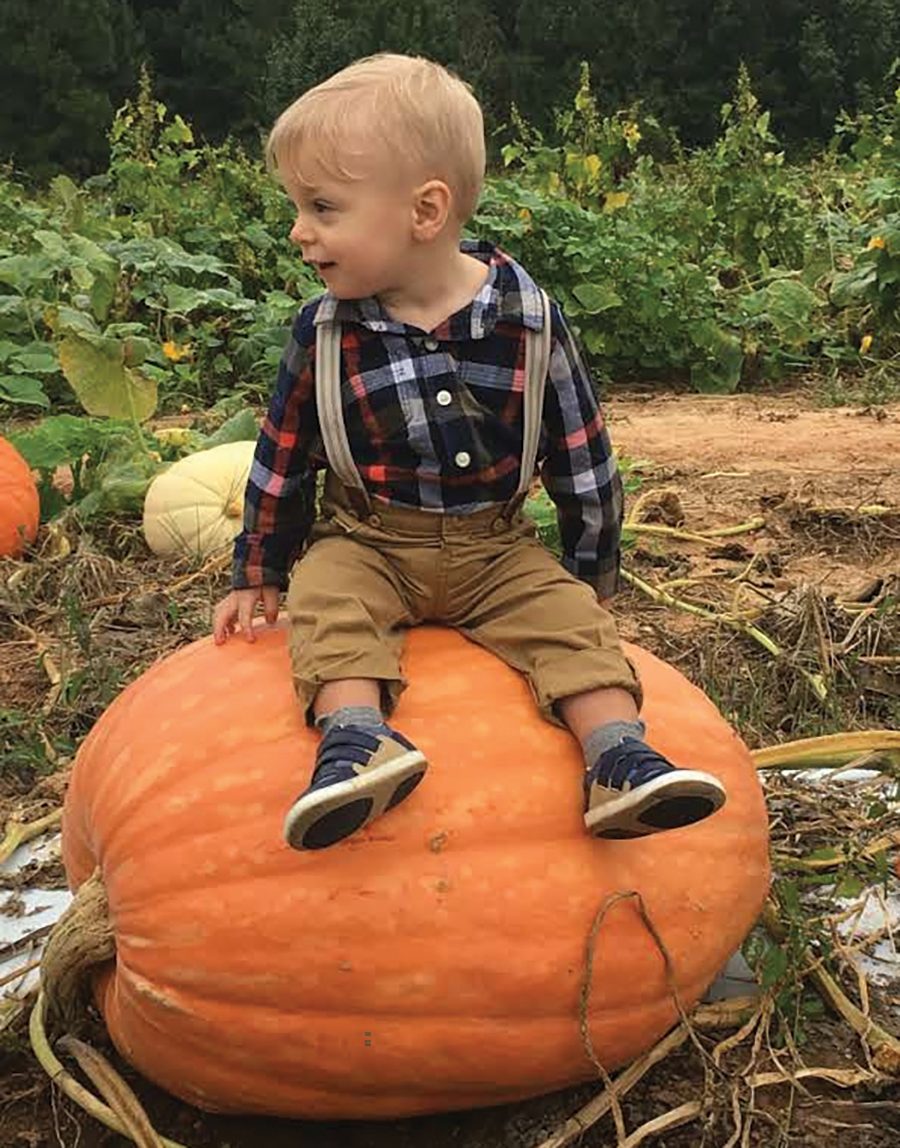
That pumpkin patch “out next to I-77” would be my last resort. First I followed a hunch and headed north from my home outside Fries on Va. 94 to the settlement called Ivanhoe. Just past town a left-hand turn led me up a quiet winding road. In a mile or so I crested a hill and a spectacular vista lay before me: rolling hills in the distance and a field dotted with bright orange pumpkins close by. I parked the car and, seeing no one around, popped open the trunk and set out across the rows of stubble field to grab some pumpkins.
Easier said than done. What appeared from a distance to be hundreds of perfectly good leftover pumpkins turned out to be hundreds of pumpkins that had sat out for many freezing nights getting mushy. It took me a long time to locate half a dozen intact pumpkins and carry them one by one to the car.
About that time a farmer pulled up in his truck and gave me a not-too-friendly look. “I saw you on my trail cam,” was all he said. So I played the grandma card (obviously I wasn’t poaching game). “I’m baking pumpkin seeds and wondered if I could have a few pumpkins.” He assented with a “humph” and left.
Next I continued north on 94, and close to Fort Chiswell I spied another pumpkin field near some woods. This time there was no farmer on patrol and the pumpkins were easier to collect. I took five more and headed for home. After all, I now had more than 100 pounds of pumpkin to process before dark.
There’s only one way to extract pumpkin seeds, and that’s by hand. I brought a wheelbarrow up to our picnic table and cut each pumpkin in half, then set about scraping the pulpy innards into big bowls. Do you have any idea how cold the inside of a pumpkin is that has sat in freezing weather all season?
Once I removed the seeds and thawed out my hands it was time to rinse the seeds clean of their stringy fibers. That was calming, actually, and eventually I figured I had three pounds of raw seeds. They needed to soak for an hour in salted water, then dry on cookie sheets overnight.
The last step was to bake them in a hot oven, say at 405 degrees (adjusted for altitude), for 20 minutes or so, first sprinkling them with a bit of soy sauce and a dusting of more salt, and turning and monitoring them closely so they got crisp but not burnt. Three pounds shrank quite a bit in the heat.
Packed into mason jars the seeds were a big hit at Thanksgiving, and they all got eaten during the first round of appetizers. My then-9-year-old grandson, William, late to the table, asked dolefully, “Nana, are there any more pumpkin seeds?”
“Sorry, dear, they’re all gone.”
Okay, so I lied. I’d hidden a little jar for myself in the back of the pantry at home. Don’t tell anyone.
Where to Find Late-Season Pumpkins
Because they are heavy feeders pumpkins are usually not grown in the same field in successive years. Keep an eye out for large pumpkin fields in late summer and early autumn, meet the growers if possible, and return after the seasonal harvest for the leftovers.
Virginia ranks sixth in U.S. pumpkin production, growing almost 5 percent of the domestic harvest, some 82 million pounds.
The story above first appeared in our November / December 2023 issue.