Curios: The Cakewalk – Sad Past, Glorious Present

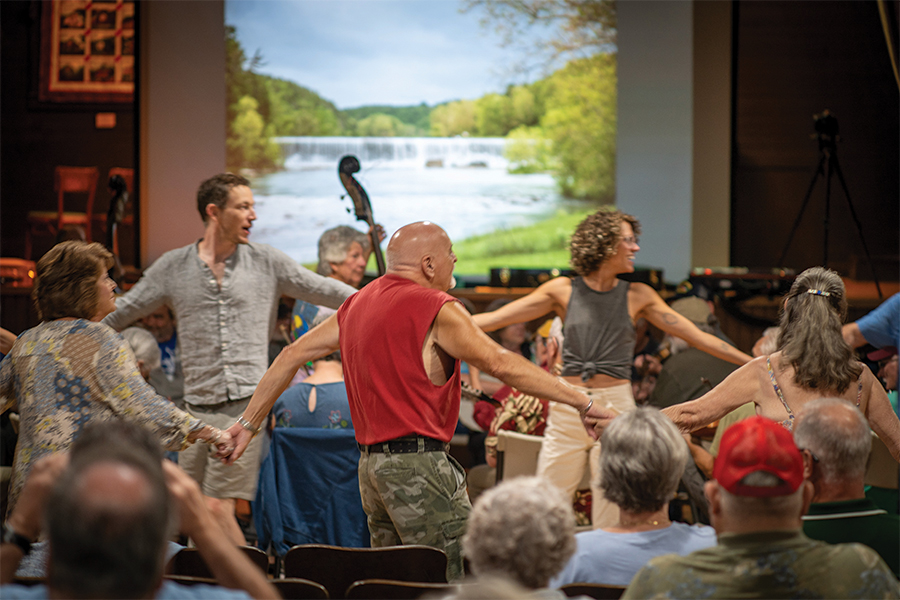
The present-day cakewalk at Fries, Virginia, involves live music, a small donation and gleeful participants.

A storied American custom built of pain lives on with joy.

Photo Above: The present-day cakewalk at Fries, Virginia, involves live music, a small donation and gleeful participants. Courtesy of Kevin Combs.

It apparently started before the Civil War, with this piece of heart-rending history: Black slaves would dress up in their finery — eventually, silken top hats and tails for men, lacy ruffles for women — and strut in an exaggerated, straight-backed way to mock their white owners. These competitive performances were sometimes called prize walks, with the winning dancers awarded a cake.  

With the end of slavery, the cakewalk dance style became ever more elaborate, featured in minstrel shows and migrating to the dance halls of Paris. Some were memorialized in early moving pictures. 

Since then, the racial aspect has faded and cakewalks have become local fundraisers, like a low-tech GoFundMe. Several organizations in West Virginia host them, and Southwest Virginia Cultural Center & Marketplace now holds a cakewalk the first Thursday of every month; and  the Lays Hardware Center for the Arts in Coeburn, Virginia, has also started a Friday cakewalk at their jam.
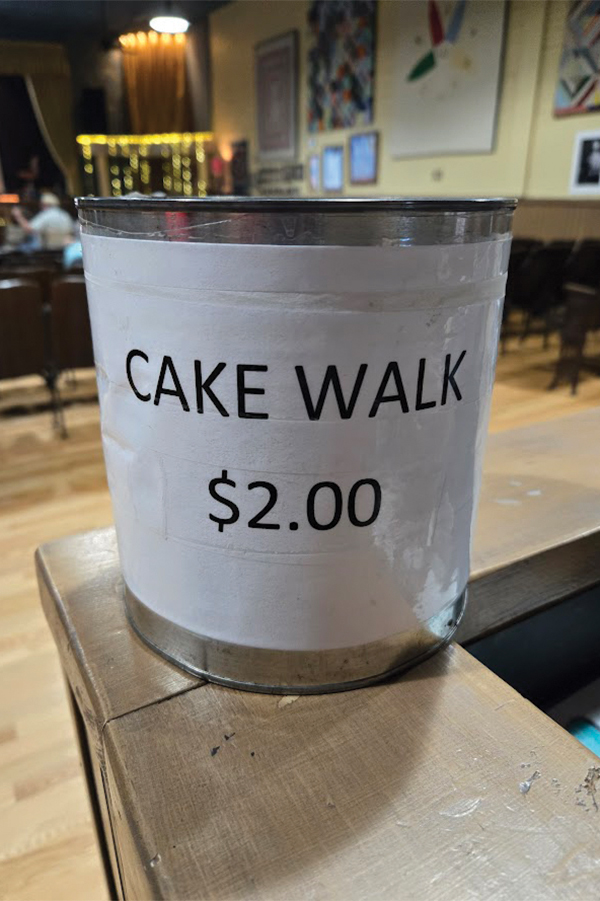
Photo Courtesy of Nan Chase

At the Fries (pronounced “Freeze”), Virginia, old-time music jam every Thursday night, the cakewalk during intermission operates like musical chairs, minus the chairs but with a numbered square on the floor for each person who pays $2. It’s not unusual for 50 or 60 walkers to vie for a dozen cakes and other baked goodies that neighbors bring, or fresh vegetables, flowers and farm eggs in season. The record cakewalk numbered 72 people, snaking through the lobby. 

“When they win you’d think they were winning a million dollars,” muses Yvonne Burr, the director of the Historic Fries Theatre, home to the jam and cakewalk.  

Admission to the jam is free, so the cakewalk acts as a painless fundraiser to keep the lights on. During the jam’s first hour, up to 40 musicians gather to make sweet music as couples waltz around the perimeter or stay in place to flat-foot. There might be a dozen each of fiddles, banjos and guitars, plus a few bass fiddles, dulcimers, mandolins, autoharps and even a washboard. Local fiddler and National Heritage Fellow Eddie Bond calls the tunes and adds vocals. 
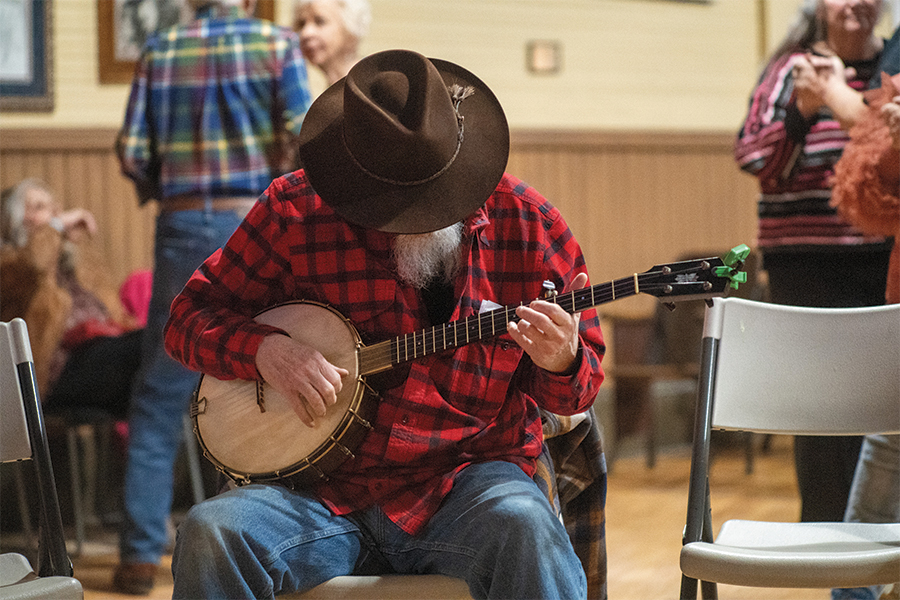
Photo Courtesy of Kevin Combs

Before the intermission, Burr circulates with a tin can collecting money. “A lot of people give more than $2, and say keep the change,” she says. “Or they say, ‘I don’t want to walk’ and throw the money in anyway.” 

 In 2025 alone, the Fries jam attracted visitors from as far away as Texas, Hawaii, Ireland and Germany, and there’s definitely visitor karma. During one recent cakewalk three couples traveling together from North Carolina won three cakes among them.


The story above first appeared in our January / February 2026 issue.

You Might Also Like:

Built in Roanoke, Virginia, in the 1950s, the “Queen of Steam” remains one of the nation’s most celebrated steam locomotives.

The Queen Still Reigns

More than 70 years after she first took to the rails, the legendary Norfolk & Western Class J No. 611 continues to inspire both passengers and the volunteers who keep her running.
In West Virginia, the rugged trails of Dolly Sods Wilderness lead to sweeping overlooks and untamed mountain scenery.

Blue Ridge Base Camp Towns

More than outposts for gearing up, these seven mountain communities are destinations in their own right, pairing easy access to some of the region’s best outdoor adventures with walkable downtowns, local flavor, and much more.
Interior designer Maisie Leach and her pup Stella Bea traded Roanoke’s bustling Grandin Village for a slower pace of life in Eagle Rock

Refuge in the Woods

A log cabin in Eagle Rock, Virginia, is the latest project for Maisie Leach of Hermione Interiors—and her most personal.
Author Tim Carmichael’s grandmother, Granny Woman Stella Gosnell Norton, served her Madison County, North Carolina, community as a trusted healer and caregiver.

The Heart of the Hills

Long before modern healthcare reached many Appalachian communities, Granny Women became trusted healers and caregivers, delivering babies, treating illness and injury, and preserving generations of healing knowledge.
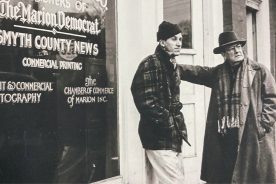
Sherwood Anderson and printer Howard White outside the Marion news office, in one of the last photos taken of Anderson.

Finding Home in the Mountains

In 1926, renowned writer Sherwood Anderson moved from center stage in Chicago to the mountains of far Southwest Virginia. Why?
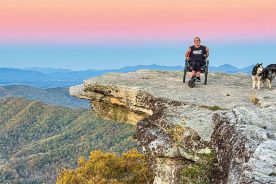
Carly Pearson smiles at the summit of McAfee Knob in Virginia

Trailblazer

Former wildland firefighter Carly Pearson became an accidental advocate for people with disabilities.
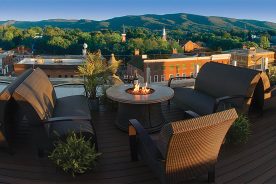
The hotel’s rooftop terrace, affectionately known as The Perch, offers exceptional mountain views.

Walking in the Footsteps of an American First Lady

The owners of Wytheville’s Bolling Wilson Hotel and Graze on Main make sure the town never forgets her legacy.
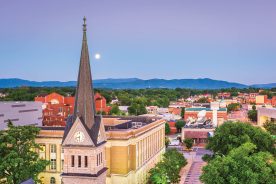
Roanoke, Virginia, USA downtown skyline at dawn

2026 Happiest Mountain Towns

Ten years after this poll’s inaugural launch, we once again turned to our knowledgeable readers for their picks. The results? A brand-new collection of 71 exceptional Blue Ridge communities that excel at bringing big smiles to the faces of both residents and visitors.
Kayaks on Toccoa River Below the Falls

7 Fabulous Float-to-Stays

Paddling trips on scenic rivers to great mountain towns make for perfect summer getaways.
Blooming rosebay rhododendrons frame a lovely, fast-moving cascade along the Oconaluftee River in Great Smoky Mountains National Park near Cherokee, North Carolina. Photo by Robert Stephens

Currents & Cascades: A Photo Essay

Our contributing photographers followed the flow of summer.