February’s Wild Edible: Wild Asparagus

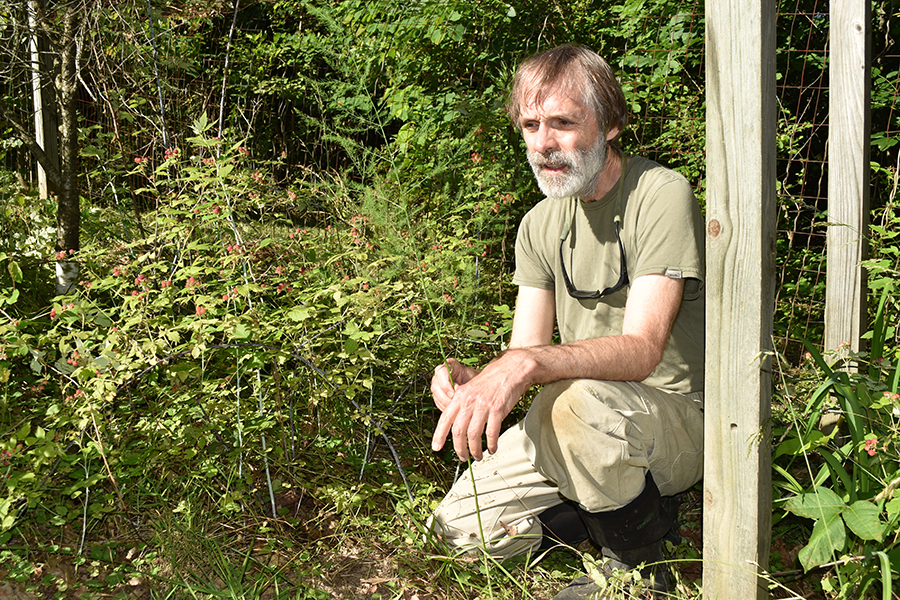
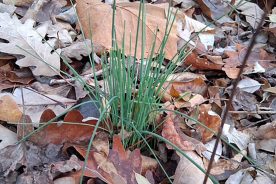
Bruce Ingram with asparagus. Asparagus appear in late winter in this region, but the best time to find patches of asparagus is when the green fronds appear much later in the spring.

Sometime this month or in early March in these mountains, the wild asparagus will begin to emerge from the soil in such nondescript places as ditches, roadsides and uncultivated fields. And unless you have amazingly acute powers of observation, you’ll stroll right by the green, spear-shaped shoots that are certainly a candidate for the best tasting wild vegetable in the Blue Ridge.

Indeed, probably the best strategy for gathering asparagus is to make note of where you locate these plants in May and June when those shoots have grown into feather-like fronds and small, round, red berries adorn them. The berries and stems are not edible, but mark the spot and you’ll know where to find this perennial next year.

The wild and cultivated asparagus are the same species, and, of course, can be used in the same wide variety of ways. Perhaps Elaine’s and my favorite way to enjoy this vegetable is in egg frittatas. Add in some of the wild edibles found now such as watercress, dandelion and bittercress, and you’ll have a meal guaranteed to vanquish the wintertime blues.

Finally, I should pay homage to that gathering classic, Euell Gibbons’ Stalking the Wild Asparagus – a book that first stimulated my interest in searching for wild edibles… and is still inspiring folks today.   


Bruce and Elaine Ingram will profile a different wild edible every month. For more information on their book Living the Locavore Lifestyle, contact them at bruceingramoutdoors@gmail.com.

You Might Also Like:

The Giovanni is an Italian-American creation born in West Virginia.

Discovering the West Virginia Giovanni

This flavorful sandwich is a product of the rich Italian heritage of the Mountain State.
e1b70596-05c8-11f1-92e0-1248ae80e59d-3-2026rueanemone--credit-Joe-Cook

March’s Mountain Wildflower: Rue Anemone

A member of the buttercup family and found in the open woodlands, rue anemone (Thalictrum thalictroides) has long, thin stems that tremble in the slightest of winds—prompting its other common name, windflower.
Pokeweed growing in Floyd County, Virginia.

January’s Wild Edible: Pokeweed

Pokeweed is one of the wild plants that is most associated with the Blue Ridge Region.
The pawpaw version of Ale-8-One debuted in the summer of 2025, in a limited edition.

Ale-8-One: Welcome to ‘Tropical’ Kentucky

This 124-year-old soft drink company continues to innovate and thrive.
Arkansas Black apples sport an attractive reddish black color.

December’s Blue Ridge Mountain Apple Profile: Arkansas Black

Originating in the 1870s in, obviously, The Natural State, this variety is reputed to be a part of the Winesap family, which includes such esteemed members as the Black Twig, Stayman, and, of course, the Old Fashioned Winesap.
A purple-spored puffball growing in a field in Botetourt County, VA.

December’s Wild Edible: Purple-Spored Puffball

The purple-spored typically grows in this region’s fields, often appearing from October through December and into early January.
The Fork and Plough name reflects the professions of the owners — chef and farmer.

Fork and Plough: Neighborly and Nimble

At this Greenville, South Carolina, eatery, the menu changes literally every day, based on what’s available locally.
d289022c-696f-11f0-a179-1248ae80e59d-CGZ_0845-011

Ride the Rails, Explore Rockbridge County: Make a Weekend of the 611 in Goshen!

This fall, one of America’s most iconic steam locomotives is making tracks and memories.
The compound, lancelike leaflets of the bitternut are a good identifier.

November’s Wild Edible: Bitternut Hickory

Frankly, this native species to the Blue Ridge mountains comes by its name honestly.
Mullein growing in Ingram's backyard.

October’s Wild Edible: Mullein

Earlier, this year, a lone mullein plant appeared along the fence that encloses my garden, which made me curious about this plant.

CALENDAR OF EVENTS