Skip to content

The story below is an excerpt from our March/April 2018 issue. For the rest of this story and more like it subscribe today, log in to read our digital edition or download our FREE iOS app. Thank you!
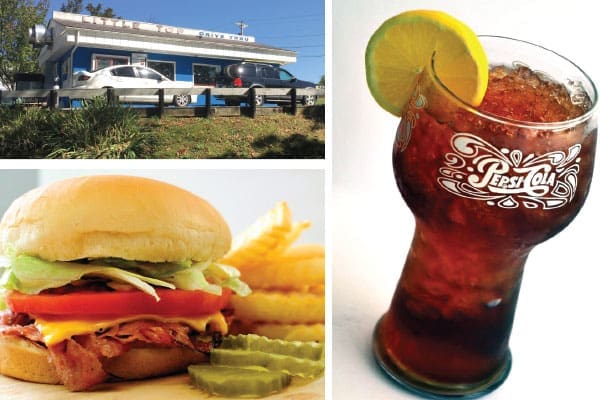
“One of the finest sandwiches of the South” lives on as a son presents his take on an East Tennessee favorite.
I grew up between The Igloo and The Camelot Room. A turn right out of our driveway led to frozen custard. A turn left led to flame-grilled steaks.

The Greeneville, Tennessee, of my childhood years was a fascinating crossroads. The Magnavox Company employed over 5,000 people then, and the city hosted one of the largest tobacco markets in the world. There were no vacant storefronts downtown, and parking spots, even on Saturdays, were at a premium.
Burley tobacco and televisions fueled the economy in this Northeast Tennessee town in the 1960s, where my love for locally-owned restaurants began. It was the Chuckwagon Steak Epoch. Every road-hugging restaurant in town had one on the menu, served with a sprig of parsley—likely the only herb in the house. In the late fall, when tobacco buyers flocked to town from all over the South, those restaurants were packed.
The Greene Villa, The Suburban, The Star and The S&S all served chuckwagon steak, and all of them did it about the same way, which was gravyless.
Meanwhile, downtown, Linton Boswell was stretching hamburger meat with milk-soaked bread, peppering it heavily, and frying it on a grill with an exhaust fan that blew the aromas up and down Depot Street. A few buildings away, Romie Britt was mixing beef stew into soup beans, adding chopped onions, and calling it Beans All the Way.
In this lost world, The Blue Circle served hundreds of sliders a day. Ham’s Drive-In accompanied every sandwich order with “free” fries, served on paper plates that looked like wood grain. The Brumley Hotel downtown served ethereal rolls and chicken gravy. The Friday night fish fry at the local Holiday Inn was a social event.
When tobacco and televisions died away in Greene- ville, so did most of those restaurants. But not all. Linton Boswell’s hamburger technique survives at today’s Tipton’s. Romie Britt’s special bean blend continues at The Bean Barn just outside downtown. The Brumley Hotel eventually became The General Morgan Inn, and although fried mush is a menu extinction, you can still get a meal in the building that dates to 1884.
Greeneville’s Big Top lives on, too. Sort of. Its former location on Summer Street is an empty lot. The building has been bulldozed away. All evidence of what was once the town’s busiest drive-in is gone from there. Half a century ago, The Big Top was so popular that theGreeneville Police Department had to hire auxiliary officers to direct traffic in and out of the parking lot. For me, in the back of the family’s 1964 Chevrolet Bel Air station wagon, a trip to The Big Top was big-time entertainment.
When he opened The Big Top in the early 1950s, Sonny Paxton started out with a no-name restaurant and a no-name sandwich. He solicited ideas for both through a contest in the town’s newspaper, The Greene-ville Sun. That contest yielded the names Big Top and Chipburger. Sonny ordered a lighted top to mount on the restaurant and a concrete, plaster-coated rooster to greet customers as they entered the lot.