Skip to content

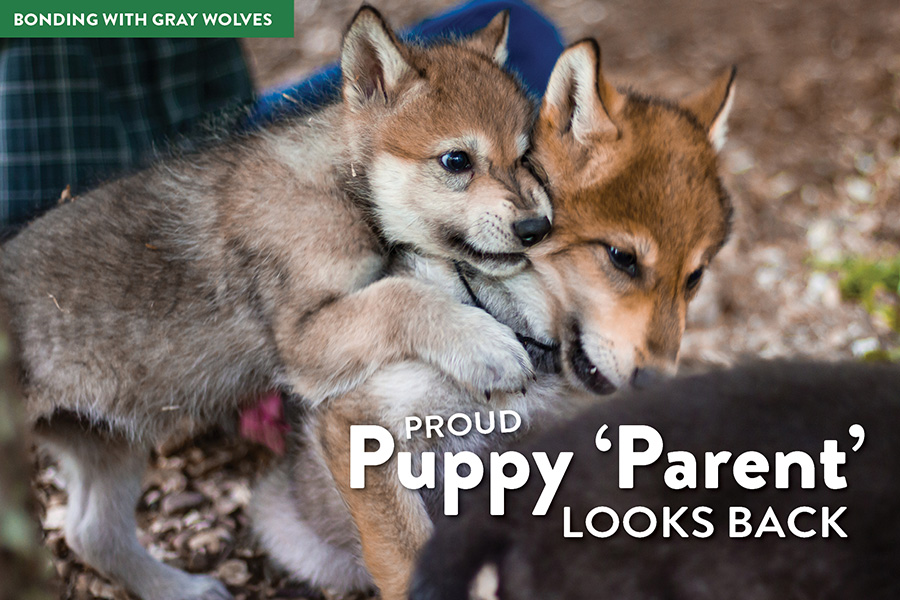
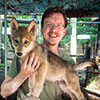
During the springs of 2014 and 2015, our writer was part of a group of volunteers bringing two sets of gray wolf pups to eastern Tennessee.
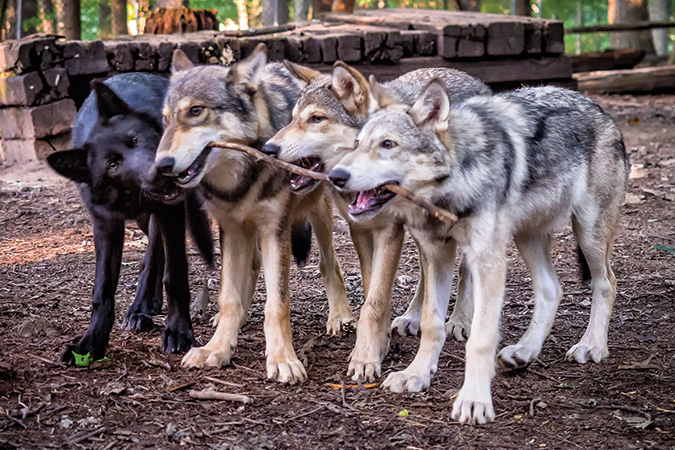
Photos Above: 5 weeks old: Ahuli gives Unalii a little love bite during play as Takoda passes by.
Photos Courtesy of Jay Huron.
Back in 2014 and 2015, I had a once-in-a-lifetime experience. Well, twice if you count both years of “puppy parenting.”

And not ordinary puppies. These were gray wolves—a species that once roamed wild over our continent, but which disappeared from our area hundreds of years ago with the influx of human settlers.
These wolf puppies had been purchased from an authorized facility in northern Minnesota and driven some 1,000 miles down to Tennessee. Specifically, to Bays Mountain Park in Kingsport, a nature preserve, and the largest city-owned park in Tennessee, spanning 3,600 acres that include a 44-acre lake.
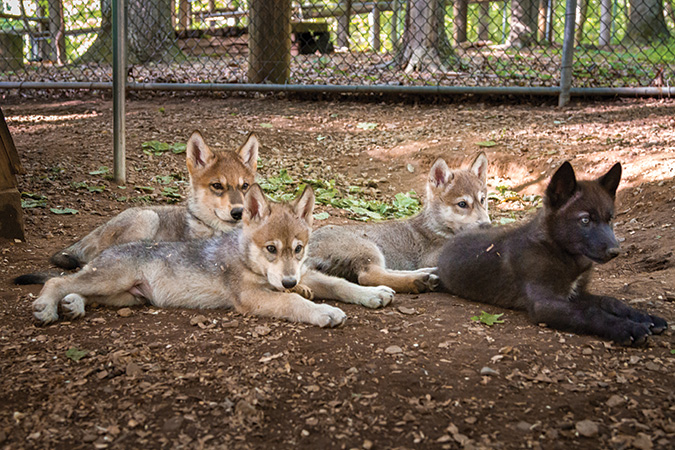
The park is currently home to eight gray wolves. My lucky experience was to be a volunteer “puppy parent” helping socialize and care for seven of those eight wolves; 2014 brought us four puppies and 2015 brought three more (the eighth came to the park with the 2007 litter). These wolves are ambassadors of their species and help educate visitors to the park about the myths and realities of gray wolves.
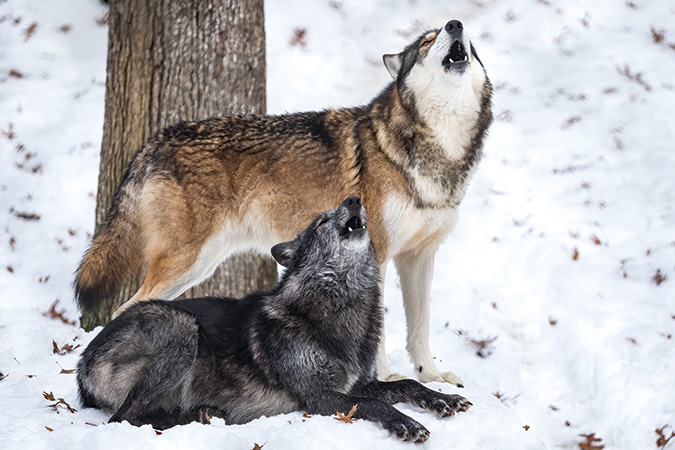
It was an incredible thing to become “one of the pack” in those two years, as a total of seven wolves were introduced. Even all these years later, the now-adult wolves still recognize us and return the howls we established with them as pups.
They arrived at the park in mid-May, when they were about four weeks old and weighed four to five pounds each. Volunteers and staff welcomed them to what would be their new home for the next three months—the Puppy Palace.
The Puppy Palace is a 25-foot square pen with a mesh roof to keep the puppies safe from birds of prey that might otherwise swoop down and snatch them up under cover of darkness. Starting that first night, we wolf puppy “parents” rotated shifts, with one or more of us staying in the pen 24/7 for the next three months.
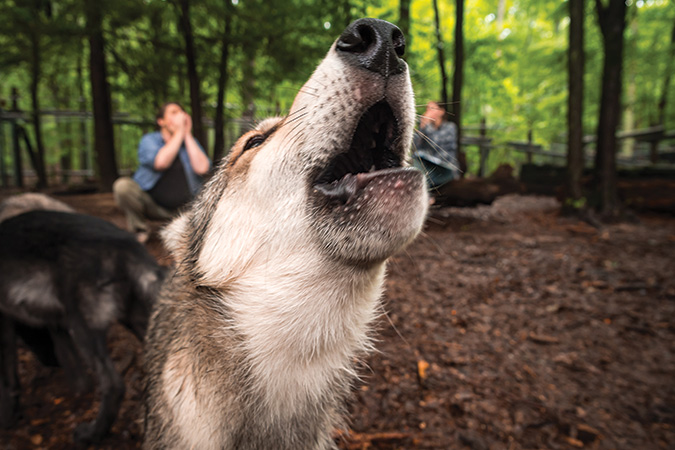
We didn’t change or wash the clothes we wore in the pen, to assure we presented the same familiar smell each time we entered. And one of the first things we did with the pups was howl, to help bond everyone, of both species.
The only rules for the puppies were to not chew on the humans or the fence. We used a stick or other natural toy to deflect any attempt to chew shoestrings or the fence. Other than that, the pups ran, played and wrestled with each other as they would in the wild. Sometimes that happened right in your lap.
We “parents” were also there for reassurance and comfort if the pups got scared of strange noises like strollers or children, or were unsure of visitors outside of the fence. This allowed the wolves to live a calm and stress-free life at the park, and taught them to ignore the people outside the fence.
We also cleaned up, did feedings and took copious notes on everything from behaviors and personality to bowel movements.
In the first month or so, the pups tripled their weight and would soon be heavy enough to go out and explore a section of the larger pen that would become be part of their home in a few months. By this time, they had quickly graduated from “formula” to a mixture of ground meat and formula, then to just ground meat, with some solid meat like a deer leg or rabbit as “treats” along the way.
From the time the puppies arrive, the adult wolves are kept in the main and largest of the four sections of their two-acre enclosure. The puppies are in a pen diagonally across from that section and they can’t really see each other, but they can smell and hear the other wolves, and get to know them in that way. Eventually, the adults are let into an adjacent pen so they can all see one another as well.
At
the end of their three months, about mid-August, the puppies reach a weight of around 70 pounds and it’s time to introduce them to the adult pack. This is the last day puppy parents can physically interact with the pups.
On the morning of this bittersweet day, the adult wolves are fed as much as they want to eat, which gives them something to regurgitate to the puppies when they enter. The puppies are let in with the alpha female and they run in and lick her muzzle and the corners of her mouth, which causes her to regurgitate the meat she recently ate. This bonds the pups to her and they are now part of the pack. More adults are let in and the process of licking and regurgitating continues with the other wolves.
The park opens as normal, and now there are more wolves in the pack and quite a few proud puppy parents that will never forget the experience!
The story above appears in our November / December 2020 issue.