Helping Wildlife Navigate Traffic and Climate

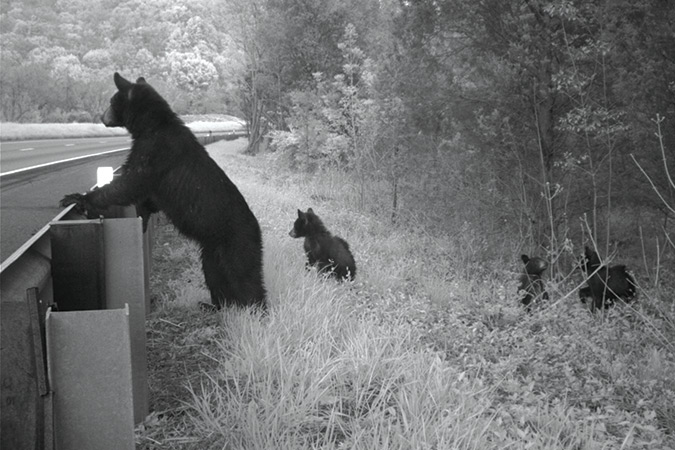
Bears and roads just don’t mix; efforts are underway in East Tennessee and western North Carolina to decrease potential collisions.

I-40 and other areas present hazards that can be addressed.

Car and critter collisions are increasing along the stretch of Interstate 40 in the mountains of East Tennessee and western North Carolina, where more than 26,000 vehicles travel daily through one of the richest habitats for bear, deer and elk in the region. Biologists, transportation officials, nonprofits and other stakeholders have teamed up to monitor wildlife movement near the highway to determine where they might establish protective crossings at key points. “Bears do really well with underpasses, as do bobcats,” Jeff Hunter with the National Parks Conservation Association says in a recent article in Blue Ridge Outdoors. “White tailed deer will use culverts and underpasses if they are large enough. Elk, not so much. Elk like overpasses.” 

The effort will feed into a much broader initiative to connect multiple wildlife corridors from Florida to Quebec due to climate change. “As it continues to get warmer, many species are going to want to migrate northward in this hemisphere and uphill to higher elevations,” says Ron Sutherland with Wildlands Network. “So, keeping movement pathways open is how we let not just animals, but plants migrate to keep up with their acceptable climate conditions.” According to The Nature Conservancy, the wildlands of Appalachia provide the most important wildlife migration route in the country.  

maps.tnc.org/migrations-in-motion; wildlandsnetwork.org


The story above appears in our September/October 2019 issue. For more subscribe today or log in to the digital edition with your active digital subscription. Thank you for your support!


You Might Also Like:

Ron Messina | Courtesy of the Department of Wildlife Resources

Historic Easement Protects SWVA Land, Opens It to the Public

Lovers of wildlife, woodlands, and waters will soon have a vast area to explore in Southwest Virginia.
This is a landscape photograph of the night sky with the Milky Way over rural Bryson City during summer in the Great Smoky Mountains North Carolina.

Skywatch: May/June 2026

The two planets that, at times, dominate the early evening sky are slowly heading toward each other for a dramatic showdown in early June.
A $1.21 million grant will help the Monacan Indian Nation purchase more than 300 acres on Bear Mountain in Amherst County. © The Conservation Fund

28 New Grants Support Virginia Land, Cultural Sites, and Wildlife

The Virginia Land Conservation Fund has announced grants for 28 projects across the commonwealth, including efforts to purchase tracts that hold cultural and archaeological significance for Native Americans and to preserve wetlands, forests, and Civil War battlefields.
Courtesy of Wunderland

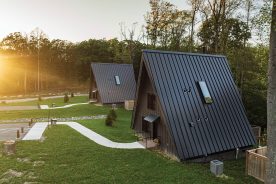
Old Fort Welcomes One-of-a-Kind Retreat

An experience-driven entrepreneur has transformed 35 wooded acres in North Carolina into a distinctive lodging destination.
Vernon and Toni Wright turn grains grown on their family farm into freshly distilled spirits.

Virginia Century Farm Home to New Distillery

For nearly 200 years, Vernon and Toni Wright’s family has raised corn, cattle and quarter horses at Hill High.
skywatch

March/April Skywatch: Late Winter Celestial Attractions

Stars are without a doubt far, even the closest ones.
This painting, inspired by Psalm 23, is one of the frescoes on display at Rumple Memorial Presbyterian Church.

Ben Long Frescoes Saved

Two thought-to-be-lost works by the acclaimed painter have been acquired by a church in Blowing Rock.
Howard Knob has long been a popular rock climbing spot.

Blue Ridge Conservancy Secures 74 Acres on Howard Knob

They say that good things come to those who wait.
Joel Ridge Nature Preserve near Lake Lure is a recent protection by Conserving Carolina.

Conserving Carolina Reaches 50,000-Acre Milestone

The nonprofit Conserving Carolina organization is celebrating reaching a milestone of 50,000 acres protected across western North Carolina and upstate South Carolina.
skywatch

January/February Skywatch: Is the Brightest Star the Closest?

Stars are without a doubt far, even the closest ones.

CALENDAR OF EVENTS