Birds of the Blue Ridge: Cedar Waxwing

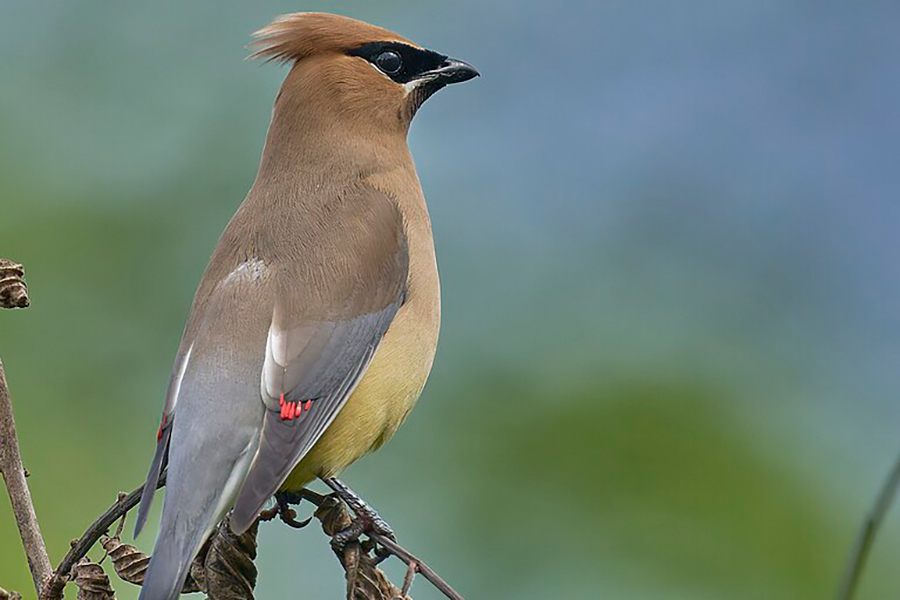
The sleek formal attire of the Cedar Waxwing is notably highlighted with bright red tips on the secondary wing feathers.

This unique feature is a waxy red secretion and a stark contrast in color along with the lemon-yellow band at the end of their tail feathers. To catch a glimpse of this handsome bird, first listen for high-pitched, thin whistling sounds in the treetops. (Birder tip: Try the free Merlin Bird ID app for assistance identifying their song.) They are often heard before they are seen.

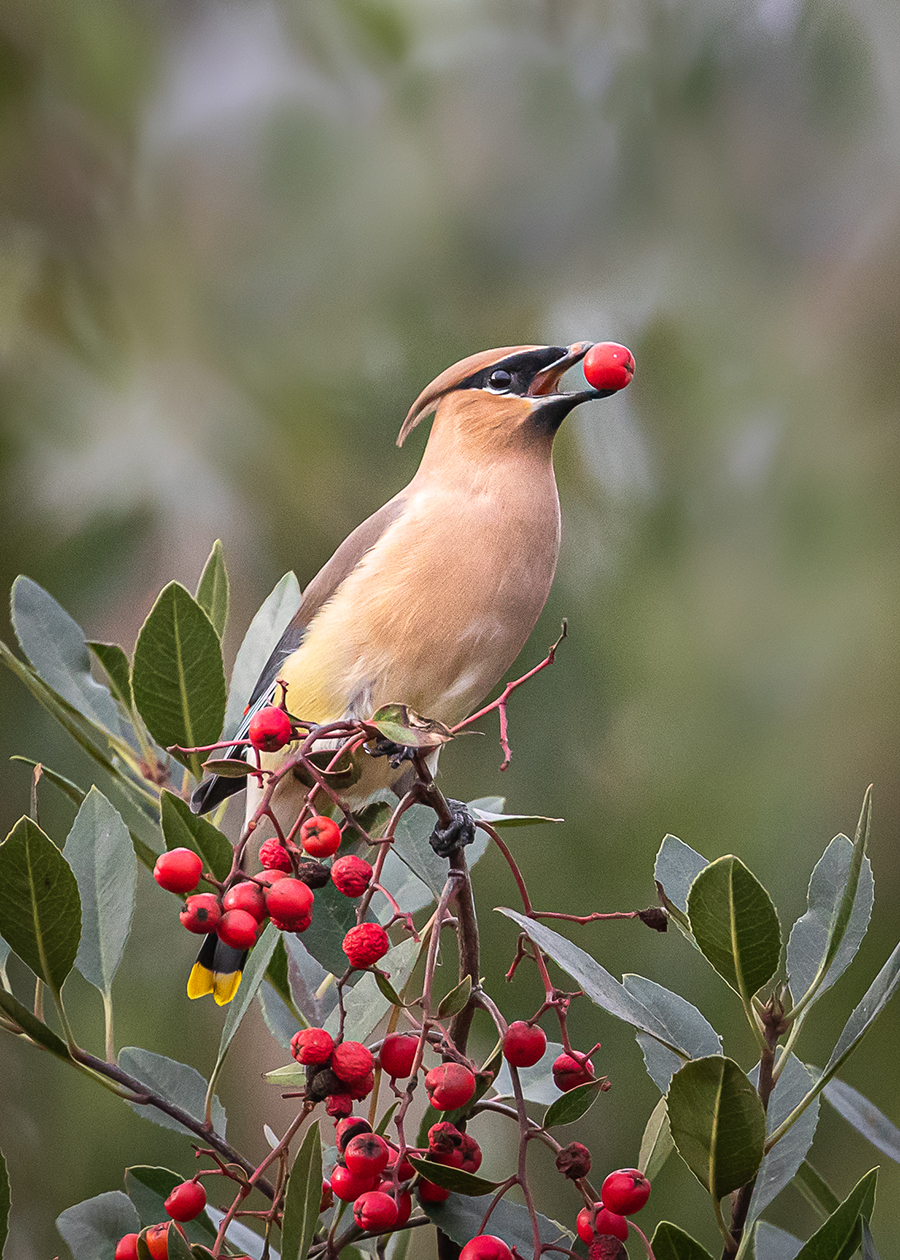
Additionally, the sociable Cedar Waxwing often shows up in multiple numbers, increasing the likelihood of spotting them. They are nomadic (except during breeding season) and travel year-round in loose associations of flocks (called an “ear-full” or “museum”) throughout our region.

Fun Facts

The Cedar Waxwing is a huge fan of fruits. As one of the few species on the continent that specialize in this food group, they can live for months on the small fruits of dogwood, cedar, juniper, hollies, hawthorn, serviceberry and other trees and shrubs.

How to Identify a Cedar Waxwing

This robin-sized bird can be identified by its smooth look of grayish-brown feathers, pale yellow underparts, a crest atop their head (often seen in a “resting” position) and a stylish black mask across the face. The male’s chin is usually darker than the female’s.

Cedar Waxwing Habitat

Woodlands, edges of fields and forests where there is an abundance of fruiting trees and shrubs.

Conservation Note

The Cedar Waxwing is a species of low conservation concern as numbers appear to be stable and increasing.


ABOUT THIS SERIES:

“Birds of the Blue Ridge” showcases frequently seen and rare birds across the southern Appalachian region. For over four decades, Angela Minor has traveled with binoculars and field guides across the continental U.S., Alaska, the Caribbean and seven European countries. She is a contributing editor with BRC magazine and a freelance writer, penning travel and nature feature articles for several regional and national print publications. Angela created and authored the state park birding series for Bird Watcher’s Digest.

Read More by Angela Minor: BlueRidgeCountry.com/AngelaMinor

You Might Also Like:

e1b70596-05c8-11f1-92e0-1248ae80e59d-3-2026rueanemone--credit-Joe-Cook

March’s Mountain Wildflower: Rue Anemone

A member of the buttercup family and found in the open woodlands, rue anemone (Thalictrum thalictroides) has long, thin stems that tremble in the slightest of winds—prompting its other common name, windflower.
Pokeweed growing in Floyd County, Virginia.

January’s Wild Edible: Pokeweed

Pokeweed is one of the wild plants that is most associated with the Blue Ridge Region.
A purple-spored puffball growing in a field in Botetourt County, VA.

December’s Wild Edible: Purple-Spored Puffball

The purple-spored typically grows in this region’s fields, often appearing from October through December and into early January.
d289022c-696f-11f0-a179-1248ae80e59d-CGZ_0845-011

Ride the Rails, Explore Rockbridge County: Make a Weekend of the 611 in Goshen!

This fall, one of America’s most iconic steam locomotives is making tracks and memories.
The compound, lancelike leaflets of the bitternut are a good identifier.

November’s Wild Edible: Bitternut Hickory

Frankly, this native species to the Blue Ridge mountains comes by its name honestly.
Mullein growing in Ingram's backyard.

October’s Wild Edible: Mullein

Earlier, this year, a lone mullein plant appeared along the fence that encloses my garden, which made me curious about this plant.
An indigo milk cap growing in Botetourt County, Virginia.

September’s Wild Edible: Indigo Milk Caps

When young, indigo milk caps are one of the most stunningly beautiful mushrooms in the Blue Ridge Mountains.
ec3b964c-5201-11f0-968d-1248ae80e59d-9-2025spottedjewelweed--credit-Joe-Cook-and-Monica-Sheppard

September’s Mountain Wildflower: Spotted Jewelweed

Seek out spotted jewelweed growing beside a stream or along a moist area and you will have a good chance of getting to watch one or more ruby-throated hummingbirds flit from flower to flower.
A black staining polypore growing in Botetourt County, VA.

August’s Wild Edible: Black-Staining Polypore

The black-staining polypore is certainly one of the more fascinating wild edible mushrooms.
Northern Dewberry growing in Botetourt County, Virginia.

July’s Wild Edible: Northern Dewberry

For several reasons, the northern dewberry is often overlooked as a summer berry in the Blue Ridge.

CALENDAR OF EVENTS