Skip to content


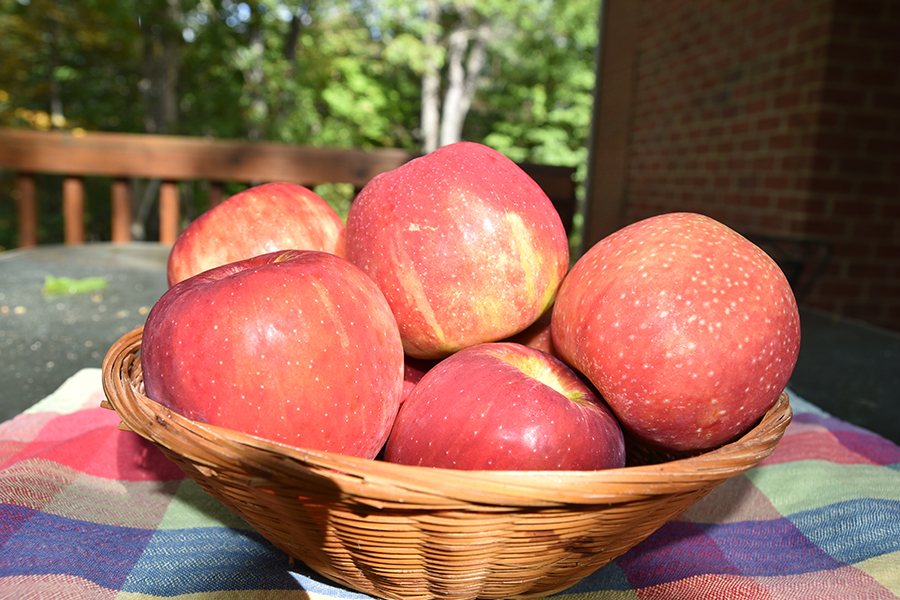
If there were a discussion about heritage apples that were made for these mountains, the list would have to include the Jonathan. That’s because this variety produces very poorly in hill and flatland climes, but excels in upper elevation areas.
Not surprisingly then, the Jonathan came into existence in the mountains, the Upstate New York ones… in fact, in the 1820s in Woodstock. And yes, that’s the same town that gave its name to the 1969 rock and roll festival. That Upstate New York area has similar habitat to our mountains.

The Jonathan is a handsome pome with a red smooth skin and sporting white, juicy, crisp flesh that makes it a quality eating-out-of-hand variety. In our mountains, Jonathans ripen in September and October and can sometimes be found then at those rural farmers market stands that dot this region. I wrote occasionally because the Jonathan was at one time one of the most popular commercial apples in the entire Eastern half of the country. But now, like so many traditional varieties, it has been replaced by more “commercial” varieties such as the red delicious which, as an apple enthusiast once told me, is beautiful “but tastes like wet cardboard.”
Jonathans are also superior cooking apples. Elaine has made the usual delicacies with this variety such as pies and applesauce, but I proclaim that my favorite Jonathan recipe to date is the one she created below.
Baked Jonathan Apples
Serves 4
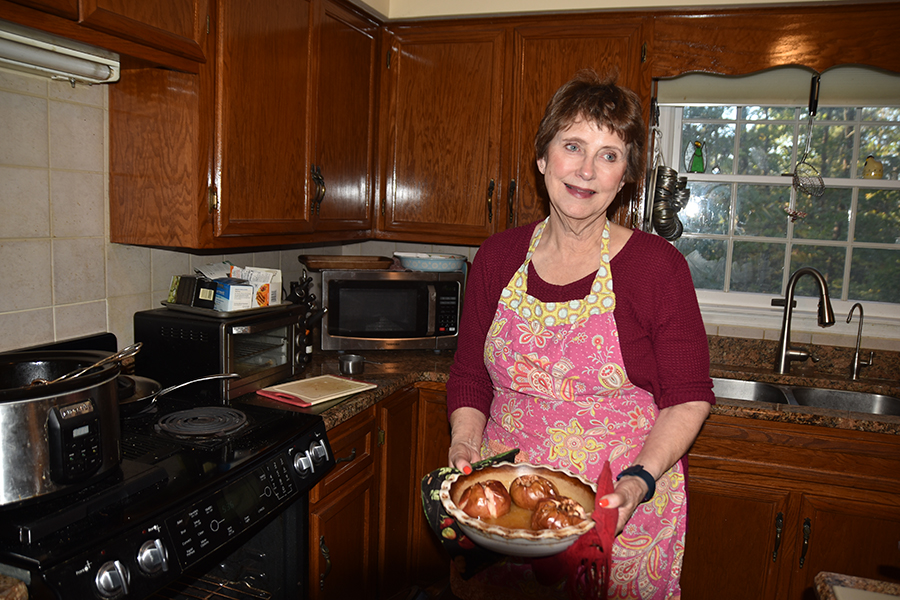
Ingredients:
- 4 Jonathan apples
- 3 Tablespoons softened butter
- 3 Tablespoons maple syrup
- ½ teaspoon ground cinnamon
- 1/8 teaspoon ground nutmeg
- 2 Tablespoons chopped black or domestic walnuts
- ½ cup water
- ½ cup orange juice or apple cider
Directions:
Preheat oven to 350 degrees F.
Combine softened butter, maple syrup, cinnamon and nutmeg in small bowl. Stir to make a paste. Set aside.
Core four apples. If an apple corer is not available, a knife will work. I also scooped some core out using a grapefruit spoon. Be sure to leave the bottom intact.
Place cored apples in oven-proof dish.
Spoon butter paste into cavity in each apple. Put a portion of walnuts into each cavity as well.
Heat water and juice to almost boiling. Pour carefully around apples in the baking dish.
Bake uncovered for 40-50 minutes until tender. Serve warm.
Apples are good as is, or top with ice cream or whipping cream.
Bruce and Elaine Ingram are authors of Living the Locavore Lifestyle, a book about living off the land. For more information, contact them at bruceingramoutdoors@gmail.com.