Hurricane Helene Response

Dear Blue Ridge Country Readers and Friends,

The scale of devastation in the Blue Ridge region from Helene remnants has left us breathless and bewildered with grief and a strong sense of helplessness for our readers, friends and partners whose lives and livelihoods have been disrupted beyond belief.

And that is not even to mention those who have lost family, friends and associates to the tragic storm and rains.

Allow us to offer into that abyss of desolation our deepest and heartfelt condolences and our personal pledge to provide what little help we can to assist in these FEMA-designated disaster areas.

In our offices, we have collected supplies for the affected counties in our home state of Virginia. And we urge all of our readers to join us in contributing to aid efforts for those in the mountain regions of North Carolina, Tennessee, Virginia and South Carolina via the links below. These organizations are recommended for their breadth of outreach of affected area and each has been fully vetted.

Again, our hearts ache, and reach out to all affected.

     Shiree Carr, Vice President

     Cynthia Bruggeman, Associate Publisher

     Kurt Rheinheimer, Editor in Chief

     Jeff Wood, Senior Online Editor

     Sarah Riddell, Associate Editor


Please Visit the Links Below for Ways You Can Help
North Carolina:
Virginia:
South Carolina:
Tennessee:

You Might Also Like:

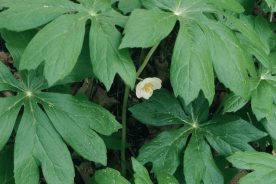
Mayapple. Credit Joe Cook and Monica Sheppard

May’s Mountain Wildflower: Mayapple

Despite its name, the fruit, which looks more like a yellowish-green, egg-shaped berry than an apple, usually does not begin to develop until early to mid-summer.
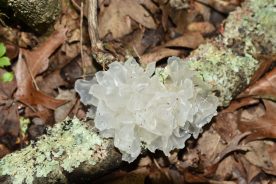
White jelly snow fungus growing in the author’s Botetourt County, Virginia woodlot.

May’s Wild Edible: White Jelly Snow Fungus

“Pass the fungus,” is not common dinnertime conversation in the Blue Ridge Mountains region, but that’s because folks perhaps have not heard of the white jelly snow fungus.
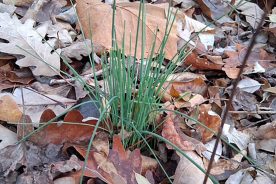
Wild garlic growing in Fayette County, West Virginia.

April’s Wild Edible: Wild Garlic

Fayette County, West Virginia’s Mitchell Dech is one of my foraging mentors, and when he wants me to try an edible new to me … I’m ready to learn about it.
Trout Lilly. Credit Joe Cook and Monica Sheppard

April’s Mountain Wildflower: Trout Lily

Like its western relative the glacier lily (Erythronium grandiflorum), trout lily (Erythronium americanum) is often found pushing its way through a blanket of snow in early spring.
RIVERSIDE ROCK Housed in a former cotton mill, the Haw River Ballroom is a place that connects you not only to music but to the land itself.

Where the River Meets Revival

From the Haw River Ballroom to Saxapahaw Island Park, charming North Carolina town is a haven of creative expression, community spirit and natural beauty
Classic Preacher Cookies

Classic Preacher Cookies

In a season when we’re opening windows, tidying porches, and welcoming people back into our homes, they feel especially fitting.
A May apple in bloom in Southwest Virginia.

March’s Wild Edible: May Apple

Sometime this month in the Blue Ridge Mountains, one of these highlands’ signature spring plants will ease from the soil … the May apple (Podophyllum peltatum).
e1b70596-05c8-11f1-92e0-1248ae80e59d-3-2026rueanemone--credit-Joe-Cook

March’s Mountain Wildflower: Rue Anemone

A member of the buttercup family and found in the open woodlands, rue anemone (Thalictrum thalictroides) has long, thin stems that tremble in the slightest of winds—prompting its other common name, windflower.
Pokeweed growing in Floyd County, Virginia.

January’s Wild Edible: Pokeweed

Pokeweed is one of the wild plants that is most associated with the Blue Ridge Region.
Arkansas Black apples sport an attractive reddish black color.

December’s Blue Ridge Mountain Apple Profile: Arkansas Black

Originating in the 1870s in, obviously, The Natural State, this variety is reputed to be a part of the Winesap family, which includes such esteemed members as the Black Twig, Stayman, and, of course, the Old Fashioned Winesap.

CALENDAR OF EVENTS