Skip to content

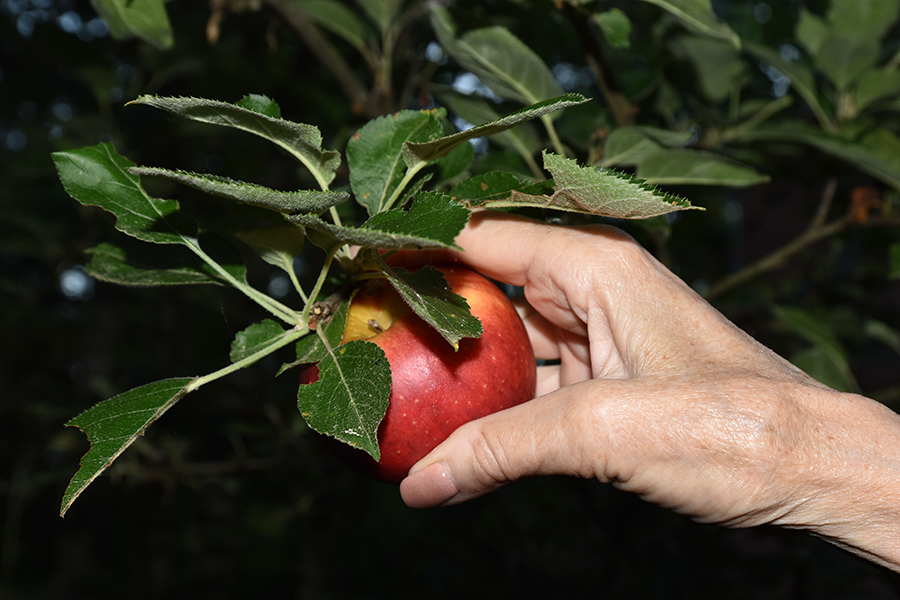
Elaine’s favorite apple is the Stayman Winesap, and I would rate it as my third favorite, behind only two other heritage varieties: the Black Twig and Grimes Golden. The reasons are numerous why this traditional Blue Ridge Mountains apple is so highly esteemed by us and many others as well.
The Stayman Winesap originated in Kansas in the mid-1800s, but it began to appear in our region late in that century and quickly became a fixture in highland orchards. First, this is a superb eating-out-of-hand variety with a juicy, crisp flesh that has a slightly tart, but pleasantly so, vibe to it.

Characteristics like that make the Stayman a sublime choice for pies and cobblers, but Elaine has also turned this variety into everything from applesauce to muffins. In our region, the Stayman often finds its way into juice and cider as well. And mountain folks before and during the Great Depression cherished this Winesap family member as a splendid keeping apple. Kept refrigerated, we’ve had this apple retain its flavor and appearance well into May.
Many heritage varieties are not known for their appearance, as our ancestors favored functionality and flavor over looks, but the Stayman flaunts a very fetching profile. A red blush typically covers much of the pome with russet dots and red stripes part of the package, too. In our region, Stayman Winesaps ripen from mid-October into very early November.
Another virtue of this tree is that although large chain grocery stores typically do not sell this or other heritage apples, smaller, locally owned shops in our region sometimes do. Come early fall, Elaine often contacts such establishments near us to see if they will have Staymans and other heritage varieties for sale this year. We then stock up on these varieties for the winter and beyond.
For example, in Botetourt County, Virginia, where we live, Ikenberry Orchards often carries Stayman Winesaps, Old Fashioned Winesaps, Romes, Summer Rambos and other heritage varieties. Consider supporting these local stores – and local growers – this year. Here’s Elaine’s recipe for muffins.
Stayman Winesap Apple Muffins

Makes 16 muffins
Ingredients:
- 2 cups all-purpose flour
- 1 ½ teaspoons baking powder
- ½ teaspoon salt
- 2 teaspoons cinnamon
- ¼ teaspoon cloves
- ½ cup softened unsalted butter
- ¾ cup sugar
- 2 beaten eggs
- 2 teaspoons vanilla
- ½ cup milk
- 2 cups peeled chopped Stayman apples
- ½ cup chopped black or other walnuts
Directions:
- Preheat oven to 375 degrees F.
- Prepare muffin cups by greasing or spraying with cooking spray. You will need 16 muffin cups prepared.
- In medium bowl combine flour, baking powder, salt, cinnamon and cloves. Set aside.
- In large bowl, cream butter and sugar together.
- Add eggs one at a time, beating until well-incorporated.
- Add vanilla and mix.
- Add dry ingredients to contents of large bowl, alternating with milk. Mix gently after each addition.
- Fold in apples and nuts, stirring gently to combine.
- Fill muffin cups 2/3 – 3/4 full with batter.
- Bake for 30 minutes at 375 degrees F or until toothpick comes out clean.
Bruce and Elaine Ingram are authors of Living the Locavore Lifestyle about hunting, fishing and gathering for food (with recipes) as well as raising chickens, fruit trees and a garden. For more information: bruceingramoutdoors@gmail.com.