Skip to content


In 1926, renowned writer Sherwood Anderson moved from center stage in Chicago to the mountains of far Southwest Virginia. Why?
By Joan Vannorsdall / Photos courtesy of Virginia Tech Special Collections and University Archives
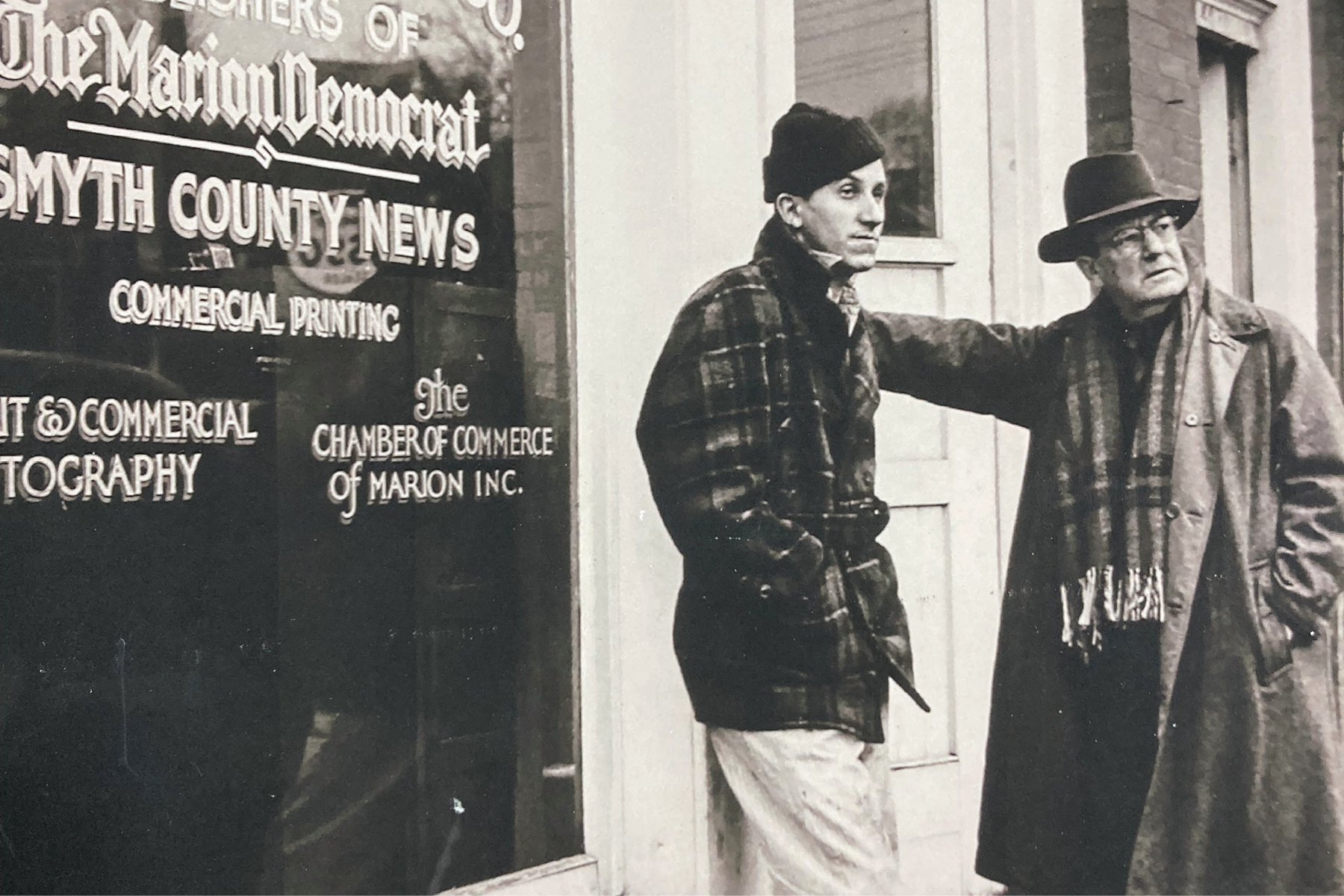
Photo Above: Sherwood Anderson and printer Howard White outside the Marion news office, in one of the last photos taken of Anderson.

I was reading about the nationally publicized Great Moonshine Conspiracy Trial of 1935 when I came upon a name I remembered from a long time ago: Sherwood Anderson.
Anderson, whose 1919 book Winesburg, Ohio is still recognized as a standout in American literature—and which I loved from page one when I read it at the tender age of 20—had covered Virginia’s moonshine conspiracy trial for Liberty magazine. To do that, he traveled to Roanoke not from Chicago or Cleveland or New Orleans or any of the other places he’d lived, but from his remote Grayson County farm he called Ripshin.
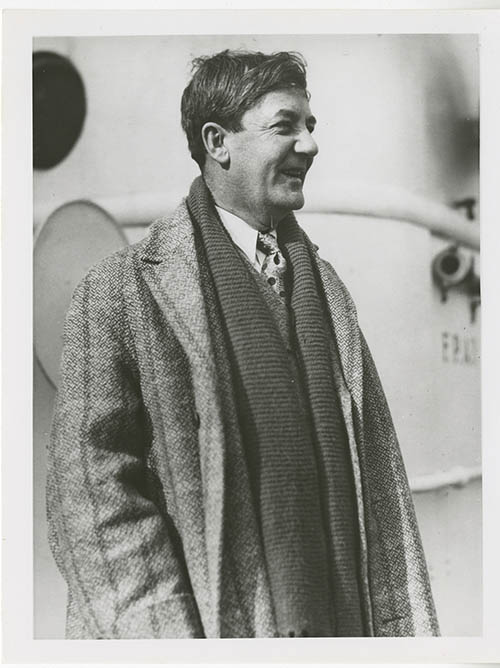
Why, I wondered, would the internationally admired “father of modernism in American literature” disappear into the hills and valleys of Smyth and Grayson counties? Anderson was Midwestern to the core, living most of his life in Ohio and Chicago. What had drawn him into the highest mountains in Virginia’s Blue Ridge, far from the people and places that had made him who he was?
I needed to know. It was time for a mountain road trip…a time trip…a Sherwood Anderson trip. And so I went to Marion, Virginia, to explore the place where Anderson spent the last 16 years of his life, running two small newspapers, entertaining the locals, revealing the damages of industrialization in the South, and traveling the world.
And where, it turns out, he continued to write his truths.
To understand what brought Anderson to our mountains—and kept him there until his untimely death in 1941—you have to understand what came before. What it was that Anderson sought to leave behind—and what he saw lying ahead.
Sherwood Anderson was born in Camden, Ohio, 150 years ago, on September 13, 1876, the third of seven children. His father worked sporadically, alcoholism making consistent employment difficult. Moving to nearby Clyde as a child, Anderson dropped out of school at 14, taking on countless odd jobs that helped support his family and earned him the nickname “Jobby.”
After brief military service, Anderson enrolled at Wittenberg Academy in Springfield to earn a high school diploma, then drifted to Chicago, Illinois, where he became a successful copywriter. By 1906, he’d moved back east to Cleveland, Ohio, and then Elyria, where he established and ran the Anderson Manufacturing Company. By this time, he had a wife and three children and tried his hand at fiction writing at night.
It all ended up being too much for Anderson. On November 28, 1912, while dictating a letter in his factory office, he stopped mid-sentence, walked out the door, and disappeared. He was found four days later in a Cleveland drugstore, unable to identify himself, and was diagnosed with exhaustion and aphasia.
Soon after, Anderson left his family, returned to Chicago, and began to write full time, connecting with the icons of early and mid-20th-century American literature: Theodore Dreiser, Carl Sandburg, Edgar Lee Masters, and Floyd Dell, and later, Faulkner, Hemingway, and Gertrude Stein. He published his first novel, Windy McPherson’s Son, in 1916, followed by Marching Men in 1917.
Then in 1919 came Winesburg, Ohio, and two years later the bestseller Dark Laughter, providing Anderson with the money to travel the world and buy the land on which his Virginia mountain home would be built.
In 1925, Anderson rode a logging train to Troutdale, Virginia, and rented an old log cabin from a farm family to use as a writing retreat. He was seen by the locals as something of a mystery, with people suggesting he was a revenuer. Anderson later said that one of the neighbors “sent men through the corn, creeping toward my cabin,” not believing that he was a writer. “It may be that they heard me, spouting in the cornfield. It may have saved me. They perhaps thought I was crazy.”
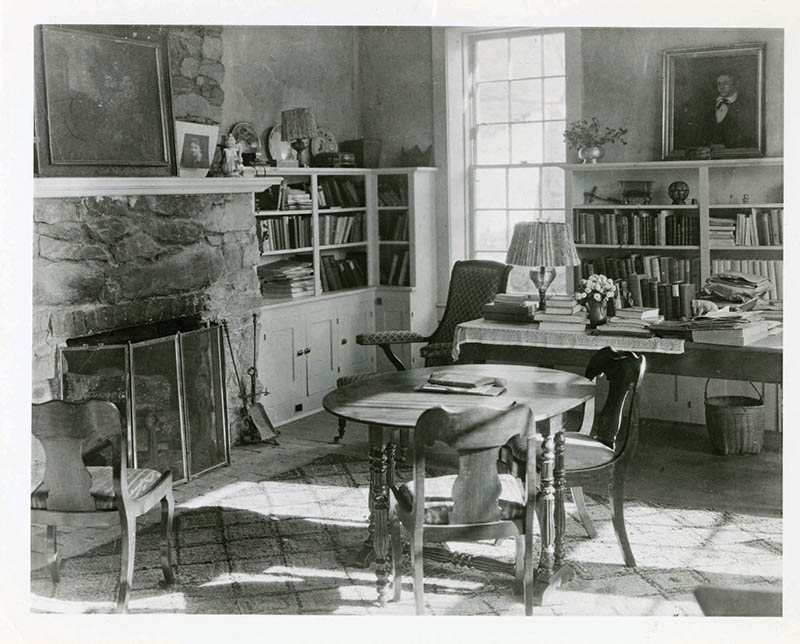
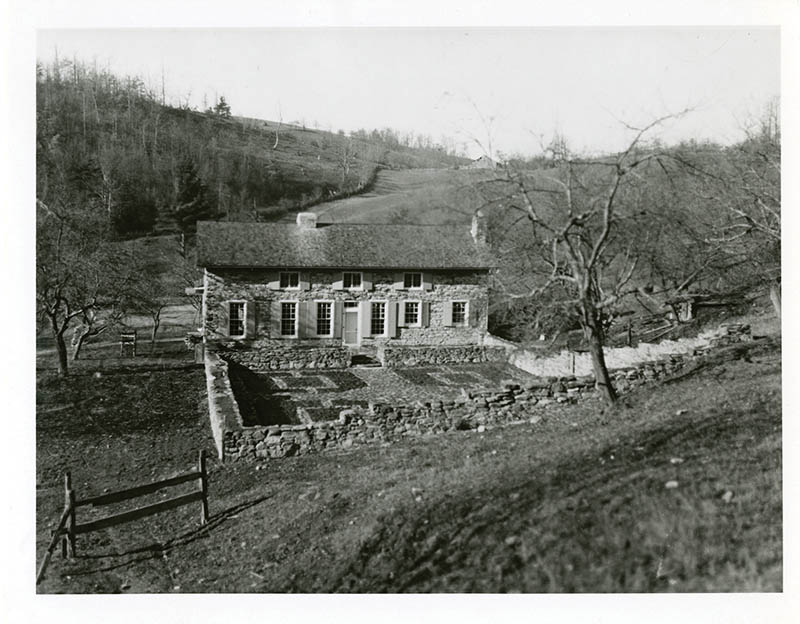
A year later, Anderson and his third wife, Elizabeth, bought a farm up the road and named it Ripshin after the nearby creek. (Or perhaps, as a neighbor suggested, because “getting there through the brambles ripped your shins.”)
Here’s how Anderson described Ripshin in his memoirs:
It was a place for my books. It was a place to come and to bring my friends….I was no longer a man apart, a writer, a something strange to them. I was just a man. I had a farm. I planted corn and kept cows. They had found out I was far from the millionaire they had at first taken me to be and I had found my land.
The nearby town of Marion was a magnet for Anderson. A New York Times reporter visiting in 1929 portrayed the town in glowing terms: “Marion is a pleasant and seemly town, looking both prosperous and well-bred….It has two dignified banks, one of them so very dignified that its brick and marble entrance arches up three stories.”
As his international literary reputation declined and his ability to write publishable fiction waned, Anderson purchased The Smyth County News and The Marion Democrat and began covering local happenings, often with a well-honed humorous tone:
He has invented various characters typical of the neighborhood who interpret the daily drama. Buck Fever, son of Mrs. Malaria Fever, lives in a mythical Coon Hollow and comes to town to report the country doings with a dry and pointed wit. Mrs. Homing Pigeon is an energetic and opinionated housekeeper.
—From “A Small-Town Editor Airs His Mind”
The New York Times
September 22, 1929
Anderson held court most days in the back of the drugstore, gathering the area’s leaders into what he called The Senate, listening to what they shared and reporting it faithfully in his papers. He was known for standing on the Courthouse steps and trading stories with residents, and his newspaper office was a place to come to for anyone wanting to hear the latest tales, well-told.
“Here, I am closer to life than I have ever been,” Anderson wrote.
But times were changing. The damages of the Great Depression and rampant industrialization were everywhere around him, and in 1929, Anderson gave ownership of both newspapers to his son Robert and took to the road to document what he saw.
With him on many of his trips throughout the South was Eleanor Gladys Copenhaver, a Marion native and nationally known social activist and labor organizer. In July of 1933, she became his fourth and final wife, a marriage that by all accounts was happy and supportive.
In late February 1941, the couple left New York on the ocean cruise vessel Santa Lucia, bound for South America to explore labor conditions and make connections there. Early in the voyage, Anderson swallowed a toothpick and developed peritonitis. He died in a Colón, Panama, hospital on March 8.
Eleanor took her husband home to Marion, Virginia, and buried him in Round Hill Cemetery, about which Anderson had once said, “[T]here are few more lovely spots in this world in which to make the long adventure of death than the cemetery at Marion.”
I spent some time at Anderson’s grave, marked with a modernist stone monument created by his sculptor friend Wharton Esherick. “Life not death is the great adventure” is carved beneath Anderson’s name—the message he wanted to share with the world. Overhead, a hawk drifted on high and gentle wind currents, and an American flag stretched straight across the blue sky, rimmed all around by mountains. Mount Rogers, Virginia’s highest mountain, is one of those.
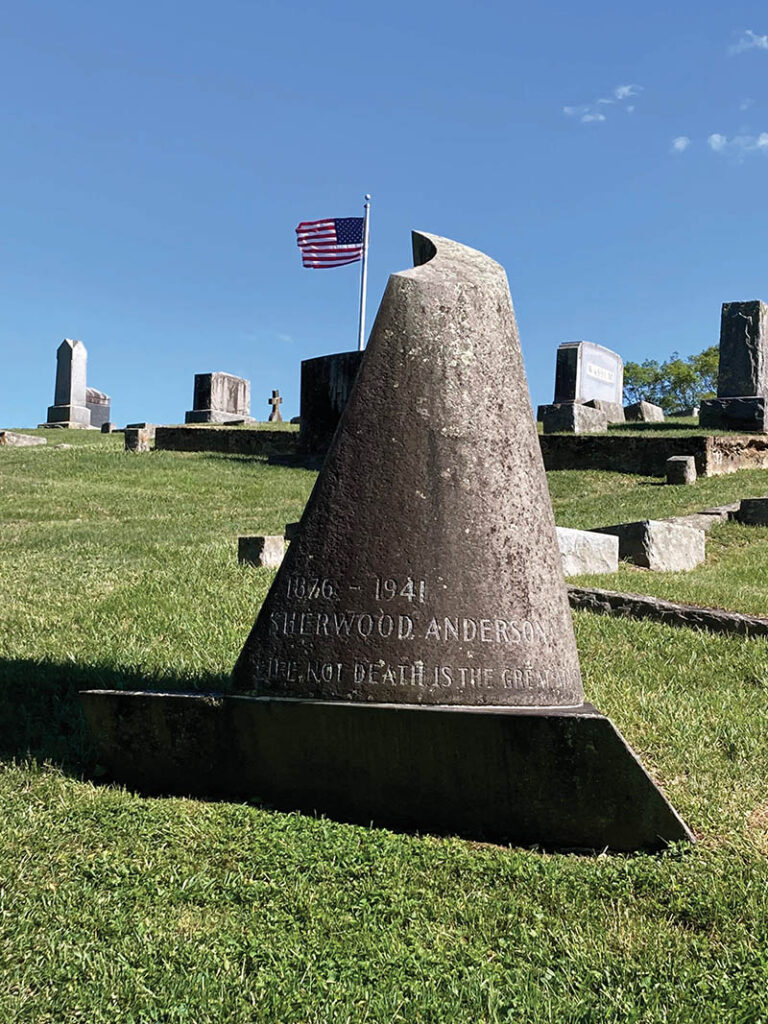
It’s worth noting that Anderson’s unusual grave marker sits immediately right of a small mausoleum building in which the remains of some of Marion’s most prominent citizens are encrypted. The modernist/traditional contrast is striking—and not surprising, given Anderson’s perennial search for his own truths.
Bruce Falconer described Anderson’s funeral beautifully in his wonderful Fall 2017 Humanities piece, “On My Obsession with Sherwood Anderson”:
[T]he people who gathered at the cemetery that morning had known not just the writer but the man—and for them, his legacy was to be found not on the printed page but in the gentle memory of his humanity. After the funeral, a local cabinetmaker invited a group of men back in the workshop he kept behind his house. Many times, he and Anderson had idled away the hours there, chatting amid the sawdust. He secured some wood in a lathe and the men took turns carving it into a goblet. When finished, they filled it with wine and passed it around, toasting Anderson’s memory. “We did not look at him through his books or magnify him through his fame,” one of them said, according to a reporter who was there. “We found and loved the man for what he was.”
After a lifetime of wandering and wondering, Sherwood Anderson found love and friends and home in these mountains. May he rest in full peace in the place that loved him “for what he was.”
Sherwood and Me: A Love Story
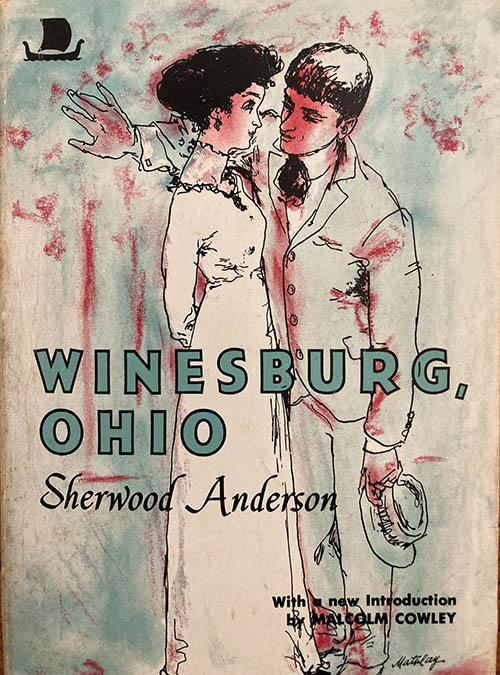
In the spring of my junior year at St. Olaf College, I signed up for an American Literature course, and from the first chapter of Winesburg, Ohio, I knew I’d found a writer who told complicated truths, addressing his readers as “you” and drawing them into the brilliantly told, unforgettable “moments” shared by his characters. Plot mattered less to Sherwood Anderson than epiphany—the “single moment of aliveness” that opened the door to something new.
I’d paid all of $1.45 for this book, and it was mine to keep. On the hand-sketched map of Winesburg opposite the title page, I drew an additional house on the outskirts of town and labeled it “Anastasia’s House,” using that pseudonym to disguise my wishful move to Winesburg from the prairies of Minnesota.
And then I switched my major from political science to English, deciding that I’d become like the unifying main character in Winesburg: young George Willard, newspaper reporter/writer, who’d witnessed what it meant to be human and then, as critic Malcolm Cowley wrote so accurately, “become the voice of inarticulate men and women in all the forgotten towns.”
Thank you, Sherwood Anderson.
The story above first appeared in our September/October 2026 issue.