Skip to content



Now in its fourth generation of ownership, The Smith House in Dahlonega remains closely tied to the state’s gold-mining history.
By Fred & Jill Sauceman | Photos courtesy of Mariah Bafile, The Smith House
Bessie Smith understood the magic that happens when buttermilk meets bird. In 1922, she served her first buttermilk fried chicken at The Smith House in Dahlonega, Georgia. Although the chickens no longer come from the backyard, the recipe has never changed.


That recipe is deceptively simple. Current Smith House owner Freddy Welch told us that diners frequently ask, “What all kinds of ingredients do you have in the chicken?”
In addition to the chicken, buttermilk, and self-rising flour, the only seasonings are salt and pepper. In pre-Depression days, Bessie Smith charged $1.50 for a full chicken dinner and overnight lodging. The chicken and the overnight stays are still part of the Smith House experience, as the Welch family celebrates 80 years with the business this summer. Freddy Welch’s parents, Fred and Thelma, took over the Smith House kitchen in 1946.
“Momma and Daddy kept some of the cooks, who were from the area,” said Welch. “Some of them had cooked in the Army during World War II.”
In the lobby of the Smith House is an ornate but functional relic that holds stories of Dahlonega’s past. The nickel-plated cash register was specially made by the National Cash Register Company (NCR) in the 1880s. One of its keys, labeled “Gold Bought,” is a direct link to the gold-mining history of Dahlonega. Gold was first discovered near there in 1828.
According to the Consolidated Gold Mining Company, which still exists today, Dahlonega was at the center of America’s first gold discovery when a deer hunter tripped over a glittering rock about 2½ miles south of the present-day town, setting off what is often called America’s first gold rush.
In 1868, Frank Hall, who had been a Union officer in the Civil War, moved from Vermont to Dahlonega to make his fortune in gold. He later opened the Frank W. Hall Merchandise Company on the town square and commissioned NCR to manufacture the cash register, which traveled by train from Chicago to Atlanta and by wagon from there to Dahlonega. It was Frank Hall who built what would become The Smith House in the 1890s before his death in 1901 from the typhoid fever he had contracted on a vacation trip to West Palm Beach, Florida. Over the years, his register fell into disuse. It was rediscovered in 2007 in the back room of a clothing store. The Welch family acquired it by donation in 2012 and had it restored four years later.

The cash register is not the only link to Dahlonega’s gold-mining history that diners can view at The Smith House. Records show that during construction of the house, workers discovered a vein of gold and quartz. When they were remodeling The Smith House in 2006, Welch and his wife Shirley found an old mine shaft. Apparently, Frank Hall was prevented from mining the vein of gold by city leaders who were fearful that the noise might disrupt downtown businesses a block and a half away.
“As we were taking up the floor of the main dining room, workers were breaking the concrete with a sledgehammer, and the pieces fell into what looked like a well,” Welch recalled. “It’s a hole 36 feet deep [that] had been used as a trash pit. We even found some old theatre seats in the mine shaft.”

Members of the Welch family are passionate caretakers of Dahlonega’s fascinating history. Their 40-room hotel and 104-year-old restaurant have evolved with the times, but the honest flavor of fried chicken remains.
The Smith House
84 South Chestatee Street
Dahlonega, Georgia
smithhouse.com
Fred and Jill Sauceman study and celebrate the foodways of Appalachia and the South from their home base in Johnson City, Tennessee.
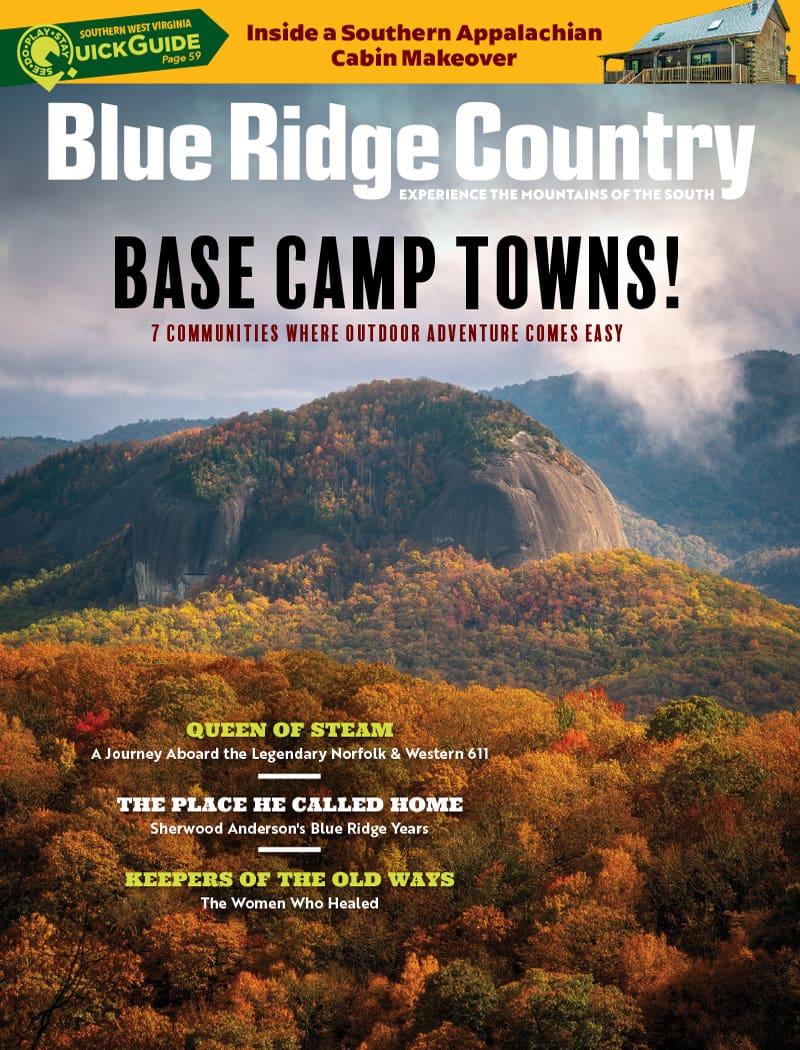
The story above first appeared in our July/August 2026 issue.