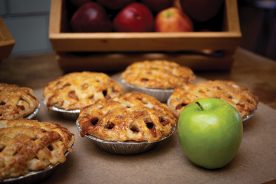
The Arkansas Black is certainly among the most fascinating of all the heritage apples that grow in the Blue Ridge Mountain region. Originating in the 1870s in, obviously, The Natural State, this variety is reputed to be a part of the Winesap family, which includes such esteemed members as the Black Twig, Stayman and, of course, the Old Fashioned Winesap. Indeed, if I made a list of my favorite 10 apples, these four would all be on it.
Photo Above: Arkansas Black apples sport an attractive reddish black color.
Photos Courtesy of Bruce Ingram.
The Arkansas Black’s charms are numerous. I relish eating them out of hand, but this variety excels as a cooking one too. The pies, cobblers, applesauce and other delights that Elaine creates from the crisp, juicy, coarse yellowish flesh are amazingly scrumptious.

Another virtue of the Arkansas Black is that it is among the best keepers, retaining its flavor well into spring. This apple is late ripening too, best picked in late October. This leads to another charm. Rock hard when picked, the Arkansas Black’s flavor improves as the apple ages and it softens, too, but not overly much. An appealing waxy finish also appears. The thick, tough skin also makes the variety more insect resistant.
An additional desirability is the appearance of this medium size, round apple. The attractive, reddish black skin features small, white dots that are fairly hard to see from just a few feet away. The one flaw of the Arkansas Black is that it is an extremely poor pollinator; it will need a nearby tree to help it in that regard. I planted our Arkansas Black near a well-established Dolgo crabapple, for example. Here’s Elaine’s recipe for a dessert she served to our family this past Christmas Day and hopefully on this December 25, as well.
Arkansas Black Cobbler
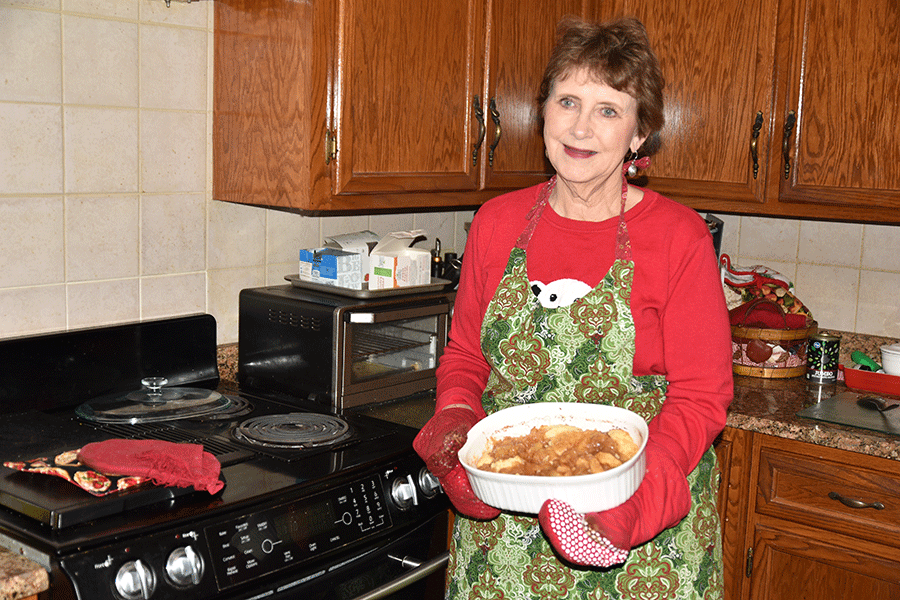
Serves 6-8
Ingredients:
- 5-6 cups peeled, sliced Arkansas Black apples
- 2/3 cup sugar
- 1/3 cup King Arthur Baking Company Pie Filling Enhancer (or thickener of your choice)
- ¾ teaspoon ground cinnamon
- ¾ teaspoon salt, divided
- 1 teaspoon vanilla
- 1 stick butter
- 1 cup flour
- 2 teaspoons baking powder
- 1 cup milk
Directions:
- Place peeled, sliced apples in large pot. Add sugar, cinnamon, and ¼ teaspoon of the salt. Stir. Cover and cook over low heat for 10-15 minutes to begin softening apples. Remove from heat and set aside.
- Preheat oven to 375 degrees F.
- Place 1 stick butter in 2-quart ovenproof baking dish. Place dish of butter in oven and heat until melted. Remove dish from oven.
- While butter is melting, combine flour, baking powder, remaining salt, and milk. Stir to combine. Allow to sit for 5 minutes for batter to thicken.
- Stir vanilla and pie filling enhancer into apples.
- Pour batter over melted butter. Spoon apple mixture evenly over top of batter.
- Bake for 35-40 minutes until light golden in color.
Serve as is or with ice cream or whipping cream.
Bruce and Elaine Ingram co-wrote Living the Locavore Lifestyle, a book about living in a sustainable fashion off the land through hunting, fishing, and gathering for food. For more information, contact them at bruceingramoutdoors@gmail.com.