For more stories like this subscribe today, view our digital edition or download our FREE iOS app!
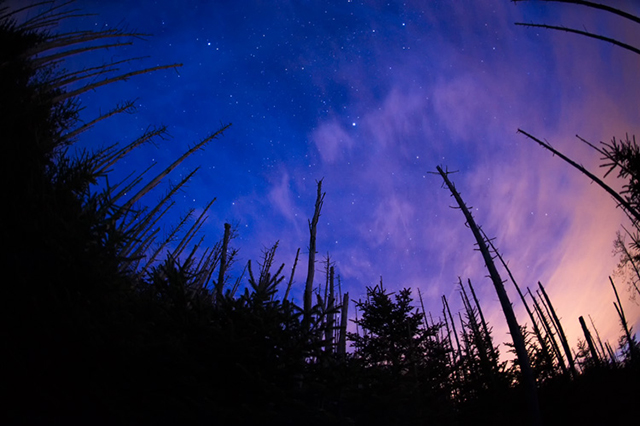
Today’s digital cameras do a terrific job of capturing the night sky. For the best images, you’ll want to use a DSLR camera that has a full-frame sensor. These cameras produce images that have much less noise than other cameras. Noise causes the image to look grainy and have less detail. You can certainly use cameras that have smaller sensors, including the newer mirrorless types, but with all else equal, the photos won’t be quite as good. You can forget using your smart phone for night photography. Today’s phone cameras can’t handle the high ISOs and long shutter speeds required to capture the night sky.
A good starting point for exposure is ISO 1600, f/2.8 (or as wide an aperture as your lens provides), and a shutter speed of 30 seconds. Under very dark skies, you can bump the ISO to 3200. If there is much light pollution, you might not be able to go as high as ISO 1600. These settings work well when using a wide-angle lens from about 14mm to 24mm. If you shoot with a longer focal length, the stars begin to show obvious steaking with a 30-second shutter speed. Remember, your tripod is moving under the stars during the exposure, the result of Earth’s rotation.

You can also shoot star trails. If you shoot longer shutter speeds, you’ll record streaks in the stars, which can make for a very dynamic image. With a digital camera, it’s best to shoot multiple exposures and stack them together, rather than shooting one very long exposure. A 2-hour shutter speed on a digital camera will produce a massive amount of noise, but shooting 30 4-minute exposures is very workable. A good starting point for exposure with star trails is ISO 400, f/4, and 4 minutes. Shoot continuous exposures and stack them in software. StarStaX is a free software that will do all the stacking work for you.
If you want to add a spark to your night-sky images, choose a composition that includes an interesting foreground element. You can illuminate the foreground using a flashlight or camera flash. To add even more drama, use colored gel filters to change the color of the foreground elements.
Kevin Adams has just completed a total revision to his popular North Carolina Waterfalls book, which will be available next spring. He offers night-photography photo tours and workshops in North Carolina’s mountains and on the Outer Banks. He also offers unique gear for night photography in his online store. For more info: kadamsphoto.com