Skip to content

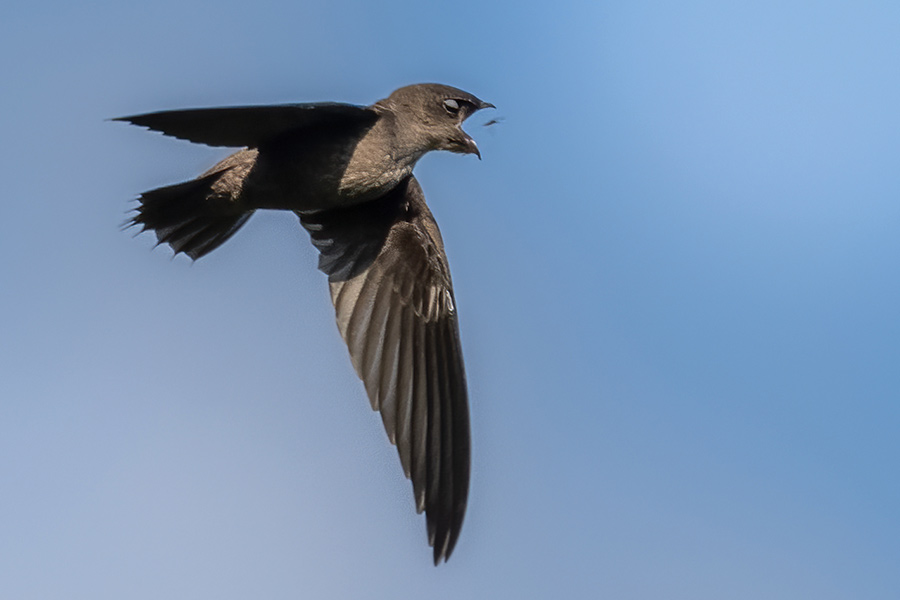
Swifts can eat up to 10,000 insects a day. Kevin Fox
As old industrial and school buildings and their chimneys disappear, so too do refuge spots for migrating swifts. Work is underway to create new hollow spaces for the birds to overnight safely.

In early March a band of chimney swifts set off on their long flight home, winging some 3,000 to 4,000 miles from their winter quarters in South America toward Southwest Virginia’s New River Valley. They fed on the wing, dodging skyscrapers, towers and hawks to reach their perennial nesting place.
What the exhausted avians didn’t know was that their landmark chimney home at Radford’s McHarg Elementary School was gone, demolished in a renovation.
Radford bird lover Wilson Rankin, intimately acquainted with the swifts’ nesting fidelity year after year, has reason to be deeply worried.
“Chimney swifts are a ‘near-threatened’ species here and ‘threatened’ farther north,” Rankin says. “The loss of nesting sites in traditional chimneys has really hurt them, that and the decline of the insect population.”
Rankin, his wife Liz Altieri, and a band of Radford cohorts were determined to not let the swifts’ return to Radford last spring become a sad story. Although McHarg chimney was gone, they planned an artificial chimney tower behind the school, specially designed for swifts by the architecture firm that created plans for the school renovation. The Radford group had raised the necessary $15,000 over the winter months. By April 1—the swifts’ historical homecoming date in Southwest Virginia—the 18-foot tower of recycled brick was ready to welcome the first swifts.
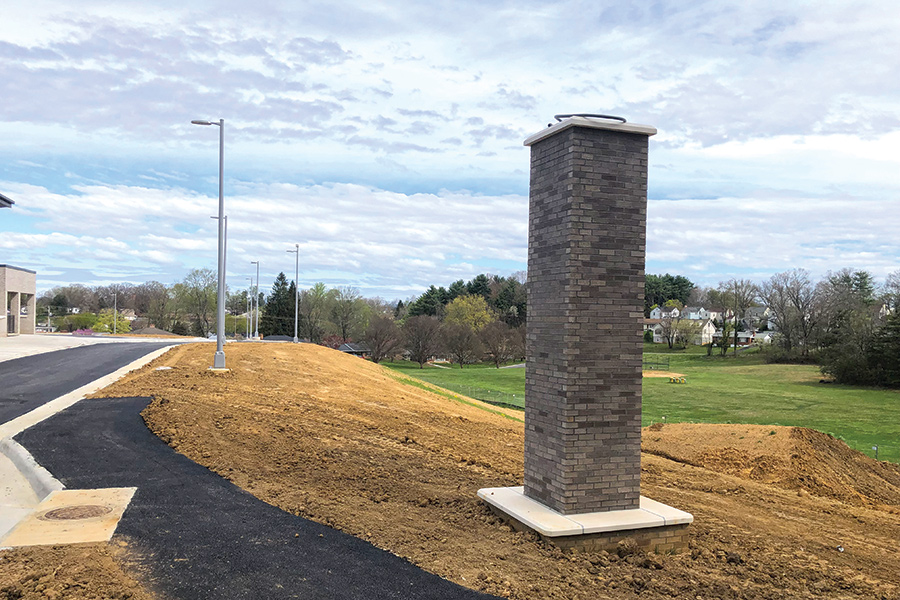
That chimney will welcome migrating swifts again in September, as the birds undertake their long flight back southward.
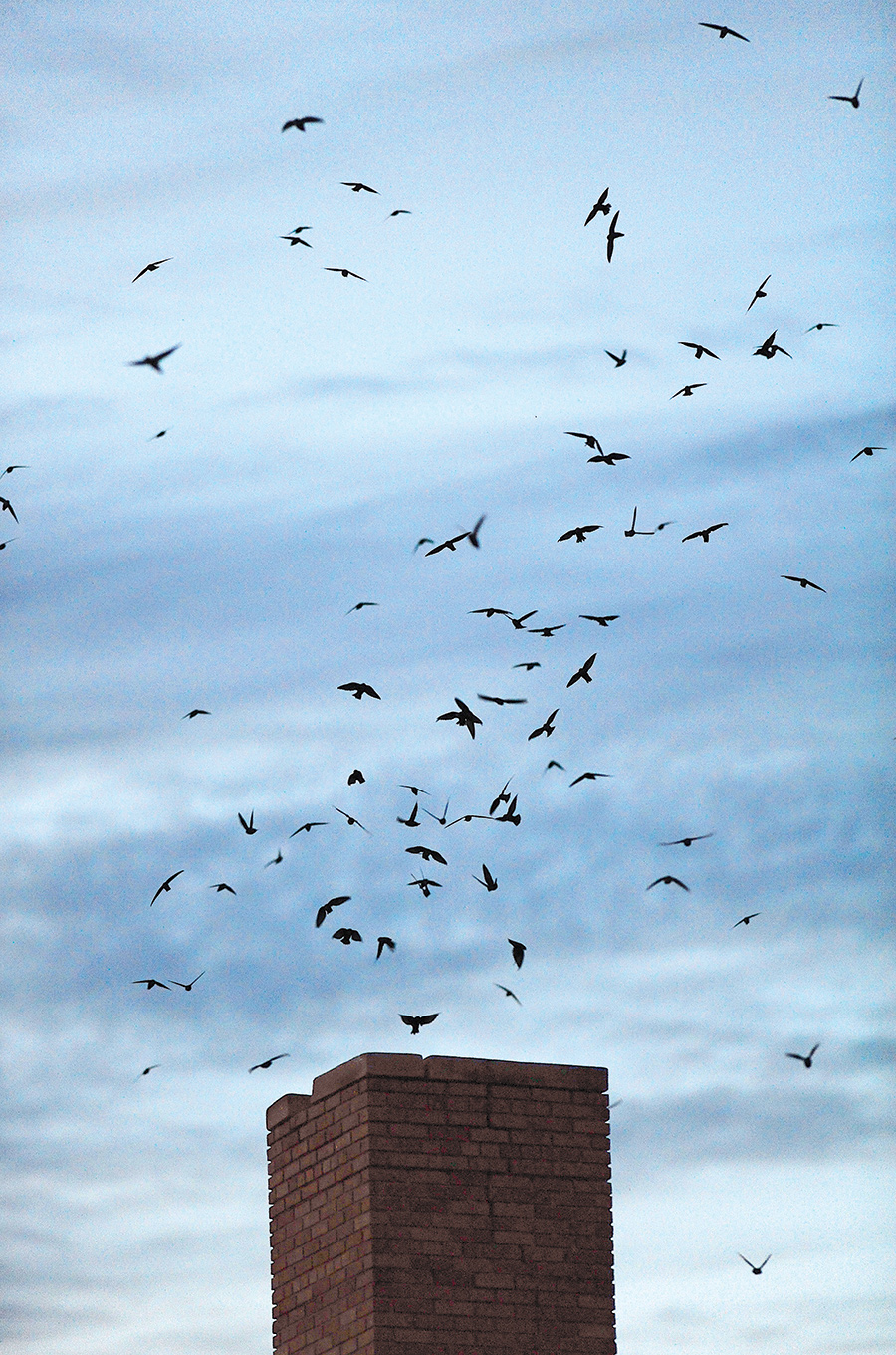
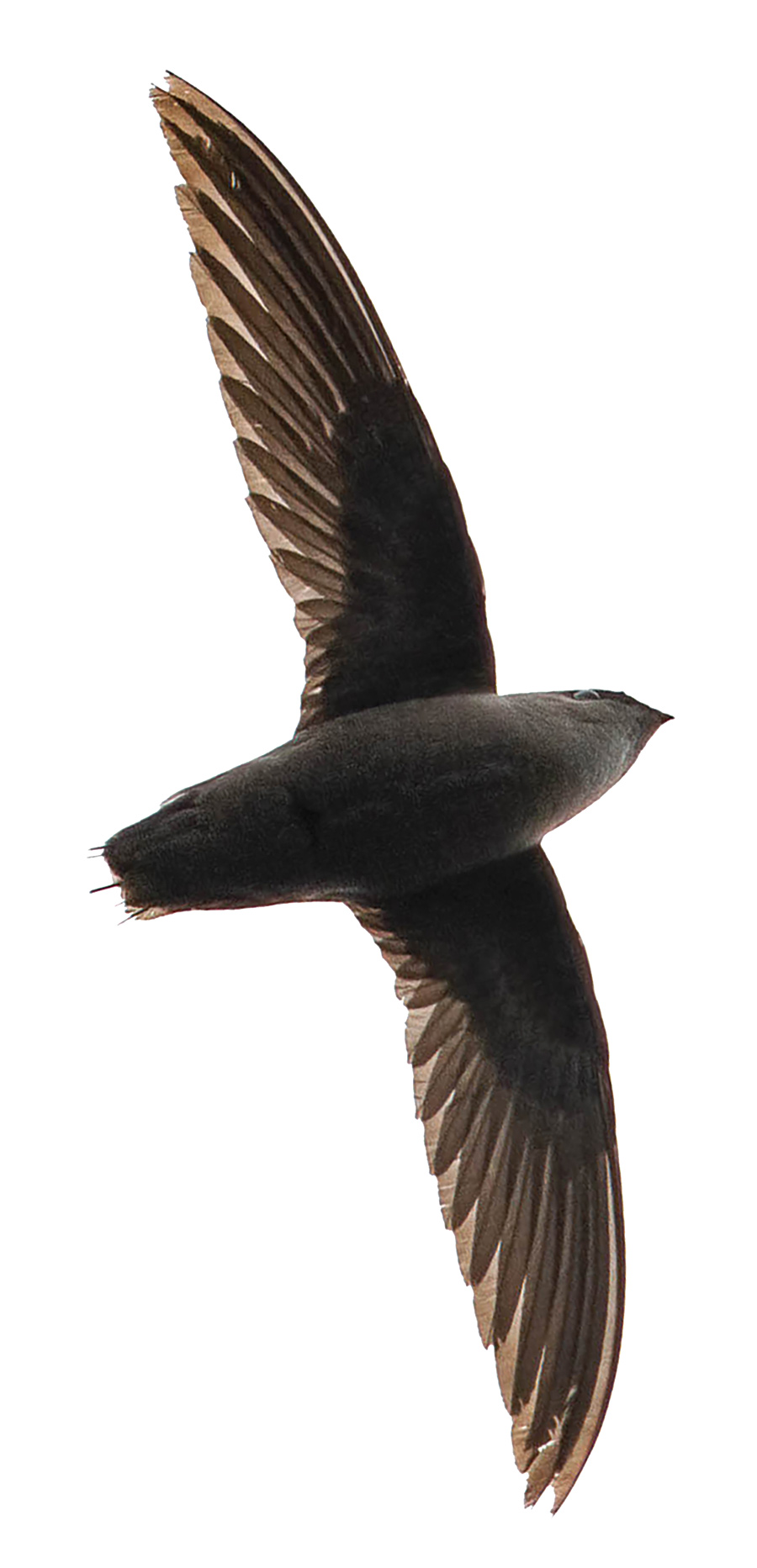
The plight of chimney swifts is dire everywhere. In Canada their numbers are down by more than 95 percent, partly due to the loss of safe nesting sites. While swifts are well adapted for flying, their long wings and short legs make it impossible for them to perch on branches like other birds. If swifts can’t find shelter inside hollow trees or chimneys, they overnight out in the elements clinging to walls or cliff sides.
The loss of chimney swifts is a loss to the community. A swift can dine on up to 10,000 mosquitoes, termites, flies and other insects a day during nesting season. But the swifts’ greatest appeal for many, including Rankin, is the beauty of their swooping flight and murmuring chitter.
The sight of these acrobatic birds swirling into funnels over the area’s largest chimneys at sunset is becoming increasingly less frequent. Rankin still remembers when he became aware of swifts, at the McHarg School some 30 years ago.
“When I’d take my daughter to the playground in the evenings, I enjoyed watching the swifts swooping around the chimney as it got dark—hundreds of swifts,” he says.
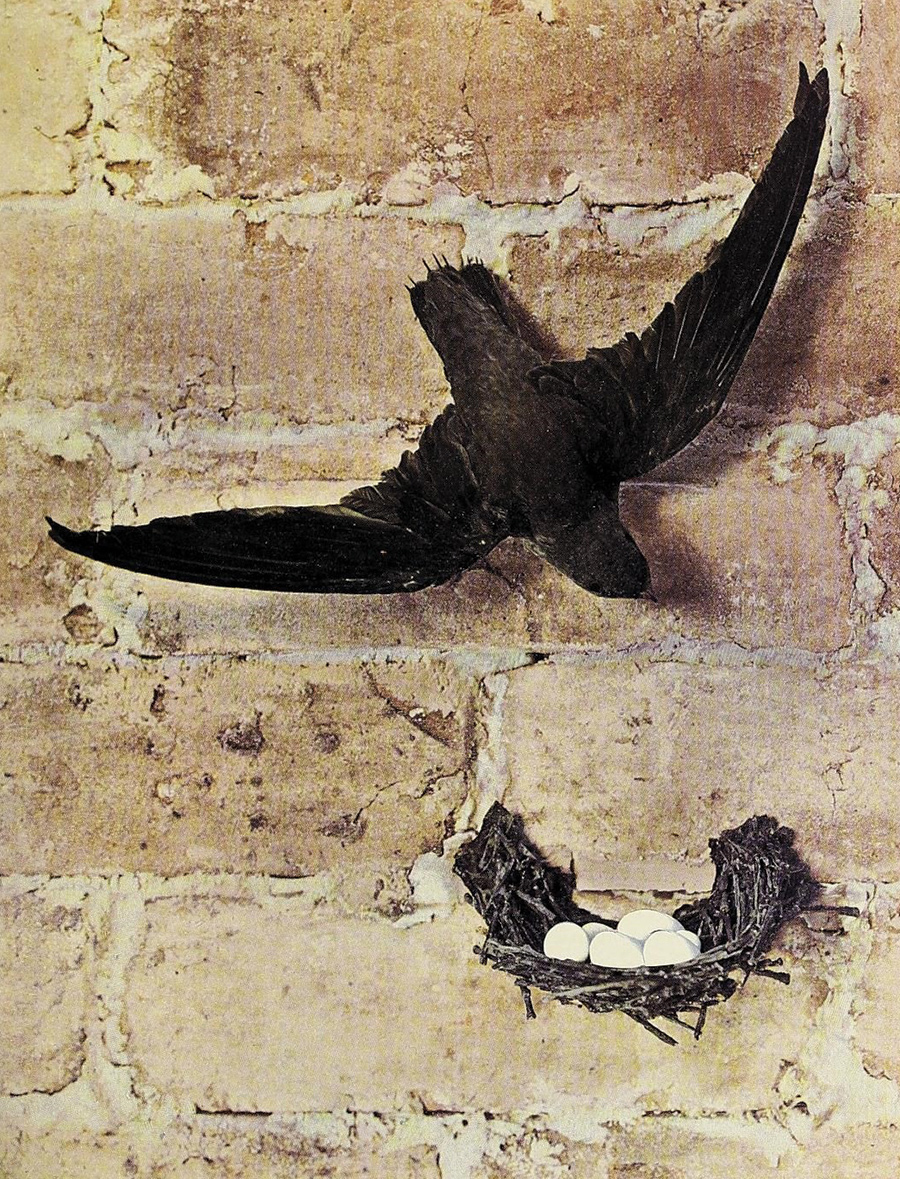
Swifts use their gluey saliva to build cup-like twig nests against the chimney’s rough interior walls. Old factories and schools with large chimneys like McHarg School’s are being torn down, and most new houses have capped chimneys with smooth metal liners if they have chimneys at all. The swifts, who return to their natal nesting area each year, are left without protective homes.
While artificial chimney-swift towers are rare in Virginia, the Audubon Society of Western Pennsylvania has constructed 150 such structures around Pittsburgh.
Tennessee makes swift-chimney construction plans available to the public (tn.gov/twra/wildlife/woodworking-for-wildlife/chimney-swift-chimney-plan.html).
A historical marker at a swift tower in Shelby County, Tennessee, commemorates work started in 1932 by amateur Tennessee ornithologists, who banded 113,000 swifts and determined the birds overwintered in South America’s Amazon basin.
In West Virginia, the Brooks Bird Club has funded five chimney swift towers, including one in Little Beaver State Park. When one of West Virginia’s largest swift roosting sites was slated to be demolished at Shepherd University, the Potomac Valley Audubon Society built a 30-foot chimney swift tower nearby. Swifts began nesting there in 2020.
In North Carolina, the nonprofit Wildlife Rehabilitators of North Carolina awards small grants to groups building swift towers. Tar Heel birdwatchers have compiled a list of chimney swift roosting sites that includes an Asheville paint store, a Wilkesboro school, and the stone North Carolina Building on Lees-McRae College campus. (nc.audubon.org/news/how-watch-chimney-swifts-north-carolina-fall).
Many folks will likely find pleasure in simply sitting beneath the tower, watching the swifts dive in and out. The public is welcome to visit the spot atop the school’s “Sledding Hill.”
For the Chimney Swift Conservation Association’s info on swifts and towers: chimneyswifts.org
Swifts Nights Out: Where to Watch
The months of September and October offer several organized opportunities to watch the magic of swifts appearing to be vacuumed into man-made chimneys. Here are a few in the region:
- Wilkesboro, North Carolina. September 8; 6:30 p.m. Wilkesboro Elementary School.
- Banner Elk, North Carolina. September 12; 6:30 p.m. Lees-McRae College.
- Asheville, North Carolina. September 26; 6:45 p.m. Asheville Civic Center.
The story above first appeared in our September / October 2022 issue.