Skip to content

Our hard-traveling dining writers celebrate many things northern Georgia, including a hole in the wall . . . wait, the Hole in the Wall!
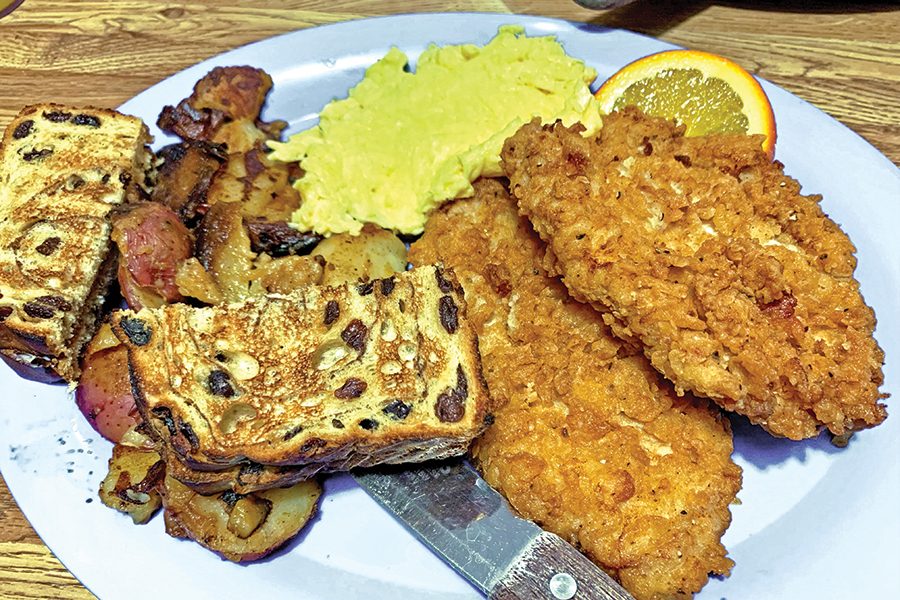
Photo Above: At Hole in the Wall, breakfast, including pork tenderloin, is served all day.
Photos Courtesy of Fred and Jill Sauceman.
For us, northern Georgia is a land of endless discovery. As Blue Ridge Country begins its 36th year of publication, we are reminded of the magazine’s mission of finding and celebrating places that are often overlooked.

While northern Georgia has its share of well-known restaurants like The Dillard House, it’s also home to many whose owners quietly go about their business, with little attention from outside the area.
And the cuisine of northern Georgia is incredibly varied. We have eaten Republican barbecue in East Ellijay and Democratic barbecue in Cherry Log. In Habersham County, we were served barbecue with a side of polenta by an Italian restaurant owner from New Jersey.
We found convenience-store fried pies that we ate in the car in Rabun County, and we began an elegant, farm-to-table meal with bowls of winter squash bisque at Harvest Habersham, in the beautifully named White County town of Sautee Nacoochee.
House-cured country ham and green tomato relish often call us back to The Dillard House, where boardinghouse-style meals have been served since 1917.
Perhaps most surprising of all, we found flavors of the Caribbean in the mountains of northern Georgia and reported on them last year. Elizabeth Correa served us rum cake laced with Italian limoncello liqueur at her café in McCaysville. Dan Hernandez placed before us his Cuban grandmother’s version of picadillo at Dan’s Grill in Blairsville. Across town, Lissy Rodriguez, owner of Lala’s Kitchen, placed before us the best restaurant flan we have ever found, and in that same town, at Nani’s, we savored plates of Cuban ropa vieja, black beans and yellow rice, prepared by Ray Arrazcaeta, who is Cuban, and his wife Marife, who is Puerto Rican.
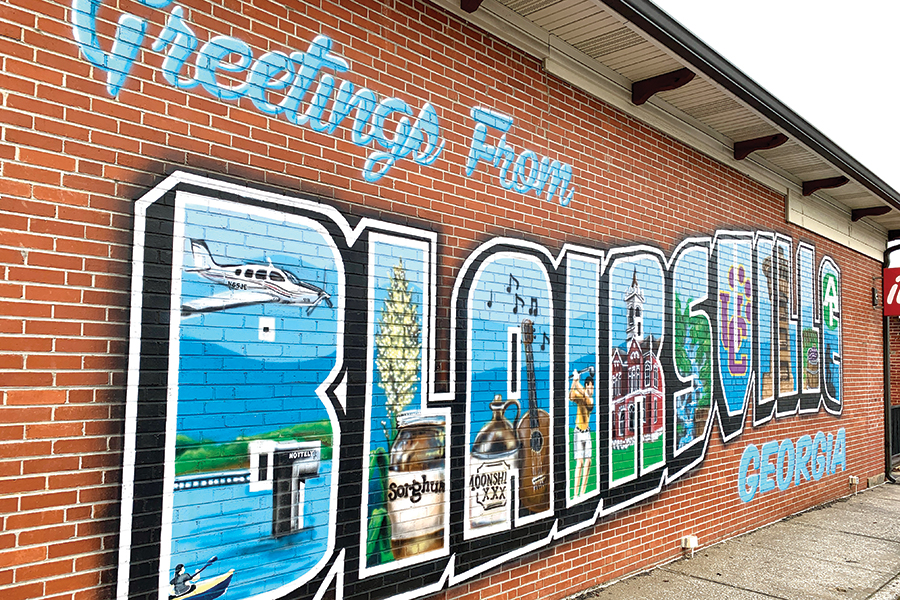
All these Latin American immigrants told us they were drawn to northern Georgia by the friendliness of the people and the beauty of the mountains. We were drawn there, too, by the promise of sorghum syrup. Blairsville is home to an annual festival in October that highlights this amber-colored sweetener made from cane that originated in Africa.
In late 2022, we arrived in Blairsville several weeks after the festival had ended, but we were able to find one of the few remaining quart jars of Terry Hughes’ “Pure North Georgia Sorghum Syrup.” The Hughes family has been making it in Young Harris since 1954. We took it home and held a sorghum syrup tasting on Christmas Eve that year. Then in February of 2023, we spoke about sorghum and served sorghum-flavored dried apple stack cake at the annual convention of the National Sweet Sorghum Producers and Processors Association in Pigeon Forge, Tennessee. The convention always includes a sorghum competition. That year there were over 50 entries, and Terry Hughes’ Georgia sorghum captured first place.
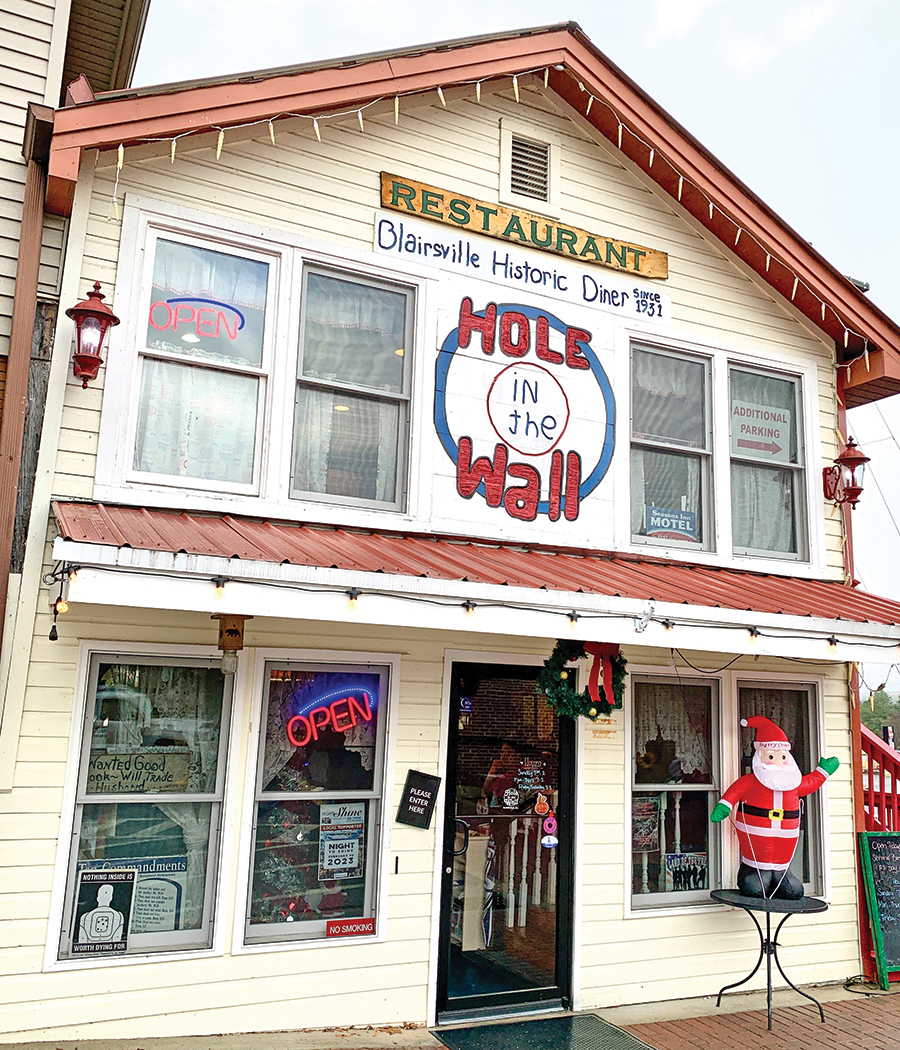
While we were walking around the courthouse square in Blairsville, we noticed a restaurant called Hole in the Wall. Despite the fact that we have made many food forays into northern Georgia and despite the fact that the business dates to 1931, we had never come across any references to Hole in the Wall before. Very few articles have been written about the place, and there are only a handful of cursory reviews online. Since we love courthouse-square towns and restaurants with longevity, we stopped in for breakfast, which is served all day.
In doing some research, we discovered that Hole in the Wall actually began as a food truck during the Great Depression. Margie Henson sold sandwiches out of the back of her truck on the square before purchasing the building and establishing a more conventional eatery. According to the Union County Historical Society, she made history by “becoming Union County’s first independent and divorced business woman.”
During World War II, we learned, the restaurant (then called the Blairsville Restaurant) served as a Trailways bus stop, where tickets were sold inside. With the draft board located right next door, it was the place where soldiers boarded buses to take them off to war. And, a couple of times a year, an itinerant dentist stopped in to pull teeth.
“Elbows up,” our server says, as she delivers big platters of breakfast fare at Hole in the Wall. The restaurant calls them “Down Home Mountain Breakfast Specials.” The Moonshiner includes two eggs, bacon or sausage, and a choice of biscuits and gravy, French toast or pancakes. You can get a big slab of country ham with redeye gravy, too.
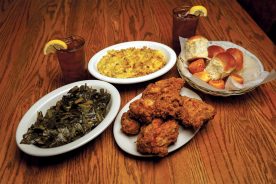
Our favorite, and the standard by which we judge all breakfast places in the South, is the pork tenderloin. Chef Mark Cox at Hole in the Wall does it in a grand way, breaded and fried. Throughout the day, other Southern favorites include blackeyed peas, fried okra, liver and onions, rainbow trout and catfish. Hole in the Wall is the kind of place where you feel like staying all day, and the coffee just keeps on coming.
On our way back to Tennessee, we take a detour through Mineral Bluff, Georgia, attracted by the largest collection of metal sculptures we had ever seen, at a hillside business called The Zoo. We purchase a metal aloe plant and a handsome metal rooster as lasting reminders of our good times and fascinating discoveries in northern Georgia.
Fred and Jill Sauceman study and celebrate the foodways of Appalachia and the South from their home base in Johnson City, Tennessee.
The story above first appeared in our March / April 2024 issue.