Skip to content

“Spring is sporting jaunty speckles. My lawn has dandelion freckles.” ~Ginny Neil
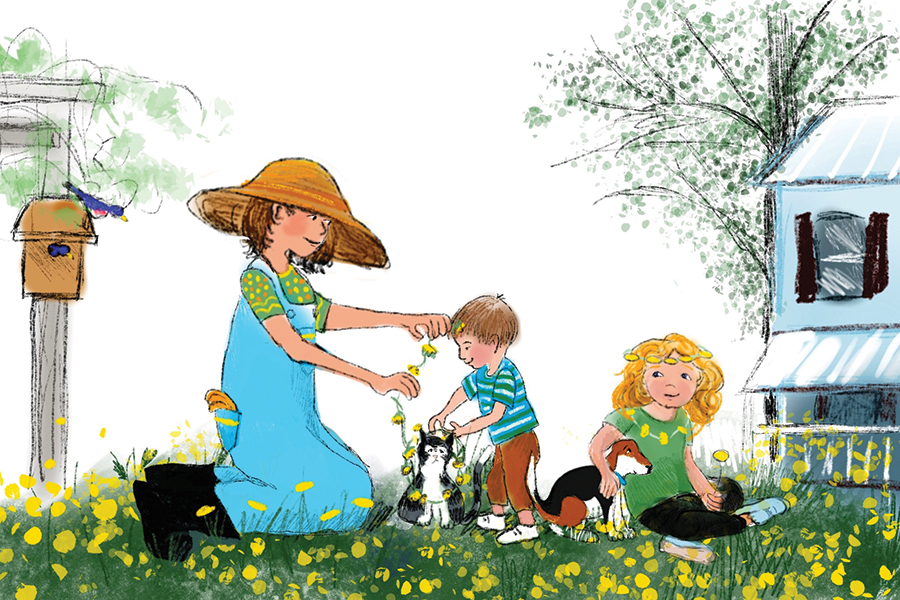
The amount of light in each day is growing, which means spring is coming and one of my favorite spring rituals cannot be far behind. While many homeowners may groan at the arrival of dandelions, I am delighted to see them popping up all over. It’s time to teach my grandchildren to make dandelion crowns. As I sit in the warm sun and poke a slit into one long stem after another, and then thread them through each other, I think about all the other childhood pleasures I associate with dandelions. My Papa taught me to look for fishing worms congregating around their deep tap roots. My sister and I made wishes as we blew dandelion clocks into clouds. My sons used to bring me bouquets to place in vases around the house.
Taraxacum officinale, the dandelion’s Latin name, gives a nod to its medicinal uses while its family name, Asteraceae, refers to its star-shaped flower head. Early Americans mispronouncing the French name “dents de lion,” which describes the lion-toothed appearance of the leaves, led to the common name “dandelion” which I find especially appropriate. It conjures up something both beautiful (dandy) and strong (lion).

When I taught STEM, my students observed and reported on dandelion phenophases for Project Budburst. Sponsored by the Chicago Botanic Garden, this citizen-science project gathers data from people around the world about the timing of various biotic events. Scientists use it to create computer models that predict how climate and ecosystems will change decades and even centuries into the future.
Dandelions are ubiquitous, which made them the perfect plant for my students to study. A dandelion’s predictable life cycle from leafy rosette to fluffy puff ball is affected by climate. It seems to me that the cycle happens earlier and lasts longer than it did 50 years ago. The data that my students and other citizen scientists around the world have collected about the phenophases of various plants will prove or disprove my casual observation.
But, that’s not the only reason I love these shaggy-headed heralds.
Dandelions are practical. They have been used medicinally to treat many things including fevers, toothaches and constipation. Their stems and heads are great for making a pale yellow or purplish dye. Their roots can be dried and used as a coffee substitute, while their blossoms yield tasty fritters. A student once brought me a jar of delicious dandelion blossom jelly. My mother-in-law, who lived through the Depression, welcomed spring with dandelion green salad. And, who hasn’t heard of, or perhaps tippled, dandelion wine?
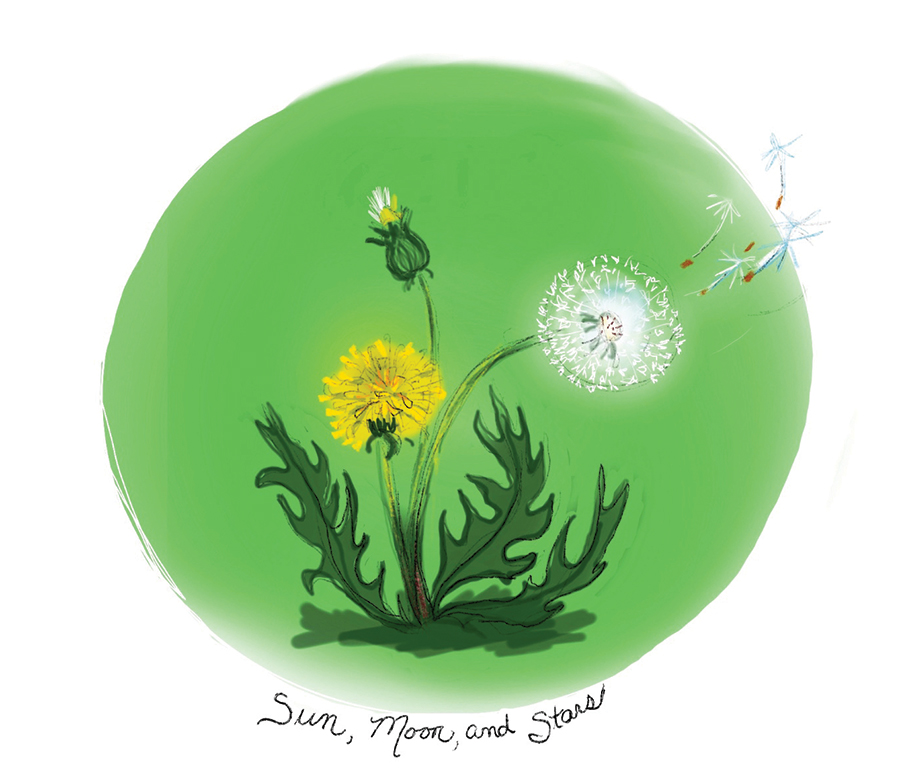
The flowers are also poetically beautiful because they represent the three celestial bodies. First, they open into mini suns. Then, they transform into silvery moons before releasing tiny stars to the wind.
I think I should strive to be as beautiful and helpful as these weedy wonders. Meanwhile, I am happy to see them popping up all over the lawn. It means that spring is finally showing her warm face, one jaunty, yellow freckle at a time.
Geneva’s Spring Salad
As soon as dandelion rosettes appeared, my mother-in-law gathered the tender leaves, washed and dried them, and then sometimes added bacon and onions to the salad. She poured this dressing over top.
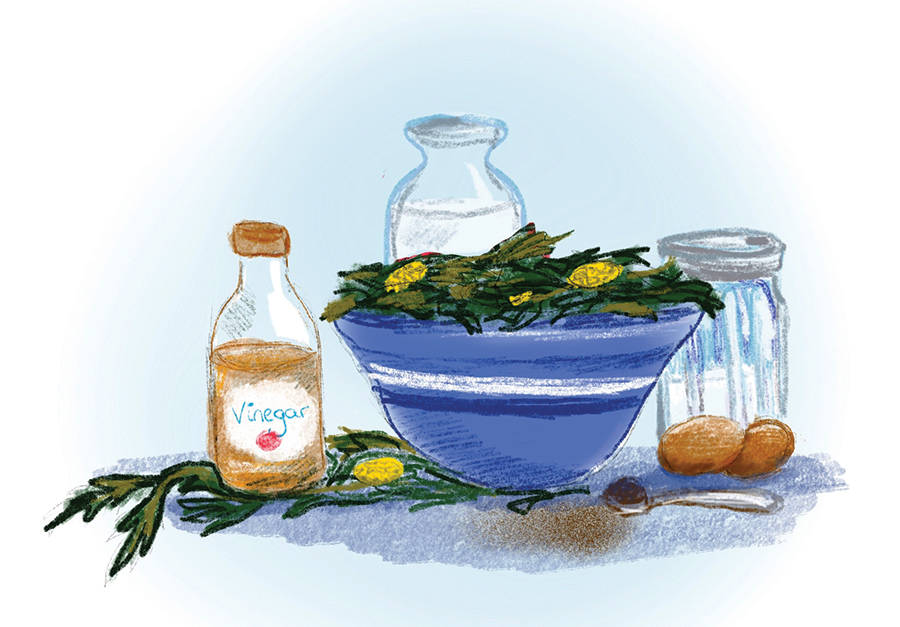
Hot Dressing:
Ingredients:
- 2 eggs beaten
- ½ c. vinegar
- 1 c. milk
- ½ tsp. salt
- ½ c. sugar
- ½ tsp. celery seed
- ½ tsp. mustard seed
- ½ tsp. dry mustard
Combine eggs, milk, sugar and seasonings. Heat vinegar. Slowly pour in egg mixture, whisking as you go, and cook at a low simmer until thickened.
The story above first appeared in our March / April 2024 issue.