Skip to content


The story below is an excerpt from our May/June 2015 issue. For the rest of this story and more like it subscribe today, view our digital edition or download our FREE iOS app!
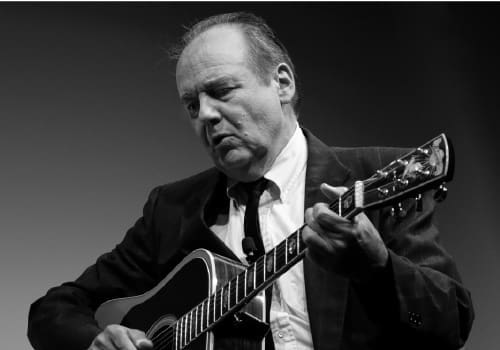
Gary Reid is an author, historian and actor from Roanoke, Virginia. His recent book, “Music of the Stanley Brothers,” is the culmination of 39 years of researching the recordings of Carter and Ralph Stanley. He is also a co-author of “The Bluegrass Hall of Fame Inductee Biographies 2001-2014” and recently launched a one-man play called “A Life of Sorrow, the Life and Times of Carter Stanley.”
My friend Stephen Wade released a book not long ago called “The Beautiful Music All Around Us” (University of Illinois Press). In it, he traces the histories of 13 iconic field recordings from the 1930s and ‘40s that today are housed in the Library of Congress. Although Stephen’s book covers material from many parts of the country, I like to think of the title in context of a more narrowly defined locale, the beautiful music all around us – in the Blue Ridge region.

Music has existed in the area for as long as it has been settled, and likely before that as well. The music that has survived and evolved encompasses a broad range of genres and styles including blues, ballads, string bands, gospel, fiddle and banjo music, bluegrass, folk, singer/songwriter, and much, much more.
As long as there have been mechanical means to capture the sounds of the region, people have been coming to harvest the homegrown music. Among the earliest to do so was Ralph Peer when he set up the now-legendary Bristol sessions in July and August of 1927, in what is today referred to as the Big Bang of Country Music.
Others followed, such as John and Alan Lomax. Later, in the middle 1960s, the fledgling County Records of New York sent recordist Charlie Faurot to Galax and Mt. Airy. There, he produced seminal performances by now legendary names such as Tommy Jarrell, Fred Cockerham, and others.
It wasn’t only through recordings that people got to hear the beautiful music. Virginia’s White Top Mountain festival in the 1930s was one of the first large scale events to feature music of the region; it eventually attracted notables such as First Lady Eleanor Roosevelt. Fiddlers contests and a bevy of up-and-coming radio stations made the music very accessible to the masses.
The music of the Blue Ridge has a long, rich, and storied past, and it is still with us today in places like Hiltons, Clintwood, Wilkesboro, Floyd, Galax, Cherokee, Asheville, and many others. As we now face the warm months of summer, it is festival season. Some are devoted strictly to music while others celebrate local heritage, of which music plays a significant role.
Abundant natural resources of our area light our homes and keep us warm in winter and cool in summer. The music of the Blue Ridge offers a different kind of energy, a sustenance for the heart, body, mind, and soul. Although there’s no danger of it running out, it is a renewable resource that needs us just as much as we need it. This summer, take time to soak up talents of our wonderful music makers, and enjoy the beautiful music around us – in the Blue Ridge.