Wild Edibles

CURRENT Wild Edibles

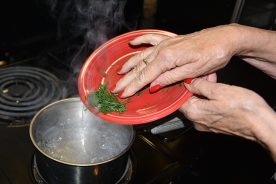
Add snipped white pine needles to boiling water.

February’s Wild Edible: White Pine Tea

White pine tea has a piney smell and a slight citrus taste, and is actually quite good for us because of its high Vitamin C content.
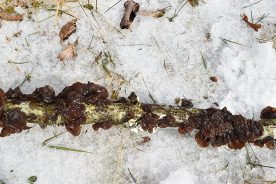
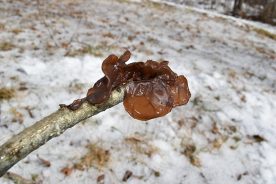
A tree ear mushroom looks remarkably like a human ear.

January’s Wild Edible: The Tree’s Ear Mushroom

Auricularia auricular, also known as the wood ear or jelly ear, is a member of the jelly and rubbery fungi family and is commonly found throughout the Blue Ridge Mountain range.
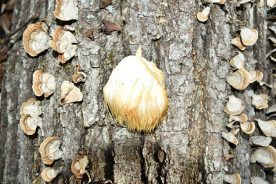
Lion's Mane growing on an oak tree

December’s Wild Edible: The Lion’s Mane Mushroom

A choice edible, this prize fungi is described as having a seafood texture, which is understandable as many fungi fanciers say Hericium erinaceus possesses a slight seafood flavor of perhaps shrimp or lobster.
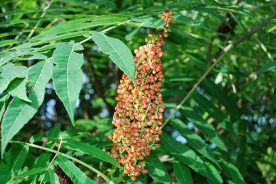
Staghorn sumac bobs are a distinguishing characteristic.

November’s Wild Edible: Staghorn Sumac Tea

Staghorn sumac (Rhus typhina) is a fairly common small tree in the Blue Ridge Mountains, often thriving along forest edges or in abandoned fields.
Cauliflower mushrooms add zest to any number of entrees.

October’s Wild Edible: Cauliflower Mushrooms

Spot one from afar, and you’ll likely agree that the creamy white clump growing from an oak’s base or its roots make the cauliflower mushroom look like the namesake vegetable.

Departments

Knoxville Asian Festival, August 29-30,  Knoxville, Tennessee. Photo courtesy of Asian Culture Center of TN
Events

Fall 2026 Festivals & Events Guide

From the Virginias and the Carolinas to Georgia, Tennessee, and Kentucky, our annual compendium is the perfect travel companion. Inside,

4th of July Parade & Festival, July 4, Blowing Rock, North Carolina.
Events

Summer 2026 Festivals & Events Guide

From the Virginias and the Carolinas to Georgia, Tennessee, and Kentucky, our annual compendium is the perfect travel companion. Inside,

CALENDAR OF EVENTS