Skip to content


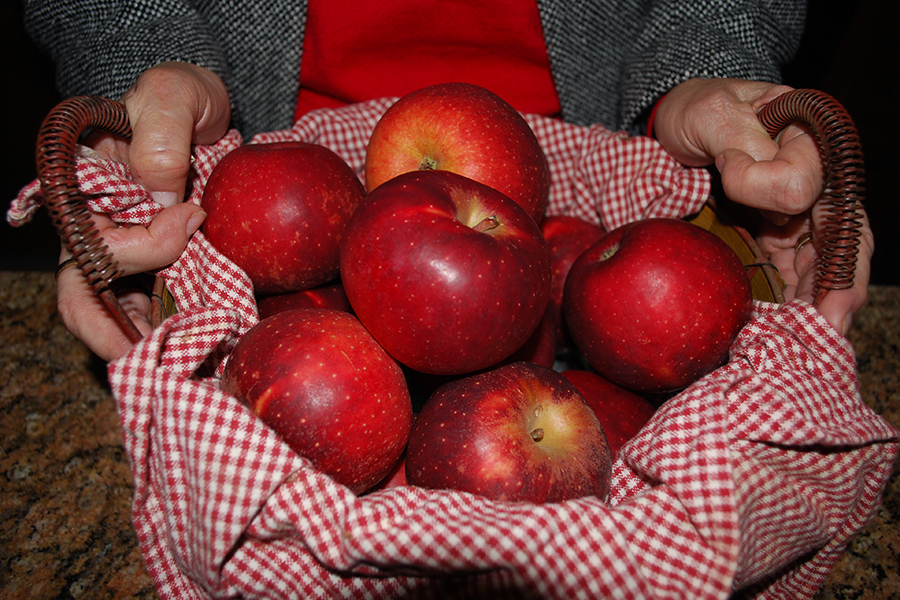
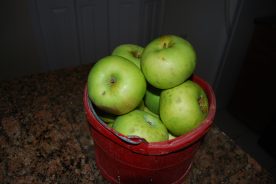
One of the truly great heritage Blue Ridge apples is the Old Fashion Winesap, often called simply Winesap.
Interestingly, this variety did not originate in our region, probably first appearing in New Jersey in the 1700s. But it has been an important mountain apple for some 200 years, and one that held a cherished place in the orchards of subsistence, highland farms. Also of note is that the Winesap is the parent apple, so to speak, of many Southern varieties such as the Blacktwig, Arkansas Black and Stayman – all classic, vintage apples in their own right.

The Winesap features other charms. Though small to medium in size, the apple flaunts winey red hue that is stunningly attractive. On the shaded side, a pleasing yellow background exists. The yellow flesh sports a winey aroma and a crisp, juicy texture, making this variety a fine eating-out-of-hand one.
Like all members of this family, the Winesap excels as a pie apple, and when the first apples appear, usually in early October at country stores, I beg Elaine to bake us a pie. The Winesap’s innate juiciness and firmness is readily apparent in those pies and enhanced with several dollops of vanilla ice cream. Cider and cobbler fans will similarly appreciate this variety’s traits.
Regardless of all these charms, a different trait was why our ancestors treasured the Winesap – it is truly one of the great keepers. Winesaps harvested in October can often still be good to eat well into spring. Indeed, the ones Elaine used to make applesauce for this story came from our “apple refrigerator” in early June. The only negatives I’ve ever heard about the Winesap is that its pollen is sterile and thus is useless as a pollinator, and the tree can be difficult to grow. But those few flaws are nothing compared to this variety’s overall excellence. Here’s Elaine’s recipe.
Winesap Applesauce
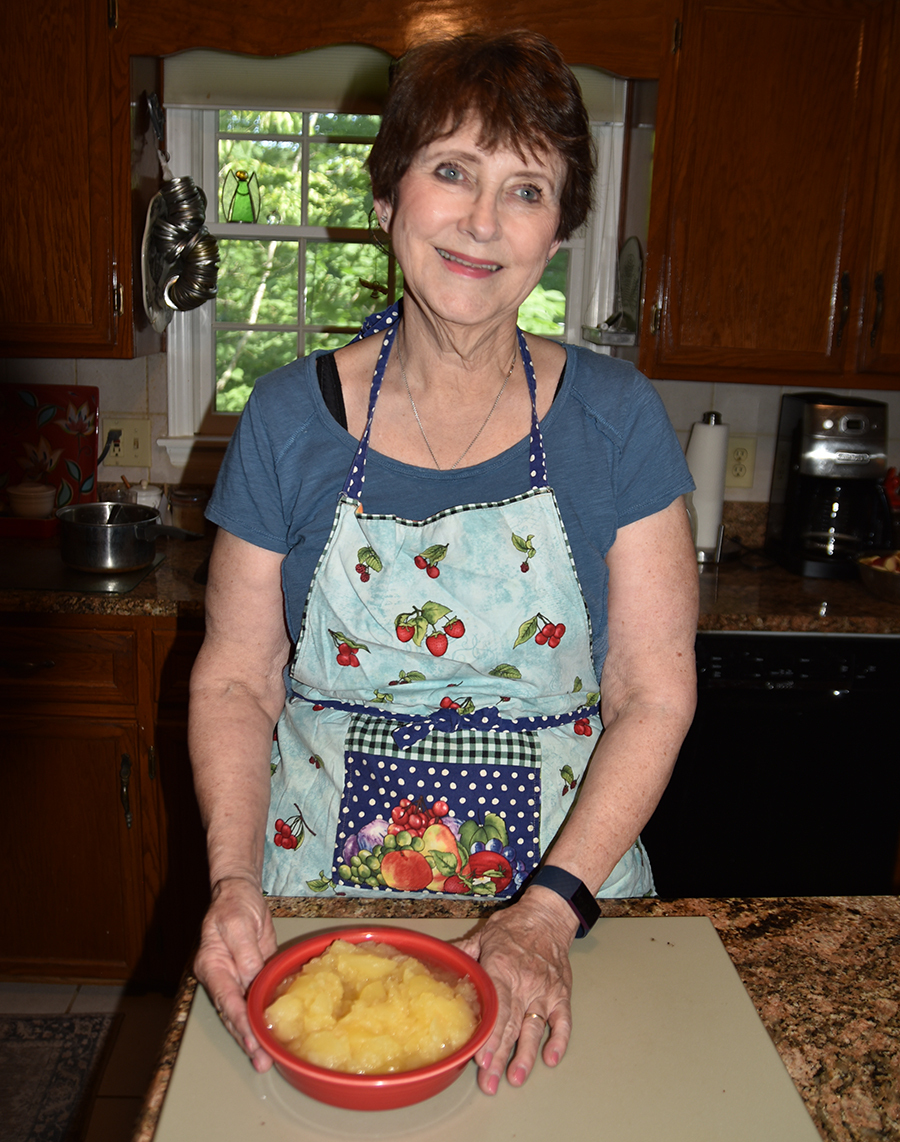
Makes 2-3 cups
Ingredients:
- 4 cups peeled, sliced Winesap apples
- ¼ cup sugar
- 1/4-1/3 cup water
Directions:
- Put sliced, peeled apples in large pot on stove. Sprinkle with sugar and water.
- Cook, covered, over medium heat until apples start to bubble.
- Reduce heat to low, cover, and cook 15-20 minutes more until apples are mushy. Cook longer for a smoother applesauce, but for chunkier applesauce cook less.
Note: Bruce prefers the chunky version (the chunkier the better he says) and delights in adding cinnamon and vanilla to his sauce. My husband’s favorite way to eat this applesauce is in oatmeal with bananas, blueberries and, again, cinnamon and vanilla, plus ginger and cloves. I prefer Winesap Applesauce on the smooth side with no vanilla and a touch of cinnamon.
Bruce and Elaine Ingram are authors of Living the Locavore Lifestyle about hunting, fishing and gathering for food (with recipes) as well as raising chickens, fruit trees and a garden. For more information: bruceingramoutdoors@gmail.com.