September’s Wild Edible: Old Man of the Woods Mushroom

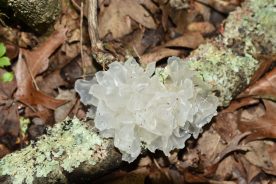
This Old Man of the Woods was found growing in the mountains of Craig County, Virginia.

Certainly, one of the most colorfully named wild, edible mushrooms in our region is the Old Man of the Woods. Appearing July through October, Strobilomyces floccopus features a two-to-five inch wide grayish black cap that is quite distinct in appearance, but hard to spot among the forest duff.

Also of note, this member of the Bolete family can grow among hardwoods, mixed hardwoods, and pines in our region. This adaptability makes the Old Man one of the most common mushrooms found during summer and early fall hikes in our mountains. Although this fungi is typically found, there never seems to be more than one or two in a general area. Because of that likelihood, Old Man of the Woods is rarely the main event in any mushroom-themed meal.

As always with mushrooms, I suggest that the first time gatherers search for any species unfamiliar to them, that they go with a fungi expert who can positively identify the species. Also, even edible mushrooms can have disagreeable effects on some people, especially if they have not been cooked beforehand. Always just eat small amounts of a species the first time it’s consumed.


Bruce and Elaine Ingram will profile a different wild edible every month. For more information on their book Living the Locavore Lifestyle, contact them at bruceingramoutdoors@gmail.com

You Might Also Like:

The Giovanni is an Italian-American creation born in West Virginia.

Discovering the West Virginia Giovanni

This flavorful sandwich is a product of the rich Italian heritage of the Mountain State.
e1b70596-05c8-11f1-92e0-1248ae80e59d-3-2026rueanemone--credit-Joe-Cook

March’s Mountain Wildflower: Rue Anemone

A member of the buttercup family and found in the open woodlands, rue anemone (Thalictrum thalictroides) has long, thin stems that tremble in the slightest of winds—prompting its other common name, windflower.
Pokeweed growing in Floyd County, Virginia.

January’s Wild Edible: Pokeweed

Pokeweed is one of the wild plants that is most associated with the Blue Ridge Region.
The pawpaw version of Ale-8-One debuted in the summer of 2025, in a limited edition.

Ale-8-One: Welcome to ‘Tropical’ Kentucky

This 124-year-old soft drink company continues to innovate and thrive.
Arkansas Black apples sport an attractive reddish black color.

December’s Blue Ridge Mountain Apple Profile: Arkansas Black

Originating in the 1870s in, obviously, The Natural State, this variety is reputed to be a part of the Winesap family, which includes such esteemed members as the Black Twig, Stayman, and, of course, the Old Fashioned Winesap.
A purple-spored puffball growing in a field in Botetourt County, VA.

December’s Wild Edible: Purple-Spored Puffball

The purple-spored typically grows in this region’s fields, often appearing from October through December and into early January.
The Fork and Plough name reflects the professions of the owners — chef and farmer.

Fork and Plough: Neighborly and Nimble

At this Greenville, South Carolina, eatery, the menu changes literally every day, based on what’s available locally.
d289022c-696f-11f0-a179-1248ae80e59d-CGZ_0845-011

Ride the Rails, Explore Rockbridge County: Make a Weekend of the 611 in Goshen!

This fall, one of America’s most iconic steam locomotives is making tracks and memories.
The compound, lancelike leaflets of the bitternut are a good identifier.

November’s Wild Edible: Bitternut Hickory

Frankly, this native species to the Blue Ridge mountains comes by its name honestly.
Mullein growing in Ingram's backyard.

October’s Wild Edible: Mullein

Earlier, this year, a lone mullein plant appeared along the fence that encloses my garden, which made me curious about this plant.

CALENDAR OF EVENTS