Skip to content


Sponsored Content
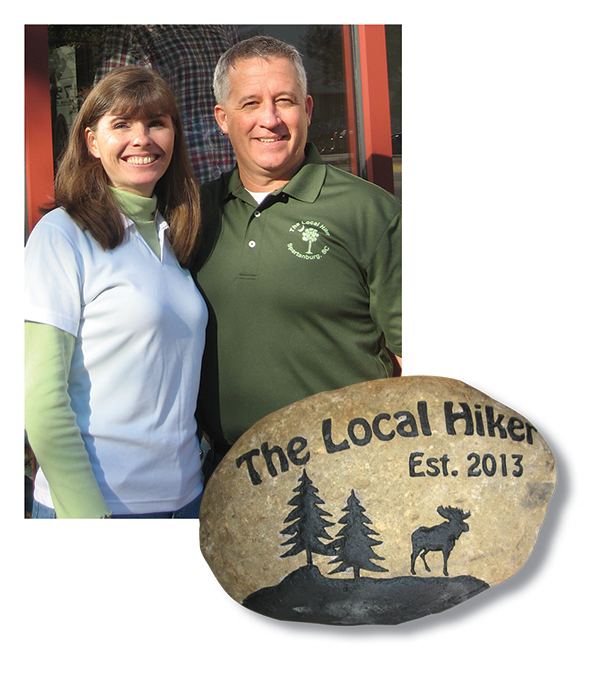
Known as the Hub City, Spartanburg, South Carolina’s charm arises from the many spokes that come together to make the city a vibrant community. One of the key spokes in town is the Silvermans, who made Spartanburg home in the late ‘90s and are now the city’s outdoor entrepreneurial power couple.

After traveling to neighboring cities in order to buy outdoor gear for years, the couple decided to open Spartanburg’s first outdoor retailer, The Local Hiker, in 2013. Located in a historic storefront on West Main Street, the store is now a flagship for the quickly developing area and features brands like Patagonia, Deuter, Smartwool, Marmot, GSI Outdoors, and many others.
The Local Hiker also conducts local hikes, monthly classes, river cleanups, and hosts National Trails Day at Croft State Park. As Mike Silverman explains: “We’re not here to just sell a bunch of gear; we want to build a lasting relationship with the customer, whether that be through going on a hike together or selling them their first pair of rock climbing shoes.”
What better way to build a relationship with customers than to also sell them a scoop of premium ice cream? In 2014, the Silvermans opened Hub City Scoops because, as Mike explains, “we realized that we needed more on this side of town, especially for families and college students.” Selling ice cream from Chocolate Shoppe Ice Cream out of Madison, Wisconsin, the shop keeps between 50 and 60 non-GMO flavors on hand, including vegan options. Their favorite flavors? Apparently Oreo is king with espresso Oreo being Kathy’s pick and the Zoreo (Zanzibar with Oreo) being Mike’s.
The Silvermans didn’t stop, though, with The Local Hiker and Hub City Scoops. In December 2016, they were approached by the Palmetto Conservation Foundation to take over the management of the Glendale Outdoor Leadership School (GOLS). A 501c3 organization specializing in outdoor recreation, education, and group development, GOLS was founded in 2004 as part of the town of Glendale’s revitalization process. “We wanted to be a part of the community, to be plugged in,” Kathy Silverman says, “and GOLS is a big part of that.”
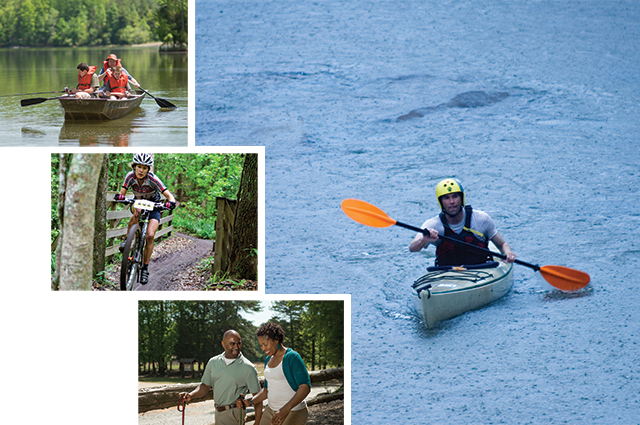
GOLS offers programming for kayaking, rock climbing, teambuilding on high and low rope courses, hiking, camping, wilderness medicine, and youth camps. As part of their mission, many of these programs work with the local schools and community groups like the Boys and Girls Club to help disadvantaged youth experience the outdoors. Through GOLS, the Silvermans are also revamping key community events like Paddle the Pacolet, an annual paddling festival with paddling, bluegrass, and BBQ.
When asked “why Spartanburg,” Mike doesn’t miss a beat: “Spartanburg is a small community with big city fun.” Thanks to the vision and risk-taking of the Silvermans, Spartanburg has a lot more fun to offer for everyone, no matter their flavor of outdoor adventure.
Spartanburg is nestled in the foothills of the Blue Ridge Mountains, between Atlanta, GA and Charlotte, NC and less than an hour from Asheville, NC. You’ll discover a great mix of outdoor fun and a charming historic town with unique restaurants and accommodations.
For suggested itineraries, guides, maps and more info go to visitspartanburg.com
More Resources:
- The Local Hiker – 173 East Main Street, Spartanburg, SC 29306, (864) 764-1651, thelocalhiker.com
- Hub City Scoops – 147 E Main St, Spartanburg, SC 29306,(864) 586-1100, hubcityscoops.com
- Glendale Outdoor Leadership School – 270 Wheeling Circle Glendale, SC 29346, (864) 586-2021, setgols.org