Great Outdoors: My First 10K

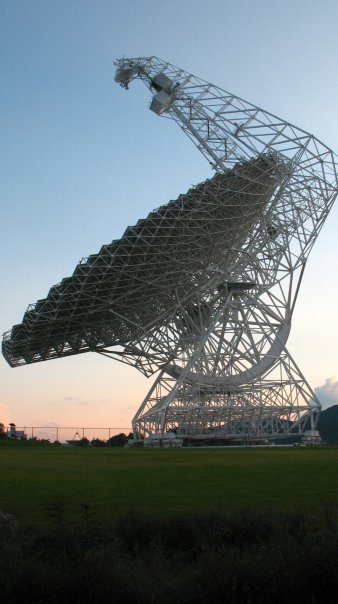
Green Bank Telescope

My First 10K: Green Bank Turkey Trot Inaugural Trail 10K

Gray clouds, swirling wind, spitting snow and 30 degree temperatures, was the weather I woke up to for my first ever 10k race over the Thanksgiving holiday weekend. 6 weeks ago I signed up for the Green Bank Turkey Trot Trail 10K and began training on the local trails in Roanoke. But the race would take me to the foot of the Appalachian Mountains where the first National Radio Astronomy  Observatory resides in Pocahontas County, West Virginia, and my beloved hometown. It’s a chilly place in November. 

The 10K snaked through fields, roads, and new, very well maintained trails on the NRAO property. I ran past all the telescopes, of which I know very well from my childhood roaming on the property. My father worked at NRAO for 40-some years, so it’s always a nolsstalgic place to visit. My favorite view from the race however wasn’t of a telescope but instead wildlife. I was a third of they way finished with the race and on my favorite part of the expansive federal land NRAO consumes. It was on this old logging road as I was making a push up one of the more challenging hills a deer the size of an elk jumped the fence and crossed in front of me. He was massive and elegant.

After that I was totally distracted by my surroundings and 1hour 1 minute 20 seconds later I finish my first trail 10K, confident I’ll keep this form of Thanksgiving celebration up for years to come. 

Photos: Since I was running a race, I didn’t take a camera but can share images of the NRAO property I have taken in the summer. 

Photo: (GBT) Green Bank Telescope, the world’s largest fully steerable radio astronomy telescope. I got to run around and practically under this guy at the 2.8 mile marker of the race. 

The National Radio Astronomy Observatory in Green Bank, WV is about 3 hours from Roanoke, 120 total miles one way and worth every second it takes to get there. If you wish to visit NRAO and take a tour of the worlds first radio observatory stop in at the new science center and take a bus tour, watch a short film on the history of the astronomy, browse the exhibition hall and warm up with a nice, country meal at the science center’s cafe. Visit their website for more information and hours: http://www.nrao.edu/index.php/learn/gbsc.
You Might Also Like:

e1b70596-05c8-11f1-92e0-1248ae80e59d-3-2026rueanemone--credit-Joe-Cook

March’s Mountain Wildflower: Rue Anemone

A member of the buttercup family and found in the open woodlands, rue anemone (Thalictrum thalictroides) has long, thin stems that tremble in the slightest of winds—prompting its other common name, windflower.
Pokeweed growing in Floyd County, Virginia.

January’s Wild Edible: Pokeweed

Pokeweed is one of the wild plants that is most associated with the Blue Ridge Region.
A purple-spored puffball growing in a field in Botetourt County, VA.

December’s Wild Edible: Purple-Spored Puffball

The purple-spored typically grows in this region’s fields, often appearing from October through December and into early January.
d289022c-696f-11f0-a179-1248ae80e59d-CGZ_0845-011

Ride the Rails, Explore Rockbridge County: Make a Weekend of the 611 in Goshen!

This fall, one of America’s most iconic steam locomotives is making tracks and memories.
The compound, lancelike leaflets of the bitternut are a good identifier.

November’s Wild Edible: Bitternut Hickory

Frankly, this native species to the Blue Ridge mountains comes by its name honestly.
Mullein growing in Ingram's backyard.

October’s Wild Edible: Mullein

Earlier, this year, a lone mullein plant appeared along the fence that encloses my garden, which made me curious about this plant.
An indigo milk cap growing in Botetourt County, Virginia.

September’s Wild Edible: Indigo Milk Caps

When young, indigo milk caps are one of the most stunningly beautiful mushrooms in the Blue Ridge Mountains.
ec3b964c-5201-11f0-968d-1248ae80e59d-9-2025spottedjewelweed--credit-Joe-Cook-and-Monica-Sheppard

September’s Mountain Wildflower: Spotted Jewelweed

Seek out spotted jewelweed growing beside a stream or along a moist area and you will have a good chance of getting to watch one or more ruby-throated hummingbirds flit from flower to flower.
A black staining polypore growing in Botetourt County, VA.

August’s Wild Edible: Black-Staining Polypore

The black-staining polypore is certainly one of the more fascinating wild edible mushrooms.
Northern Dewberry growing in Botetourt County, Virginia.

July’s Wild Edible: Northern Dewberry

For several reasons, the northern dewberry is often overlooked as a summer berry in the Blue Ridge.

CALENDAR OF EVENTS