Skip to content


The story below is an excerpt from our November/December 2017 issue. For the rest of this story and more like it subscribe today, log in to read our digital edition or download our FREE iOS app. Thank you!
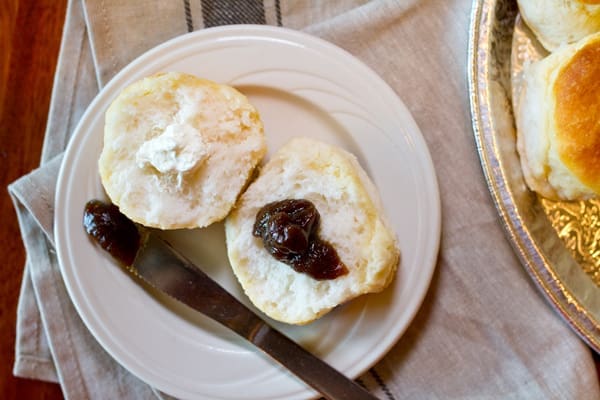
Those three items have been The Roanoker Restaurant’s trademarks for more than three-quarters of a century in Roanoke, Virginia.
Five minutes at The Roanoker Restaurant and we felt like regulars. It’s the kind of place where you want to linger over breakfast for hours.

Although our first visit to the restaurant was in August of this year, we’ve enjoyed Roanoke, Virginia, hospitality and food history for years.
We’ve occupied two of the 10 counter stools at The Texas Tavern for a Cheesy Western, the egg-topped burger dressed with mustardy cabbage relish at the place Isaac Newton “Nick” Bullington, a circus promoter, opened in 1930.
We’ve savored peanut soup and spoon bread at The Hotel Roanoke, the Tudor Revival institution that dates to 1882. That soup recipe was created by Chef Fred Brown in 1940.
A year after Brown served up the first bowl of his version of the old Virginia classic, Crafton Warren and two friends leased “storeroom No. 11 South Jefferson Street in the City of Roanoke, Virginia,” as the lease reads. The terms were for three years, beginning at midnight on May 31, 1941. For the first year, the partners were to pay $125. That would go up to $135 for the second year and $140 by the third. To get them jump-started, Warren and his partners took out a $50 loan, which would come due two months later.
In 2016, The Roanoker celebrated its 75th anniversary as Roanoke’s “Home of Good Food.” The location has changed over the years, but Warren’s original mission has not: “To welcome guests to our comfortable home for consistently good food at reasonable prices.”
With the U.S. entry into World War II in December of 1941, Warren’s two partners were called to duty. He continued to run the lunch counter while serving as a civilian neighborhood volunteer. After the war, he bought their shares.
Warren’s son E.C. began helping his father when E.C. was eight years old and would go on to own and operate the restaurant.
In the early 1960s, he hired an enterprising Roanoke native named Renee “Butch” Craft as a secretary. She’d stop in on breaks from college classes and answer the phone. When E.C. Warren retired, Craft took over as owner of the restaurant.
It was a fortuitous choice. Not only had she learned every aspect of the business, she also had come to know virtually every person who ate breakfast, lunch, or dinner at The Roanoker. And she learned their stories.
As we have breakfast with her on a late summer morning, she leaves the table often, to check on a customer who has been ill, to wish another customer a happy birthday, and to find out how another customer is dealing with retirement.
Both of Craft’s parents died at a young age. E.C. Warren stepped in to fill that void in her life. They worked together for 38 years.
“E.C. taught me things about life that my parents couldn’t,” Craft tells us. One of those lessons was to take care of employees and value their longevity. We were seated that morning by June Rogers, who has worked at The Roanoker for 42 years. For most of her career, she waited tables. But a broken shoulder prevented her from lifting trays. Instead of turning her out to find another job, Craft converted Rogers into a hostess.
“People come to work here and stay for 30 or 40 years,” says Craft, proudly.