Skip to content


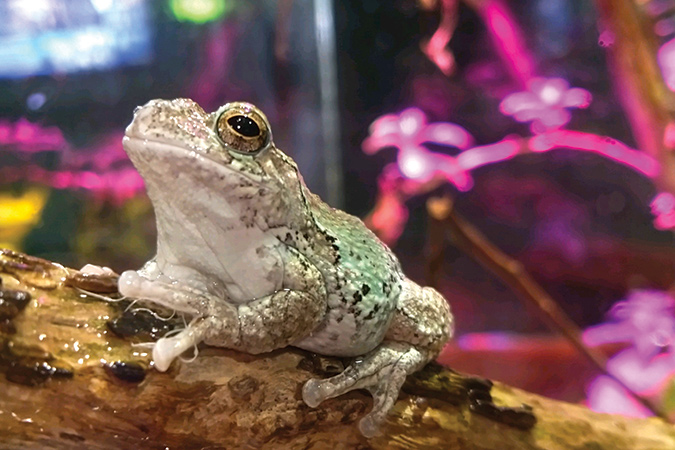
If you’re puttering around in your flower bed and a small creature suddenly hops over your outstretched hand, don’t be fearful, says MacKenzie Strickland, animal care specialist and herpetologist at the Tennessee Aquarium in Chattanooga, Tennessee. The only time you should worry about these little croakers, she says, is if you don’t see them in the garden.
“If there aren’t a whole lot of frogs and toads present there, then that kind of tells us that there may be some type of contamination on the actual land site itself or runoff from a water source nearby,” Strickland says. “It’s definitely something to be alarmed about if you’re not seeing any.”

Frogs, she adds, “are usually a great indicator species because they tell us what’s going on with the ecosystem in that particular habitat where they live. They can tell us if there’s an invasive species of frog or toad since they’re having to compete with those other species for food resources. They can tell us about parasites. They can tell us about pollution and diseases. They play a really important role in the food chain. For amphibians, it’s not just that they tell us what it’s like on the land. They tell us what it’s like in the water.”
In summer, gray and green tree frogs, among others, often surface in the Blue Ridge states. The arboreal critters don’t just hang out in trees, but in wetlands, ponds and yes, residential gardens. Their tadpoles are often mistaken for tiny fish.
Providing spaces for them to take refuge, reproduce and grow is one way homeowners can help conserve frogs and toads, many of which are classified as endangered. Attracting the amphibians to your garden and yard will most likely draw other wildlife too, from birds to harmless snakes.
“As a nature lover, that’s kind of a nice feature to have,” says Strickland.
If you’re doing everything you can to make them feel comfortable and they still don’t show up, consider hiring a professional to sample the water quality on your property. And if you see frogs with odd, missing or extra limbs, that can signal toxicity in the water or ground.
On the positive side, if you’re noticing a lot of frogs and toads in the garden, says Strickland, “That is something to be happy about because that’s telling you that you have a healthy ecosystem that more than likely has very few contaminants. … We want to have frogs and toads around for future generations to be able to see and learn about them, but in addition to that, they do tell us whether or not we have a healthy ecosystem and that’s something that affects everything living in that area. They can tell us what’s going on in the habitat and what we can do to fix it to make it better for everybody else.”
How to Attract Frogs to Your Yard
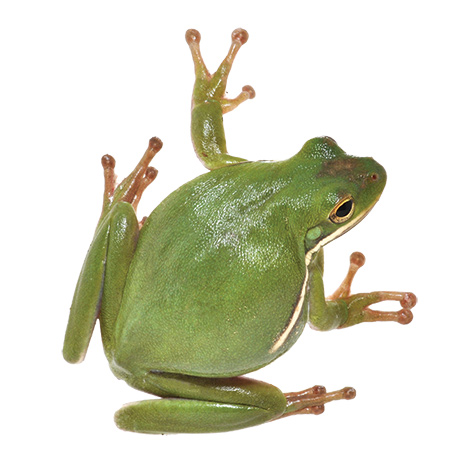
There’s a right—and wrong—way to lure amphibians to your garden, says MacKenzie Strickland, an animal care specialist and herpetologist at the Tennessee Aquarium. Here, she offers a few tips:
DO give them a hiding place. Cut plastic flower pots in half, tilt horizontally, and add a bit of sphagnum moss to create frog-friendly hangouts. Or purchase a ceramic “toad abode” for shade and protection.
DO create a pond or fountain feature. Set out small tubs where frogs can breed and lay their eggs. Tadpoles need enough water to swim around in.
DON’T use chlorine, though. It can be harmful to the animals.
DO plant native species of grasses and other vegetation, and don’t forget to include the kinds bugs like. “Those insects can be really tasty snacks for the frogs themselves,” Strickland says. “The good thing is, if you’re attracting the frogs, they’re going to be eating a lot of those insects that you’re not very fond of. And the insects play an important role in the food chain too, so they have every right to be there as well.”
DON’T use pesticides in the garden. Frogs breathe through their skin as well as their lungs, so they’re incredibly sensitive to manmade chemicals. Besides, they’ll naturally keep the bug population down on their own. —NH
The story above first appeared in our July/August 2021 issue.