Skip to content


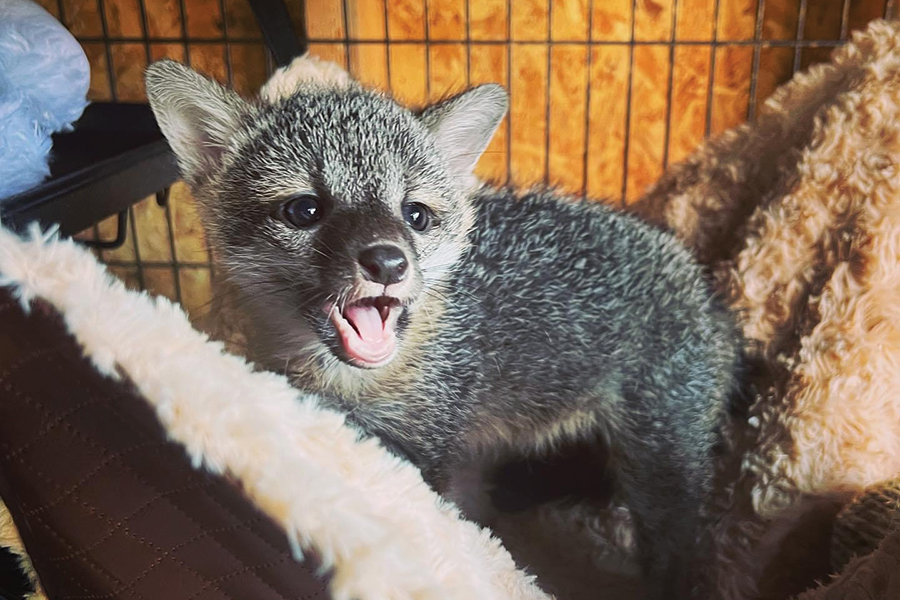
For Fox Sake rehab center takes in skunks, raccoons and other risky and at-risk critters.
Photo Above: Laurel the gray fox.
Photos Courtesy of Juniper Russo.
For Juniper Russo, the best success stories involve the wild animals that won’t let her come anywhere near them. Take, for example, her favorite “patient,” a gray fox named Laurel.

“She was the meanest animal I’ve seen in my entire life,” says Russo, founder and executive director of For Fox Sake Wildlife Rescue in Chattanooga. “There’s always a risk when an animal comes in that doesn’t have littermates that it’s going to become tame. But she hated me so much, it was honestly hilarious. Every single time I even walked past her pen, I would hear this growling and snarling and then, later, screaming if I didn’t go away fast enough.
“I was so proud of her for that because it’s easy for them to habituate with humans and then they can’t make it on their own. I love it when they hate me.” Laurel was later released into the wild.
Certified by the International Wildlife Rehabilitation Council and set up in Russo’s backyard in 2018, the nonprofit facility is the realization of a lifelong goal. “As a kid, I had all these dreams of growing up and being like Steve Irwin,” she says, noting that she originally intended to care for a few rabies-vector species but quickly discovered a greater need. “They were very underserved as a group. We already had people doing squirrels, opossums and songbirds. … Somebody needed to do it, and if it wasn’t me, then these animals would be put to sleep.”
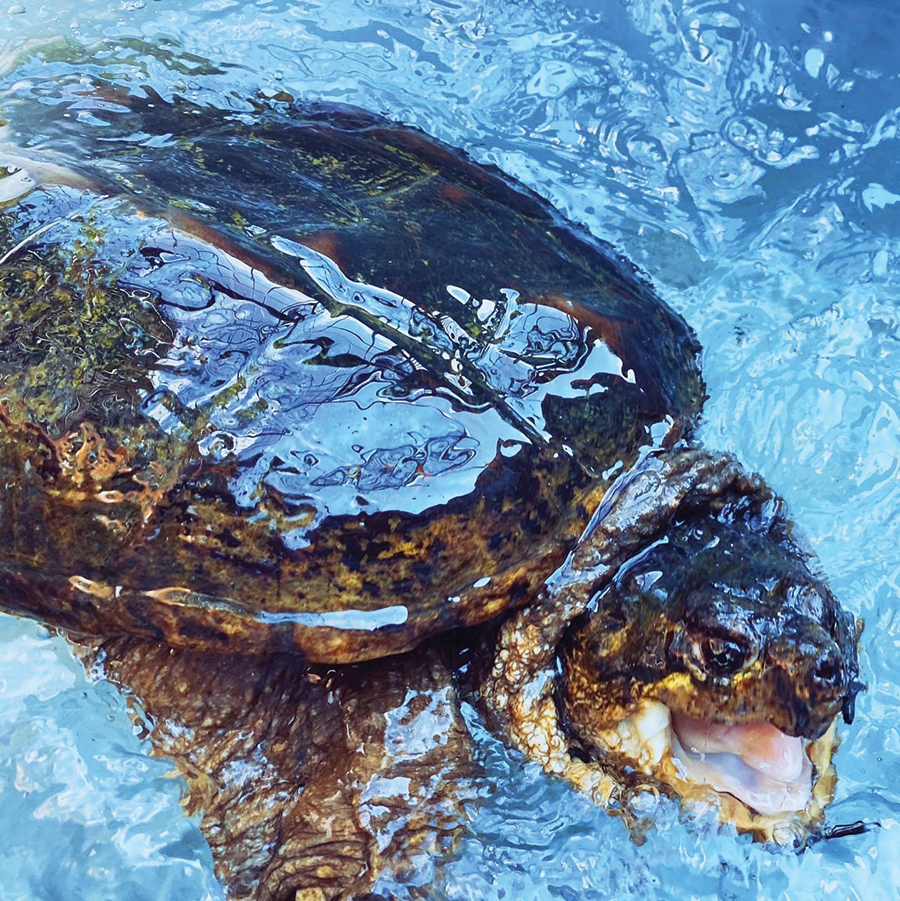
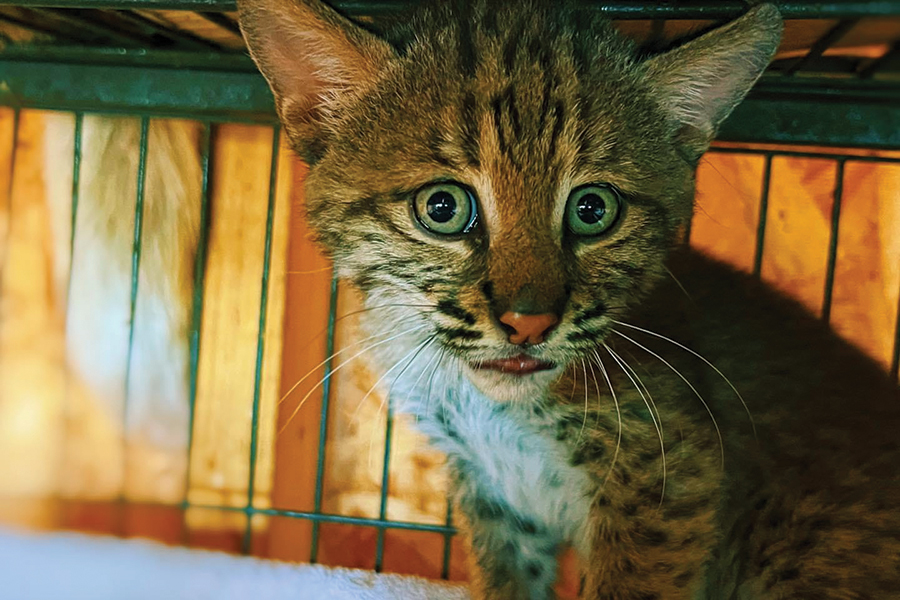
She still primarily cares for skunks, raccoons and, of course, foxes, but has since added bats, turtles and snakes, even mink and bobcats, and now rehabs about 50 animals at a time during peak summer season. In winter, when they’re not as active, that number dwindles to about 10 because they’re less likely to be hit by cars, orphaned or caught in traps. Area residents drop off injured patients, as do officers from the Tennessee Wildlife Resources Agency and keepers at the Chattanooga Zoo. Each enclosure provides water, toys, hiding spots, climbing surfaces and other places to rest and exercise.
Always, the goal is to get the animals back into the wild, “where they belong,” Russo points out. Those that can’t make it on their own become ambassadors in the For Fox Sake outreach program, visiting school kids, scouting groups and other audiences.
For Fox Sake has come with its share of challenges, including the dire need to quarantine each new critter to rule out highly contagious diseases, like parvo viruses, that could wipe out the population.
But the greatest test came on Easter night 2020, when an EF3 tornado barreled through Russo’s neighborhood, ripping holes in her roof and destroying everything inside.
“Right after the tornado, I stepped outside and the whole [shelter] was just gone. The fences were gone. The cages were gone. It was just a nightmare scenario.” Because the seasonal influx was still a few weeks away, most of the patients, including a river cooter and six baby skunks, survived. Only one fox disappeared in the chaos.
Thanks to an outpouring of donations, says Russo, “We were able to build better and bigger than ever.” For Fox Sake has since expanded its educational program to include more animals, including the newest addition, Mallow, an albino raccoon.
“I’ve got three special-needs kids and it takes a lot to raise them and take care of the animals, but it brings me so much joy and so much satisfaction that I can’t imagine my life without [For Fox Sake],” says Russo. “The feeling I get when releasing an animal—there’s not even a way to describe it. It brings me a sense that I’m doing something with my life and making a difference for these creatures.”
The story above first appeared in our November / December 2024 issue.