Skip to content


They’re back!
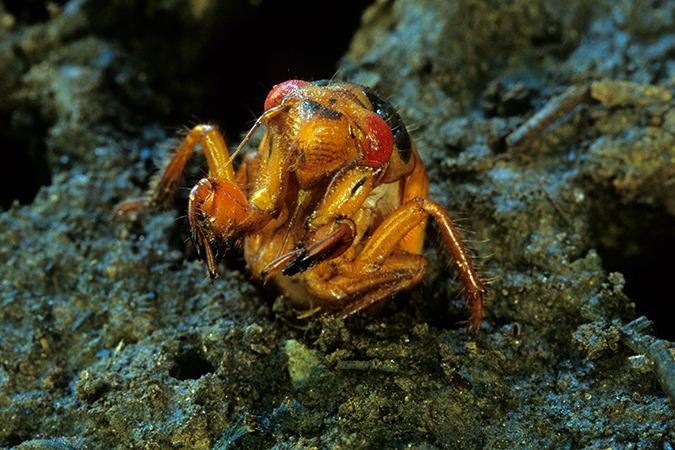
Photo Above: The mature nymphs of the periodic (17-year) cicada (Magicicada sp.) burrow up out of the ground before climbing onto a tree trunk or other object to begin metamorphosing into an adult.
A possible million-strong army of cicadas will shortly emerge from their 17-year subterranean nap and descend this spring in Virginia, West Virginia and North Carolina. Just how many of the noisy insects the average homeowner can expect to see (or hear) remains to be seen (or heard).

This remarkable natural event has happened many times before. The last massive cicada invasion of the region occurred in 2003. Now, larvae from the class of ‘03 are tunneling their way back to the surface.
After climbing trees to shed their skins, the emerging insects will sprout glorious, transparent wings and fly off in search of a companion. Those females that manage to dodge hungry predators such as birds, bats, squirrels or wasps will eventually lay eggs, then die.
After the eggs hatch, the larvae will burrow back some eight inches into the ground where they will feed on tree roots and won’t be heard from again for another 17 years.
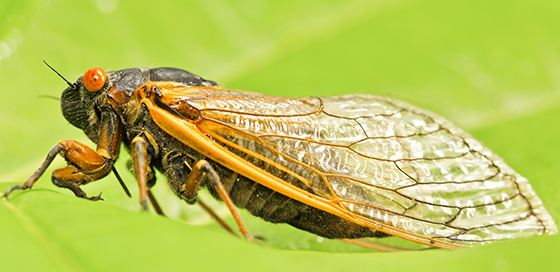
Cicadas are best-known for making an ear-piercing noise, a courtship song of the male. The eerie sound is produced from a rapidly vibrating drum-like membrane on the insect’s abdomen. The frequency and tone of their calls vary with temperature and time of day, and each of the hundreds of different cicada species has a unique call.
Cicadas are not hazardous to humans. They don’t sting or bite, but small spikes on their feet can scratch if handled. And because their aerobatic skills are somewhat erratic, the large awkward insects can appear from nowhere, perhaps flying clumsily into one’s hair which can startle children and probably a few macho adults, too.
But the greatest danger may be to pets. Some dogs and cats won’t be able to resist a crunchy cicada snack, but the hard exoskeleton can become lodged in their throats. And even if Rover does manage to swallow the tough-skinned critters, they are difficult to digest. So keep those kitties and pups well fed!
© Brian Malow, sciencecomedian.com
Fortunately, cicadas don’t have the appetite of their more ravenous airborne cousins— locusts—which have plagued humanity since ancient times by consuming all plant life in their path. Cicadas merely suck the sap from maple, oak, fruit and other deciduous trees, perhaps killing a few branches in the process. Obviously, large numbers can be more destructive, particularly to citrus orchards.
Most experts recommend doing nothing if only a few cicadas take up residence in your yard. Frantically emptying cans of Raid on the invaders will likely do more environmental damage than several cicadas ever could.
With an adult lifespan of about a month, the cicadas will soon disappear – their offspring having returned to their underground seclusion until around 2037.
Nick Thomas teaches at Auburn University at Montgomery and has written features, columns, and interviews for over 800 newspapers and magazines. See getnickt.org
More On Periodical Cicadas
Did you know there are 15 different known broods of periodical cicadas? The cicadas emerging this year are members of “Brood IX” and were last seen in 2003. Learn more at the sites and resources below: