Skip to content

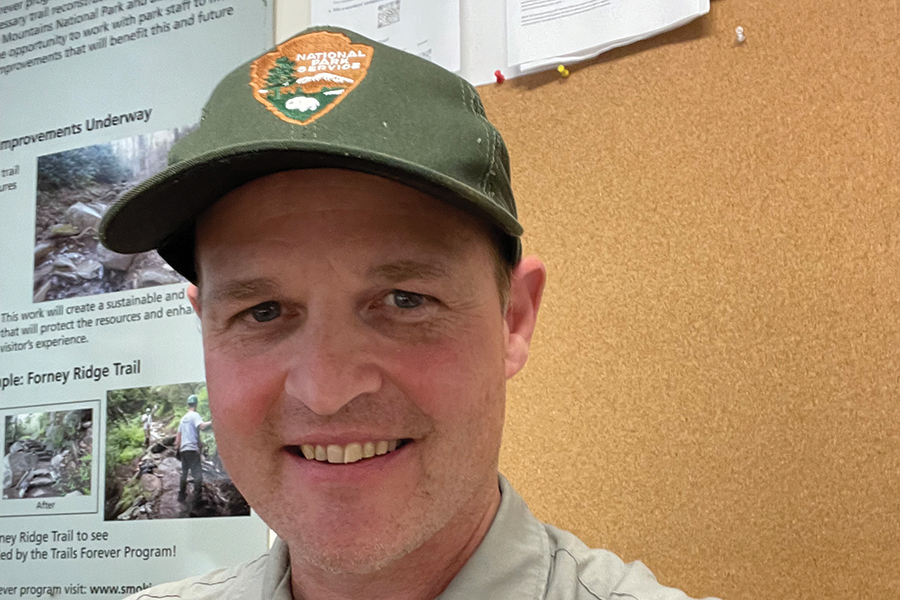
Josh Shapiro’s dedication to preserving forest footpaths in the Great Smokies is matched by his hopes that others will join the effort.
Photo Above: Josh Shapiro: “If you work on a trail and can’t spend enough time on it, you’re just going to come back in a few years.”
Photos Courtesy of Josh Shapiro.
For Josh Shapiro, staying true to the individuality of a mountain trail is just as important as protecting it from wear and tear.

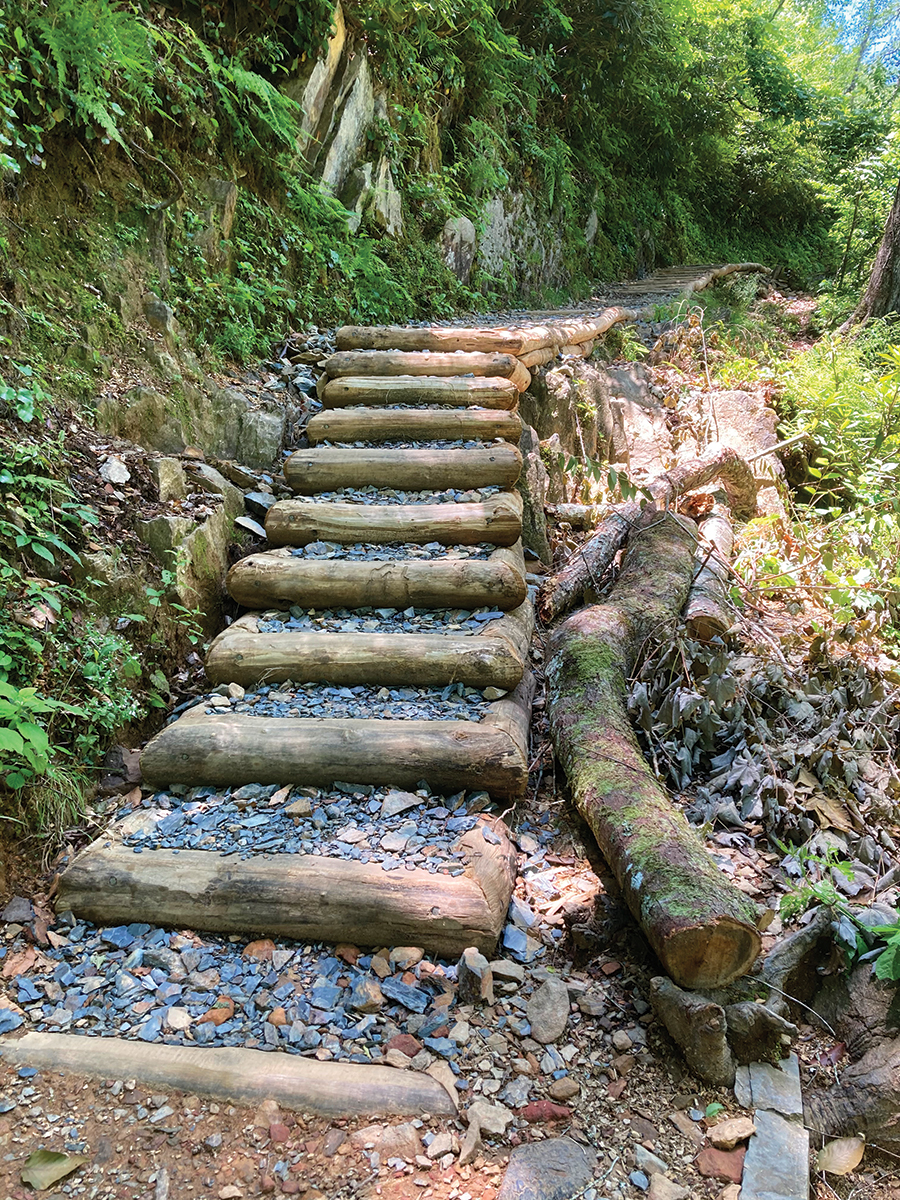
“Our basic goal is to do the work reminiscent of the Civilian Conservation Corps when these trails were first built in the 1930s. We don’t want to introduce anything drastic that would change the character of the trail at all,” says the quiet, head-down-and-get-the-work-done supervisor of Trails Forever, a partnership between the Great Smoky Mountains National Park and the nonprofit Friends of the Smokies. “We spend a lot of time just trying to have everything fit in [with] native stone and locust logs.”
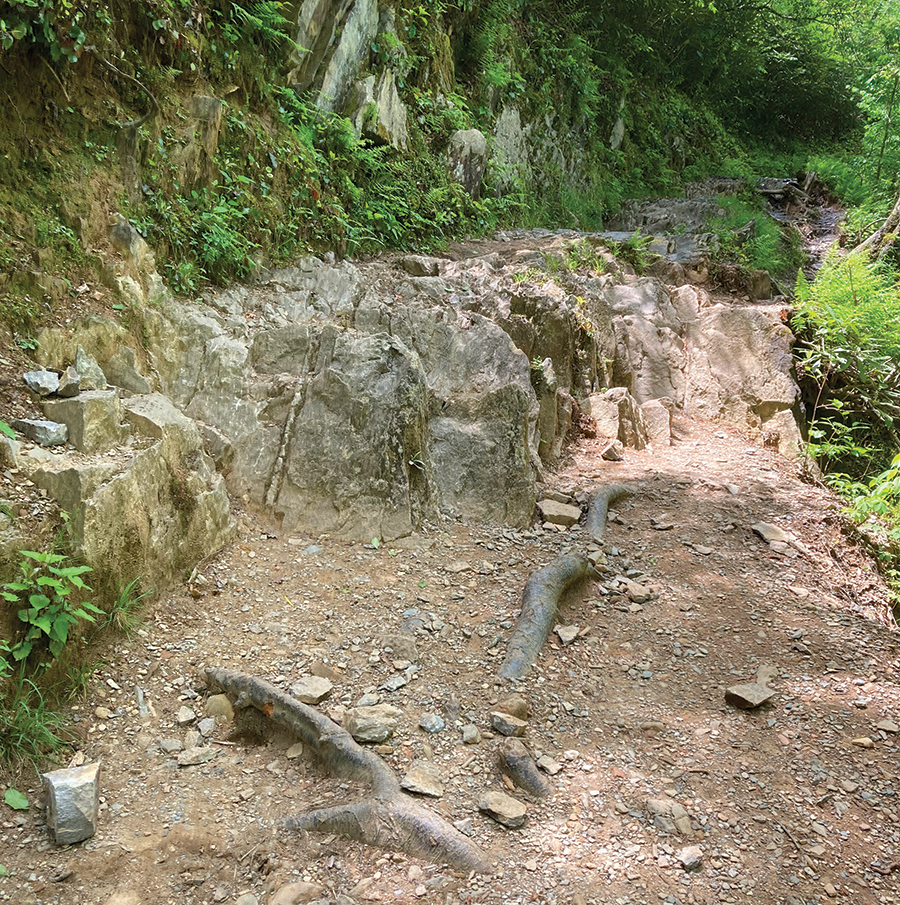
Established in 2012 with a $5 million endowment to fund a full-time crew, Trails Forever is charged with rehabilitating high-use footpath. Six have been updated so far—Abrams Falls, Trillium Gap, Rainbow Falls, Alum Cave, Chimney Tops and Forney Ridge—and the overhaul of Ramsey Cascades is currently in its third year, with completion expected in November.
A New York state native, Shapiro couldn’t get enough of hiking, but he wasn’t sure what he wanted to do with his environmental science degree. “I just wanted a job where I could be outside,” he says. That vague goal became crystal clear when he moved to Arizona after college to work with a conservation corps and fell deeply in love with the scenic settings and physical challenge of trail work.
After seven years out west, in 2009 he moved to Tennessee when he nailed his first National Park Service job, as a full-time crew member of Trails Forever. Day in and day out, he built support structures, improved trail surfaces and worked with volunteers.
“I remember when I first started, it was such a neat concept to be able to spend multiple seasons just fixing one trail. In a lot of places, the park wouldn’t invest that much time, and it’s completely needed. If you work on a trail and you can’t spend enough time on it, whatever deficiencies you’re trying to fix are just going to come right back after a few years.”
Shapiro, now 47, was quickly promoted to crew leader and, in 2015, took over as supervisor. He divides his time between the office, where he uses his big-picture skills to plan and coordinate the crew’s next steps and hands-on field work. When he walks the trails to assess the materials, manpower and time needed to bring them back to life, he’s also on the lookout for endangered and rare species to make sure they’re not negatively impacted by the changes.
At the request of GSMNP management, Shapiro and his team target the most popular trails to repair and upgrade.
“The goal is always to make the trail safe to match the user type,” he explains. “So the trails that we’ve worked on, we’ve kind of revamped to a different standard than most of the other trails to try to make them safe. The trail surface is much more manicured.”
Take, for example, the Ramsey Cascades project. “It’s close to a road,” Shapiro says. “You’ll get hikers that aren’t always completely prepared and might wear flipflops or who-knows-what footwear.”
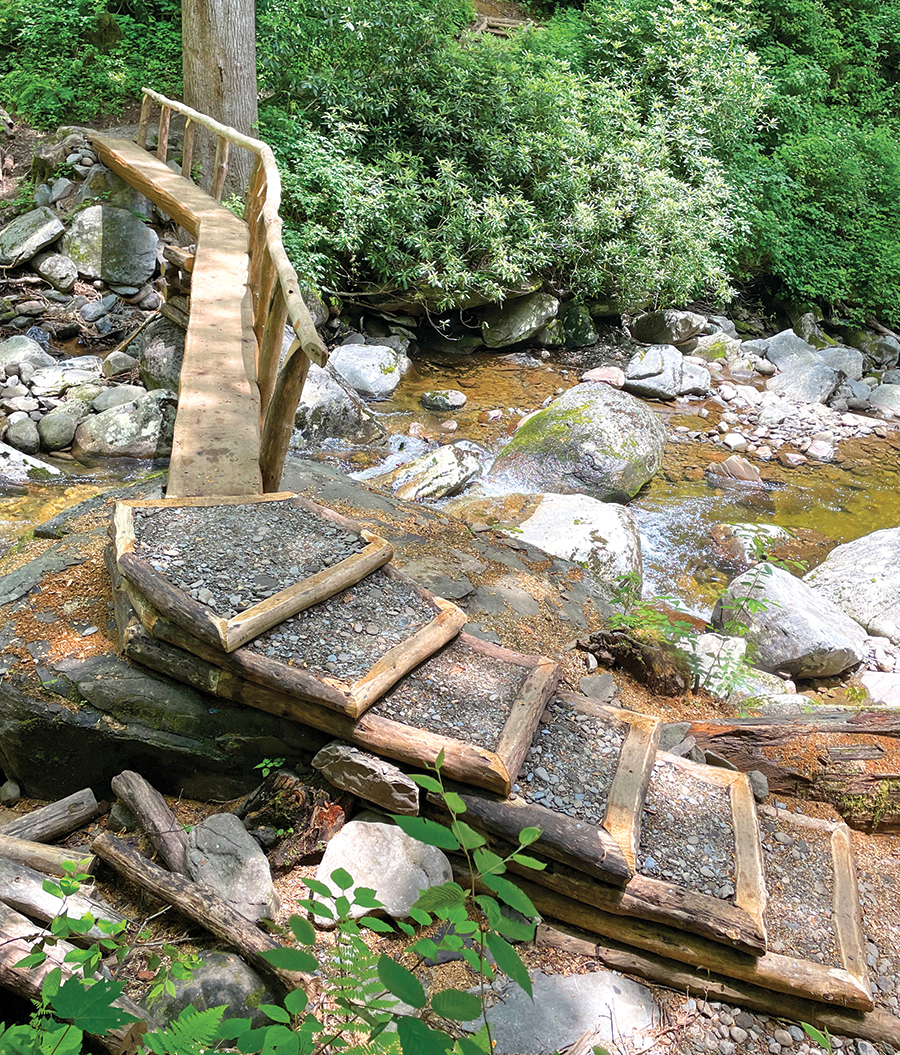
After removing obstructive stones and above-surface roots, Trails Forever workers—20 or more at peak time, including National Park Service employees, conservation corps partners and volunteers—construct steps and retaining walls, usually with black locust logs, which are plentiful and often carried by park mules, along with camping gear, tools and equipment. “They help out a ton because that’s so much weight,” Shapiro says.
Like many of the more rugged trails, however, Ramsey Cascades has been too daunting for the mules, so the heavy logs were airlifted into the space.
“It’s a pretty steep trail,” Shapiro points out. “You go up 2,000 feet, over four miles. There are a lot of exposed rocks and roots, a lot of old trail structures that have been washed out and need to be replaced, both stone and wooden structures.”
Another important component of Shapiro’s work is eliminating makeshift shortcuts, or “social trails,” by breaking up the soil, throwing branches across the paths, even transplanting vegetation from elsewhere.
“It happens a lot when the current trail is in bad shape, because people are trying to walk around stuff that’s dangerous. Normally, what we’ll do is fix the trail first, because if we just try to cover up the social trails and don’t fix the actual trail, people are just going to keep finding their way around again.
“The goal is not only to make the trail safer,” he adds, “but also try to keep everybody on the trail, if there are a lot of people that start walking off the trail and creating social trails. Our main goals are to protect park resources and make it safer.”
After all these years and the long days of backbreaking labor, Shapiro never tires of hiking in his off time, especially at his favorite spots, Alum Cave and Chimney Tops. And despite his introverted nature, the part he enjoys the most about trail work, he says, is interacting with the crew and the chance to come out of his shell with people who love the park as much as he does.
“We’re out there working really hard, and a lot of times the weather’s terrible and there’ll be all kinds of challenges that come up. But you know, we work together as a team and we get done what we set out to get done. It’s very rewarding.”
Josh Shapiro: 3 Things You Can Do to Help Maintain Smokies’ Trails
- Volunteer. “You can volunteer not only with the Trails Forever crew, but there are all kinds of volunteer opportunities in the park.”
- Talk ‘em up. “A big one is just getting out and hiking, seeing the trails, getting more people to appreciate them and talking about them.”
- Don’t try to do it yourself. “We actually don’t recommend doing any kind of work out there that could be any kind of safety risk at all. If somebody’s hiking out on the trail and sees anything like a root ball that came out, they can just report it to the visitor’s center as they drive out of the park.”
The story above first appeared in our September / October 2024 issue.