Skip to content


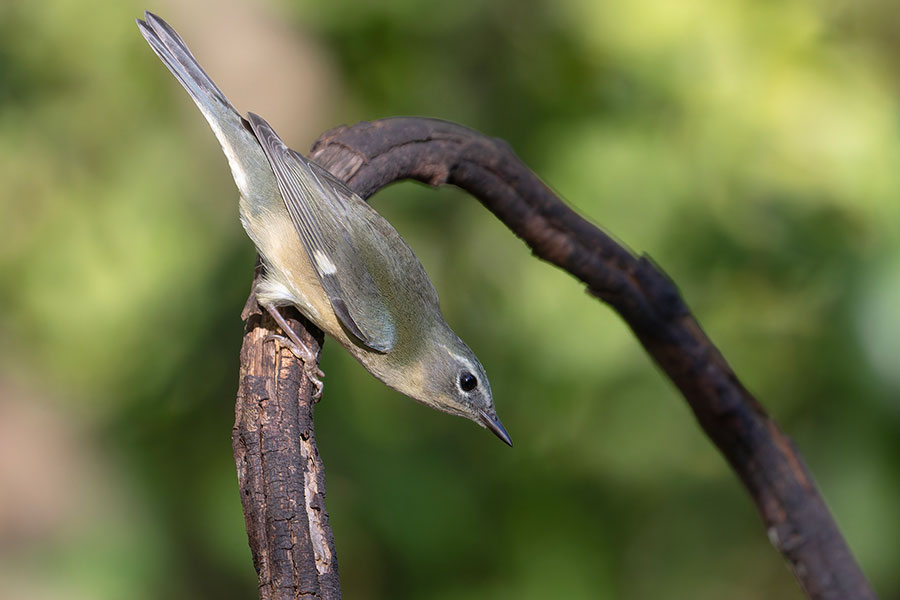
The male and female Black-throated Blue Warblers were once thought to be two separate species – even by John James Audubon.
A birding benefit to searching for the Black-throated Blue Warbler is its habit of foraging low to the ground. They look for food with more measured intention and can stay in an area for several minutes, unlike other warblers who flit quickly through the trees. These birds are relatively undisturbed by a (quiet) human presence. Listen for their buzzy song close to the ground rather than in the treetops.

The Black-throated Blue Warblers raise their young all along the spine of the Appalachian Mountains during summer in nests well-concealed in dense shrubs. Then they take to the wing and fly to the islands of the Caribbean and occasionally the eastern coastal areas of Central and northern South America for winter.
Fun Facts
One of the two subspecies is found exclusively in the Appalachian Mountains, nesting in mountain laurel and rhododendron. These Black-throated Blue Warbler males have distinctive black streaks on their backs rather than the solid blue of the other subspecies.
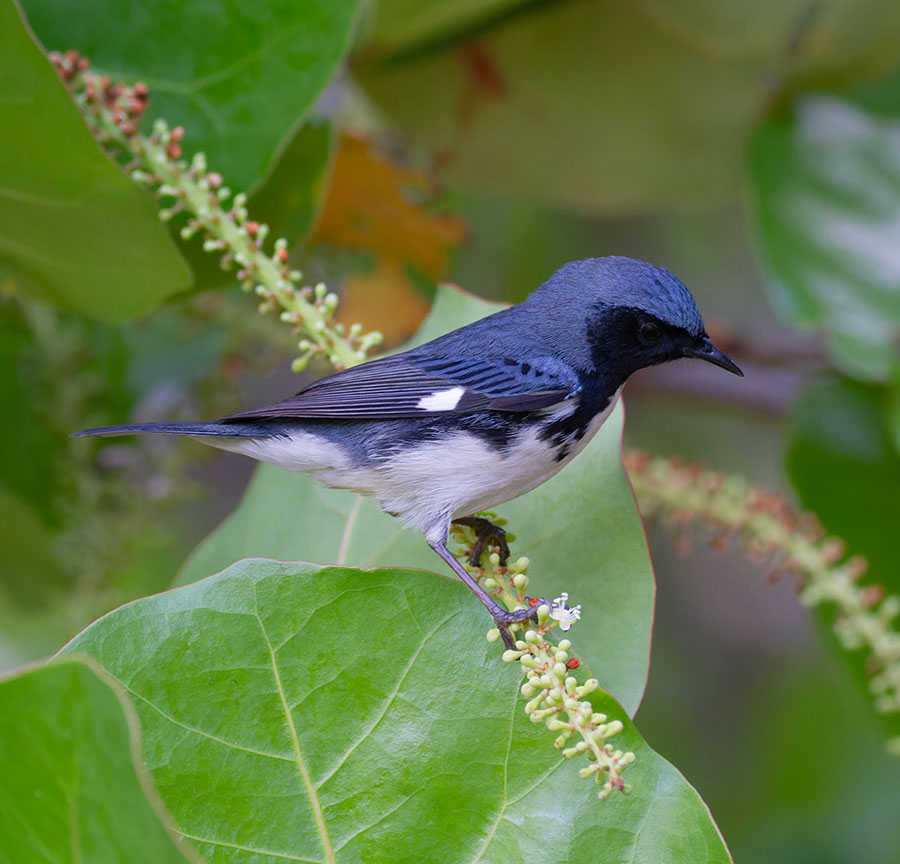
How to Identify a Black-throated Blue Warbler
The males sport a stunning midnight blue along the top of the head, back and tail. Their black throats and bright white undersides create a dramatic effect. In contrast, the females are pale olive with buff-colored undersides – hence the confusion to even John James Audubon.
To identify the female in the field, look for a small square of white near the shoulder area of the wings (also present on the males). No other “confusing” olive warbler has this mark sometimes referred to as a “pocket handkerchief.”
Black-throated Blue Warbler Habitat
The understory and lower shrub areas of mature woodlands, parks and gardens during migration.
Conservation Note
The population for this species is on the increase (up 163% since 1970!) likely due to the decrease in clearcutting of forests.
ABOUT THIS SERIES:
“Birds of the Blue Ridge” showcases frequently seen and rare birds across the southern Appalachian region. For over four decades, Angela Minor has traveled with binoculars and field guides across the continental U.S., Alaska, the Caribbean and seven European countries. She is a contributing editor with BRC magazine and a freelance writer, penning travel and nature feature articles for several regional and national print publications. Angela created and authored the state park birding series for Bird Watcher’s Digest.
Read More by Angela Minor: BlueRidgeCountry.com/AngelaMinor