Skip to content


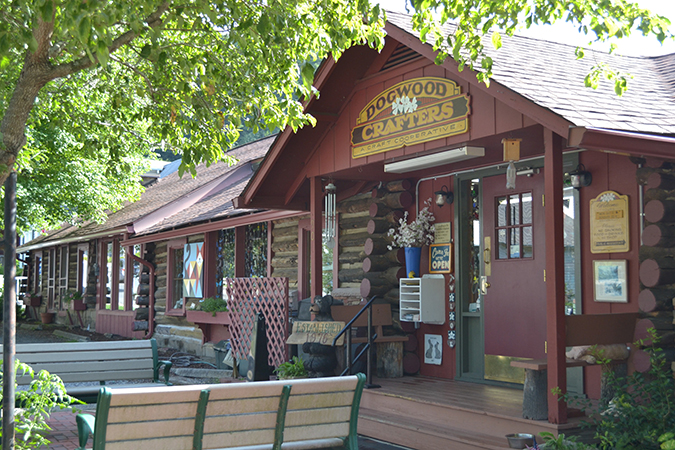
Tucked into the western North Carolina mountains is “the land in the sky” town of Dillsboro – a quaint 19th Century, artisan dense community of 200 residents. Amongst the historic downtown buildings a whisker away from the Tuckasegee River sits the Dogwood Crafters Co-op. Like most structures here, their location is preserved from a bygone era. Once welcoming tourists beginning in the 1930s, the three original cabins are now joined to form the perfect mountain setting for a craft shop.
“In 1976, interest in heritage crafting was not very high,” says Brenda Anders, president. “So we put an ad in the newspaper, and 12 people replied. Then we applied for $1,000 of leftover Bicentennial Grant money; used that for the first year’s rent; and off we went.”

Through the years, polishing and refining, increased interest, determination, and generosity from the local community have built one of the most successful crafters cooperatives in the region. “We’re often contacted by other organizations asking how we did it. And I’m happy to come meet with any group who needs ideas,” states Anders.
There is a strong consensus that the master key to success for this co-op is the volunteer spirit of the membership.
All volunteers are invested in the organization with their time and responsibilities, which builds a close-knit co-op ‘family’ that then becomes an integral member of the town. Dogwood Crafters checks all the boxes of organizational responsibility in their community. They provide economic opportunity for the arts, participate heavily in community service, follow ethical business practices, support green initiatives, provide scholarships, increase the tax base, support education and entrepreneurship, encourage innovation, and contribute to the overall health of downtown Dillsboro businesses – all upon the foundation of locally made products and the crafters.
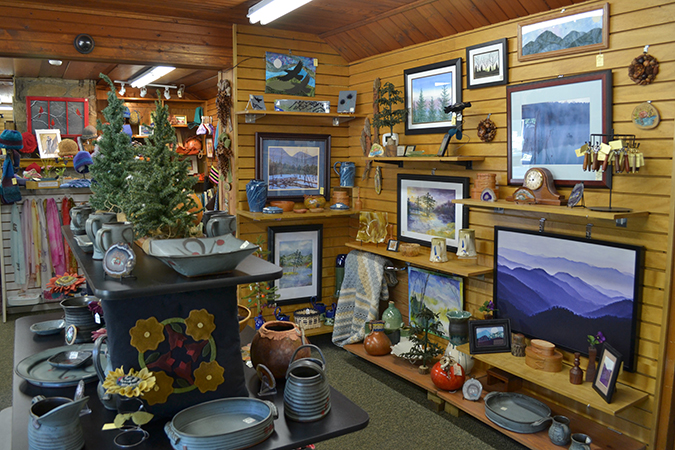
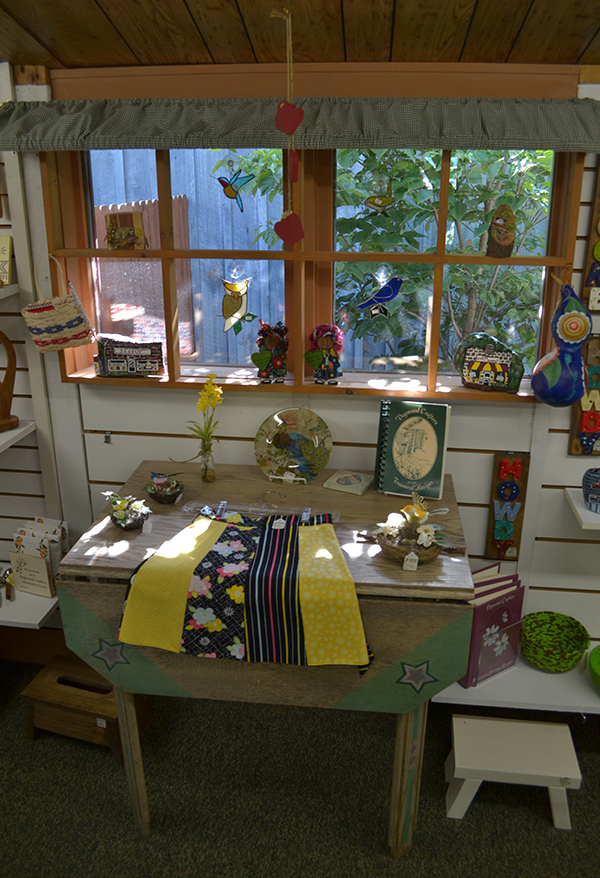
In addition to new materials and fine arts, these crafters search for resources to recycle and upcycle. Bound only by imagination, which is abundant in this group of artisans, consider the following basic items that have new life as art in their shop: door knobs, neckties, spice cans, light bulbs, blue jeans, dishes, bottles, sheets, tree limbs, pine needles, rocks, dominoes, and even bed springs!
Forty-three years later, the organization now owns their 12-room, cottage buildings, and there are 85 juried members in the Dogwood Crafters family.
Keys to a successful co-op.*
- Determine community interest in a craft cooperative.
- Choose your location wisely.
- Organize volunteers to run the craft shop.
- Establish an effective organization.
- Set up a sound financial system.
- Create and maintain standards of highest quality.
- Choose an advertising strategy that works.
- Build a community with the organization.
- Get involved with the larger community.
Dogwood Crafters has a thorough informational packet with a juried membership agreement, bylaws and policies, committees and responsibilities, inventory rules and regs, shop duties, and much more – creating a clear understanding for everyone.
More info:
*Dogwood Crafters: A success story. The first twenty-five years. By Susie Roberts Ray.